The Monthly Garage Door Safety Test Every Family Should Do
A monthly garage door safety test takes about five minutes: watch a full cycle, wave something through the sensor beam, close the door on a 2×4, check the balance and look at the springs and cables. If the door does not reverse when it should, stop using the opener until it is fixed.
This guide explains why the test matters, walks through each step, lists the household habits that keep children and pets safe, and covers what to do if your door fails.
Why a monthly test matters
An automatic garage door is the heaviest moving thing in most homes, and it closes on its own. The U.S. Consumer Product Safety Commission has received reports of about 73 children aged 2 to 14 trapped and killed under automatic garage doors since 1982, roughly three a year, and many more seriously injured. Federal rules responded in two steps: openers sold after January 1, 1991 must reverse when they hit something, and from 1993 they also needed external protection such as photo-eye sensors.
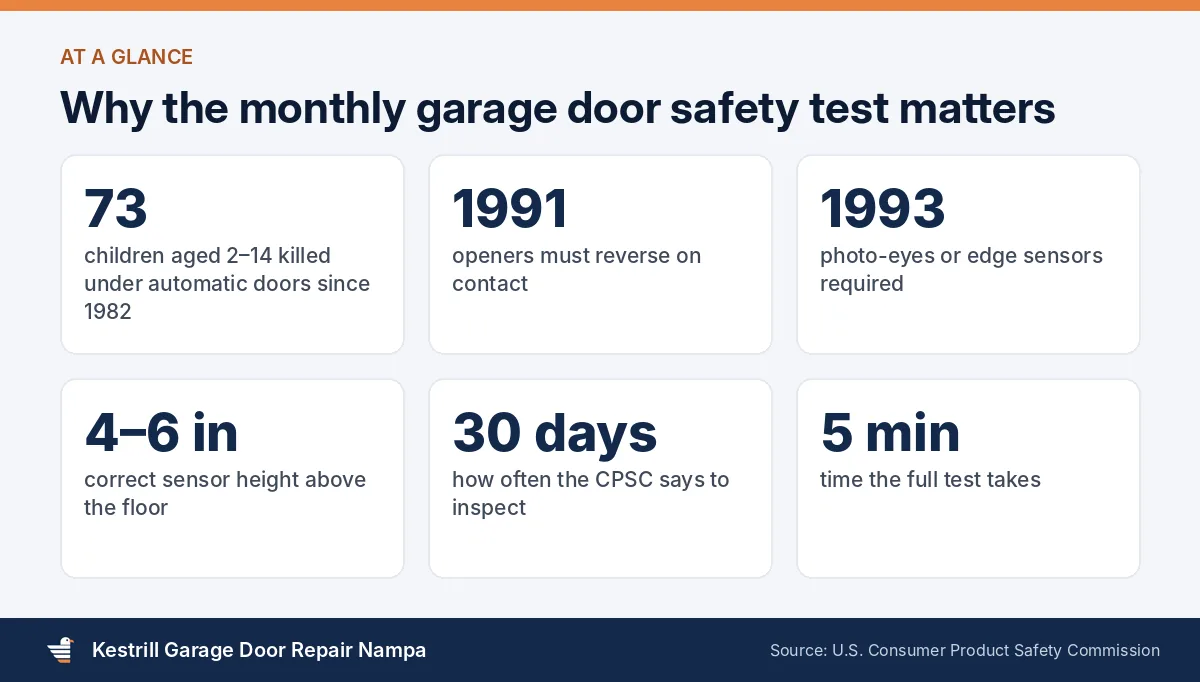
Those features only protect you if they still work. Sensors get knocked out of line, settings drift, and an opener with its force turned up to push a stiff door shut may no longer reverse when it should. The CPSC garage door safety guidance recommends inspecting the door and opener every 30 days. The test below covers what matters in about five minutes.
The five-minute garage door safety test
1. Watch and listen
Run the door through a full cycle. It should move smoothly without jerking, scraping or grinding, and stop cleanly at the top and bottom. Note anything new.
2. The photo-eye test
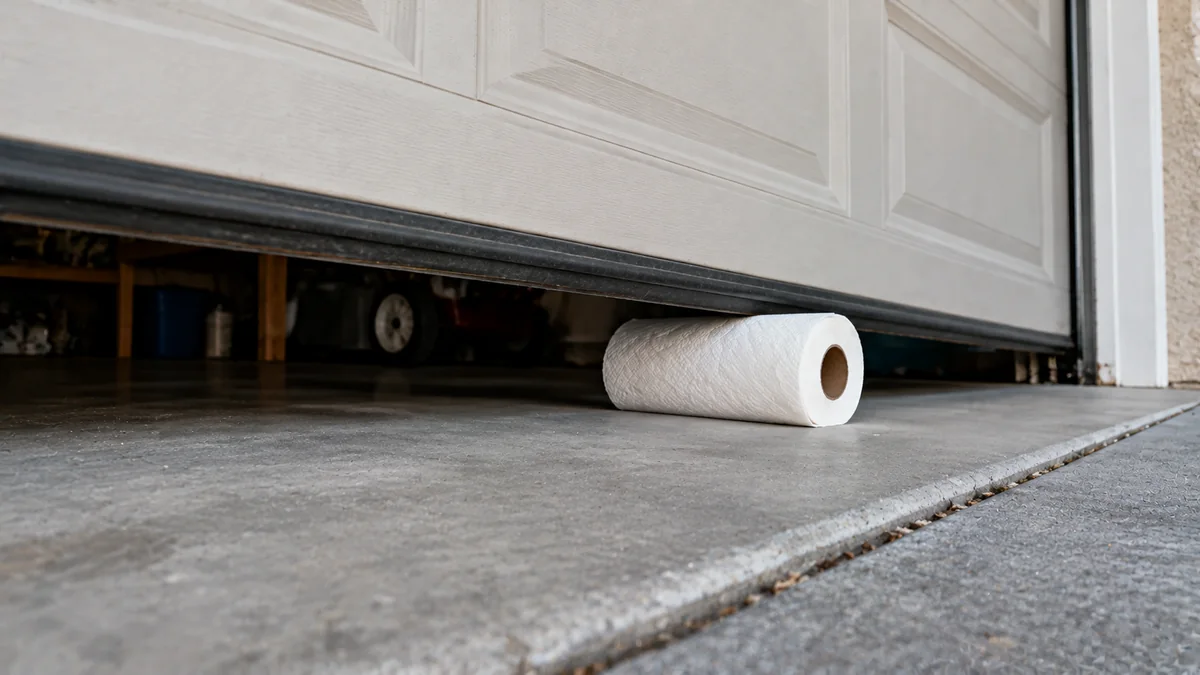
Start closing the door, then wave a broom handle or a roll of paper towels through the invisible beam between the two sensors near the floor. The door should stop and go back up. The sensors themselves should sit about 4 to 6 inches above the floor, facing each other, with steady lights.
3. The 2×4 reverse test
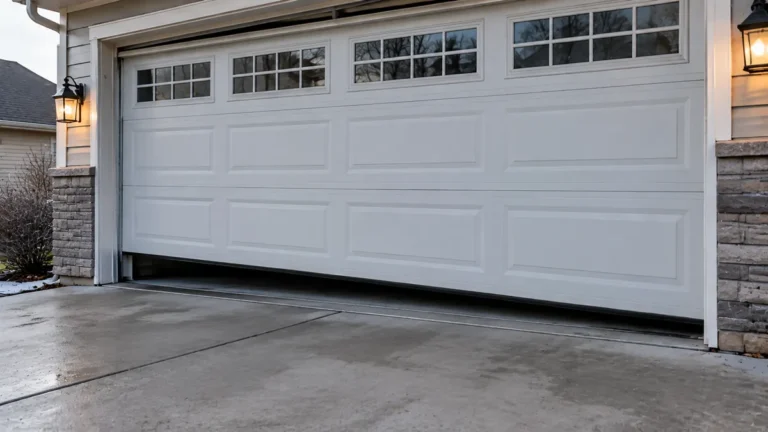
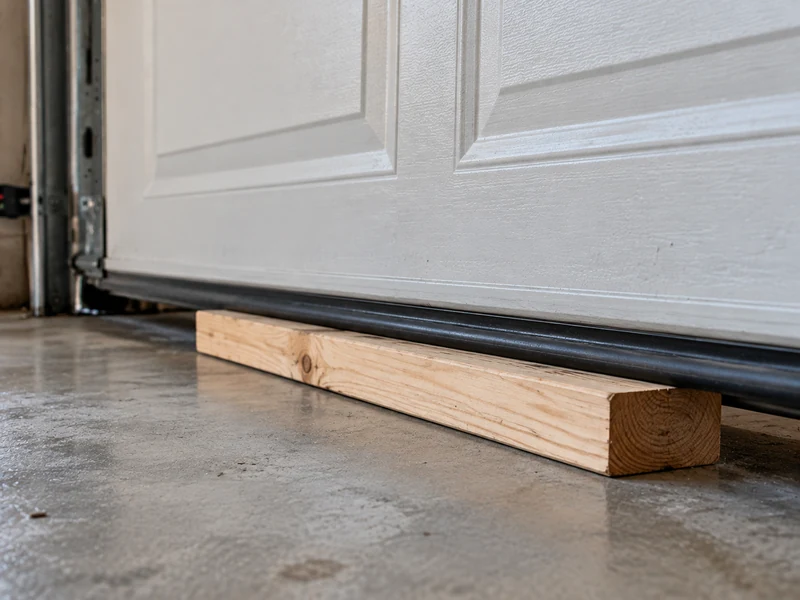
Lay a 2×4 board flat on the floor in the middle of the door’s path and close the door. When the bottom edge touches the board, the door should reverse within a couple of seconds. If it stops on the board without reversing, or crushes into it, the opener is not adjusted safely. Disconnect it and keep it disconnected until it has been adjusted, repaired or replaced.
4. The balance test
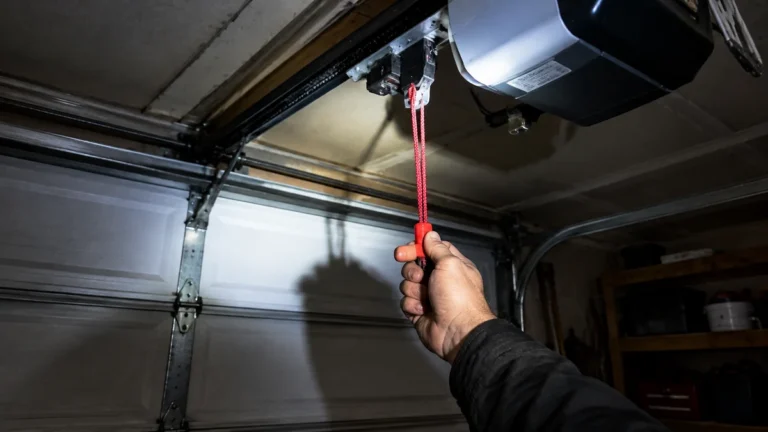
Close the door, pull the red release cord and lift the door by hand to about halfway, then let go. A balanced door stays roughly where you leave it. If it drops or shoots up, the springs need attention. An unbalanced door makes the opener work harder and can weaken its ability to reverse. Run the opener once afterwards to reconnect it.
5. Look at the springs and cables
Without touching anything, look at the spring above the door for gaps or heavy rust, and at the cables near the bottom corners for fraying. These parts are under heavy tension; if anything looks wrong, have a technician deal with it.
Household habits that matter as much as the test
- Mount the wall button at least five feet up, out of small children’s reach.
- Keep remotes away from children; they are not toys.
- Teach kids never to run under a closing door or ride the door.
- Watch the door until it has fully closed before driving off or walking away.
- Keep fingers away from the joints between sections, which pinch as the door moves.
- Never disable, tape over or raise the sensors to stop nuisance reversals.
Pets, kids and the moments that cause accidents
Most garage door accidents happen in ordinary moments: a toddler following a parent into the garage as the door comes down, a dog darting out at the last second, an older child trying to beat the door or ride it up. The sensors and auto-reverse are designed for exactly these moments, which is why it is worth checking they still work rather than assuming.
Smart openers add a new wrinkle. Closing the door from an app or on a schedule means nobody may be watching it. Many smart openers flash a light and sound a warning before closing remotely for that reason; leave those warnings switched on, and only close the door remotely when you are sure the opening is clear.
Older doors and the test
In older parts of Nampa, around downtown and the Old Nampa area, some garages still have openers from before the 1990s. If yours has no sensors near the floor, it cannot pass the photo-eye test and may not pass the 2×4 test either. Heavy wood doors on older homes are also more likely to be out of balance, which makes reversal less reliable. On these, the test is less a routine check than a clear signal that the opener is due for replacement.
Shop and RV doors deserve the test too. Their size and weight mean that a door that fails to reverse can do much more damage, so test them every month, and keep children well away while they move.
If your door fails the test
If the photo-eye test fails, clean and realign the sensors first; low afternoon sun on west-facing Nampa garages is a common cause of erratic sensor behaviour, and our post on doors that will not close in the afternoon sun explains it. If the sensors are fine, or the 2×4 test fails, the opener’s force and travel settings need adjusting, which is part of the safety system and belongs with a technician. The garage door sensor repair and tune-up pages cover what is involved.
If the opener is old enough that it has no sensors at all, it was probably made before 1993. It should be replaced, not repaired; there is no setting that adds the protections it lacks. The opener installation page explains the options.
Make it a habit
The easiest way to remember a monthly test is to tie it to something you already do monthly, such as changing the furnace filter or paying a particular bill. In Nampa, a quick test after each change of season is worth adding too: after the first hard freeze, after the windy weeks of spring, and in the heat of July, when sun and dust cause the most sensor trouble.
Garage door safety test: quick answers
How often should I test my garage door’s safety features?
Once a month, as the CPSC recommends. The photo-eye test and the 2×4 reverse test together take only a few minutes.
What is the 2×4 test for a garage door?
Lay a 2×4 board flat in the door’s path and close the door. It should reverse when it touches the board. If it does not, stop using the opener until it has been adjusted or repaired.
What should I do if my garage door does not reverse?
Disconnect the opener and use the door manually until a technician adjusts the force and travel settings or replaces the opener. Do not keep using it.
Can I do the garage door safety test with a smart opener?
Yes, and you should. Run the tests with the wall button or remote while standing in the garage. Leave the remote-close warning light and beeper turned on for when the door is closed from the app.
How high should garage door sensors be?
About 4 to 6 inches above the floor, facing each other across the opening, so they detect small children and pets.
Sources: safety data, sensor height and test methods from the CPSC garage door safety guidance; opener requirements from the federal garage door opener standard (16 CFR 1211).