
Kestrill Garage Door Repair Nampa
Noisy Garage Door Repair in Nampa
Grinding, squealing, popping or a rattle that wakes the house? Each sound points somewhere specific. Here is how to decode it and what actually makes the door quiet again.
Kestrill is a referral service. We connect Nampa homeowners with independent local garage door companies and do not carry out repairs or installations ourselves.
Noisy garage door repair, Nampa homeowners often find, is one of the smallest jobs a garage door can need, provided it is caught while it is still just noise. A door that has been grinding for a year is usually a door with worn rollers, dry hinges and a few loose bolts. Left long enough, the same wear can push a roller out of its track.
This page explains what each noise usually means, which fixes are safe to do yourself, the parts that wear out fastest in Nampa’s heat, cold and dust, and when it is time to have someone look at the springs, cables or opener instead.
Before you reach for a spray can
- Listen first. Stand inside the garage for one full cycle and note where the noise comes from: the sections, the tracks, the springs or the opener.
- If you heard one loud bang, look at the spring above the door before using it again.
- Do not spray the tracks or use a solvent-type spray as a lubricant.
- Stop using the door if the noise comes with jerking, scraping or the door sitting crooked.
- Keep away from the bottom brackets and springs when tightening anything.
What that noise is telling you
Garage doors are honest. Each kind of noise points to a fairly short list of causes, so it is worth standing inside the garage for one full open-and-close cycle and listening carefully before anyone touches a tool.
| What you hear | Most likely cause | Who should fix it |
|---|---|---|
| Squeak or squeal at each section joint | Dry hinges or roller bearings | Usually you: lubricate the pivot points |
| Grinding or rumbling along the tracks | Worn roller bearings, flat-spotted steel rollers, grit in the track | Clean the tracks yourself; roller swap by a pro |
| Rattling or vibration | Loose hinge or track bolts, slack opener chain | Tighten visible bolts; chain tension by a pro |
| Popping or creaking as the door starts | Springs dry or near the end of their life, or a section flexing | Lubricate the springs; have them checked |
| A single loud bang | A torsion spring or cable has broken | A technician, and stop using the door |
| Scraping or rubbing | Door rubbing the frame, roller leaving the track, bent track | A technician |
| Loud hum, whine or clunk from the opener | Worn gear, sprocket or motor; travel limits set wrong | A technician |
If the noise came on suddenly, especially with a bang, a jerk or the door sitting crooked, treat it as a fault rather than a nuisance. Gradual noise that builds over months is usually wear and dryness.
Worn rollers: the usual culprit
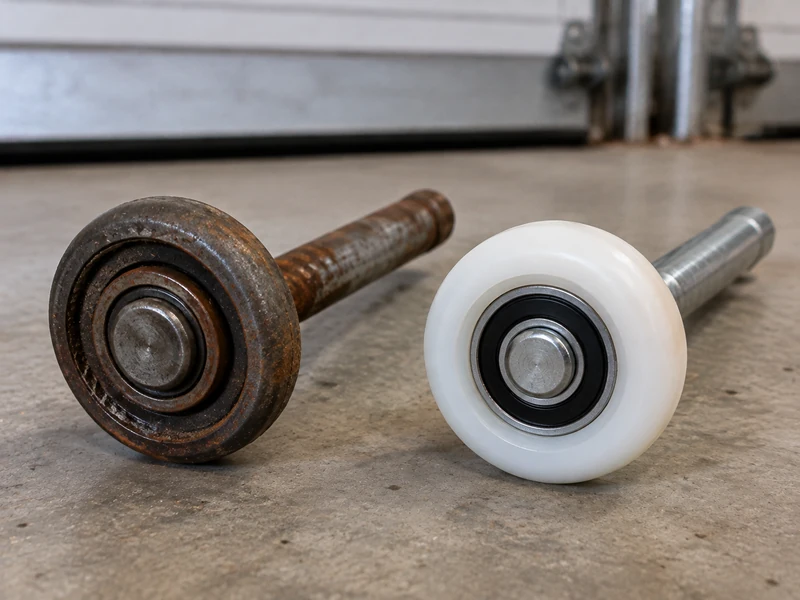
Most doors in Nampa subdivisions left the builder with plain steel rollers. They are tough, but their bearings are open to dust and they get loud as they wear, often within three to five years. Sealed-bearing nylon rollers run much more quietly and typically last 10 to 15 years.
Signs your rollers are done: a wobble you can see as the door moves, flat spots or chips on the wheel, a bearing that grinds or does not spin freely, or a roller tilting in its hinge. A door with rollers like that is not just loud; worn rollers are one of the common reasons a door comes off its tracks.
Replacing rollers on the upper sections is a straightforward job. The two bottom rollers are different: they sit in the bottom brackets, which hold the lift cables under full spring tension. Leave those to a technician, who will release the springs first.
Hinges and loose hardware
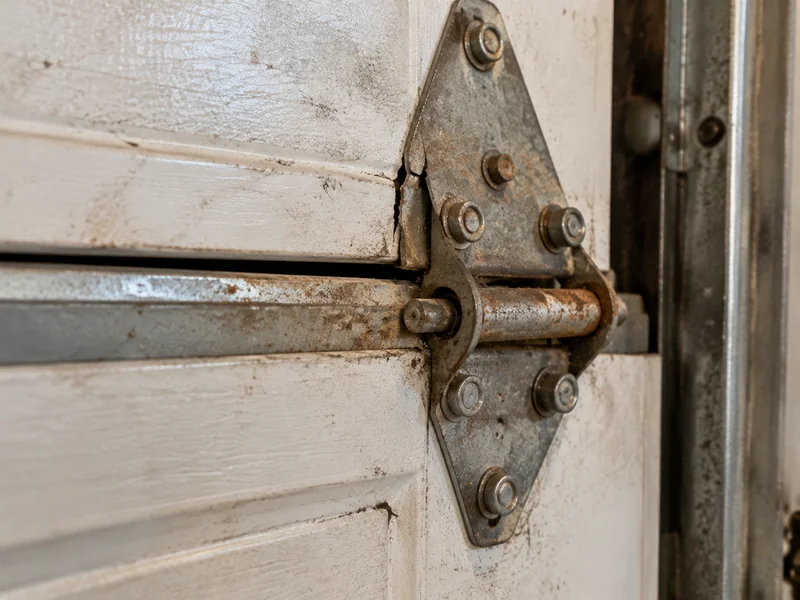
Each section of the door is joined by hinges that flex every time the door rounds the curve at the top. After enough cycles, hinges loosen, wear at the pivot and occasionally crack. A cracked hinge clicks or pops, and the section above it may sag.
Every door also has dozens of bolts holding hinges, track brackets and the opener rail. Daily vibration loosens them a little at a time. Tightening the bolts you can see on the hinges and track brackets with a socket wrench is a safe job and often quiets a rattle. Do not overtighten, which can strip the thin steel of the door, and do not touch the bottom brackets or anything on the spring shaft.
Loud opener motor or chain
Sometimes the door is fine and the noise lives on the ceiling. Chain-drive openers are naturally the loudest: a slack chain slaps the rail, and a worn sprocket clunks. Older units also transmit vibration straight into the ceiling joists, which is why a chain opener under a bedroom is so noticeable at 6 a.m.
A technician can tension the chain, replace worn gears or sprockets, and fit rubber isolation pads between the opener brackets and the ceiling. If the opener is old as well as loud, a quieter belt-drive or wall-mount unit is often the better move; see garage door opener installation. If the opener hums loudly without moving the door, that is a different problem covered on the opener repair page.
Safe fixes: tightening and lubrication
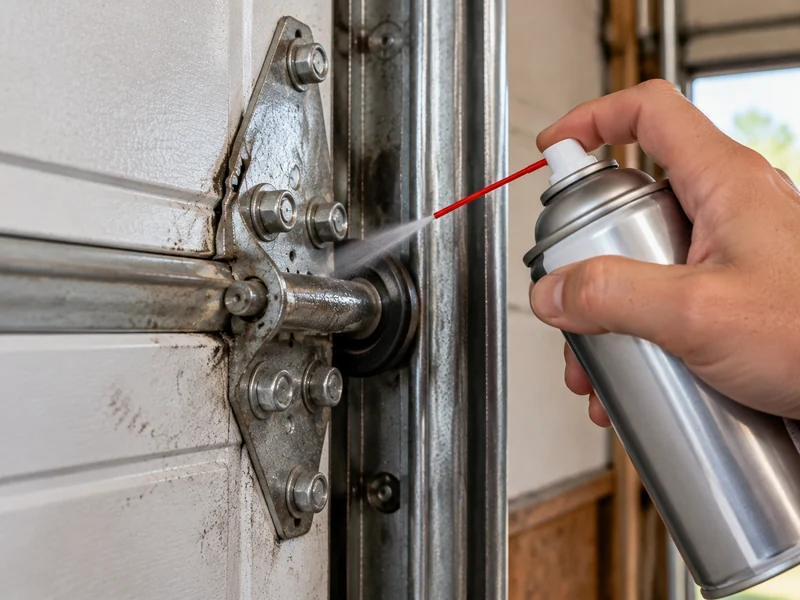
Lubrication solves more garage door noise than anything else, as long as you use the right product in the right places.
- Use a garage door lubricant, either a silicone spray or a white lithium grease made for garage doors. Avoid general-purpose penetrating or degreasing sprays; they clean old grease away and leave parts drier than before.
- Lubricate: hinge pivot points, the bearings in the centre of each steel roller, the coils of the torsion springs, the end bearings on the spring shaft, and the opener rail or chain as its manual directs.
- Do not grease the tracks. Grease in the track traps dust and makes the rollers skid. Wipe the tracks clean instead.
- Wipe off the excess so it does not drip onto the car or collect grit.
Twice a year is a good rhythm in Nampa: once in spring after the windy, dusty weeks, and once in October before the first hard freeze. Doors used many times a day, or shop doors exposed to dust, benefit from more often.
Why doors get noisy faster in Nampa
- Heat dries grease. Nampa averages about 55 days a year at 90°F or more, per NOAA 1991–2020 normals for the Boise Air Terminal station, and a closed garage gets hotter still. Lubricant that would last a year in a mild climate dries out over one summer.
- Cold stiffens it. On January mornings near 21°F, old grease turns thick and sticky, so the door groans and the opener works harder.
- Dust gets everywhere. Canyon County is the most farmed county in Idaho, and dry summer air carries field dust into tracks and open roller bearings, where it mixes with grease into an abrasive paste.
- Builder-grade rollers. Thousands of homes built since 2000 still have their original steel rollers, which are now well past the point where they run quietly.
Quiet upgrades worth considering
If your garage sits under a bedroom or beside a home office, a few upgrades make a lasting difference beyond routine lubrication:
- Sealed nylon rollers throughout. This is the single biggest change for most doors.
- New hinges where the old ones are worn oval at the pivot. Worn hinges let sections knock together.
- Rubber isolation pads where the opener hangs from the ceiling, so vibration does not travel into the joists.
- A belt-drive or wall-mount opener in place of an old chain drive.
- An insulated door. Thin single-layer steel doors drum and rattle; insulated doors with a steel or vinyl back are noticeably quieter, and in Nampa’s summers and winters they help with temperature too. The garage door installation page covers the options.
- A strut on the top section of a wide or heavy door, which stops the panel flexing and popping as the opener pulls it.
Shop and RV doors on acreage properties are a special case. They are bigger, often run on heavier hardware, and live with gravel, dust and wind. Expect them to need lubrication and a hardware check more often than an attached garage door, and have the rollers and hinges inspected whenever the springs are serviced.
When to bring in a technician
Most noise is wear, but some is a warning. Bring in a pro for noise that comes with a bang, a jerky or crooked door, scraping that suggests the door is rubbing or leaving the track, grinding from the opener, or rollers that need replacing at the bottom brackets. A garage door tune-up covers most of the routine work in one visit: lubrication, hardware, rollers if needed, a balance check and the safety tests. A careful technician will tell you which parts are worn and which only needed grease, with prices in writing before anything is replaced.
Noisy garage door repair, Nampa: questions and answers
Why is my garage door so loud when it opens and closes?
The most common reasons are dry hinges and rollers, worn steel rollers, loose hardware and a slack opener chain. A sudden loud noise, especially a bang, can mean a broken spring or cable and should be checked before the door is used again.
Why are my garage door rollers noisy?
Steel rollers have open bearings that dry out and fill with dust, and the wheels wear flat over a few years. Nylon rollers with sealed bearings are much quieter and last longer.
How can you tell if garage door rollers are bad?
Look for wobbling as the door moves, flat spots, cracks or chips on the wheels, bearings that grind or do not spin freely, and rollers that tilt in their hinges. Any of these means it is time to replace them.
How do you quiet noisy garage door rollers?
Lubricate the bearings of steel rollers with a garage door lubricant and wipe the tracks clean. If they are worn, replacing them with sealed-bearing nylon rollers makes the biggest difference. Leave the bottom rollers to a technician because of the cable tension there.
Can I use a general-purpose spray lubricant on garage door rollers?
It is better not to. Many general-purpose sprays are mainly solvents that strip away existing grease and evaporate, leaving parts drier. Use a silicone spray or white lithium grease made for garage doors.
Which is better for a garage door, silicone or lithium grease?
Both work. Silicone spray goes on thin, attracts less dust and suits Nampa’s dusty summers well. White lithium grease is thicker and lasts longer on hinges and springs. Many technicians use lithium on metal pivot points and silicone elsewhere.
Will a tune-up make my garage door quieter?
Usually, yes. A tune-up covers lubrication, tightening, a roller and hinge check and a balance test, which deals with most everyday noise. If the rollers or hinges are badly worn, they will need replacing as well, and the technician should tell you before doing it.
How often should garage door rollers be lubricated?
About twice a year for most homes, in spring and before winter. Doors that run many times a day or sit in dusty shops benefit from lubrication every few months.
Related garage door problems
Related problems people often run into at the same time:
Tune-up and maintenance
Balance, lubrication, hardware and safety checks that catch failures before they strand you.
Off-track and track repair
Rollers out of the rail, a bent track or a door jammed at an angle. Keep clear and leave it be.
Opener installation
Choosing a quieter drive, battery backup for outages and the right horsepower for your door.
Not sure which one you are dealing with? The Nampa garage door repair overview walks through every common failure and the safe first steps for each.
Sources: temperature normals from the NOAA 1991–2020 normals for the Boise Air Terminal station and the City of Nampa climate summary; farm statistics from the Idaho Business Review; safety guidance from the CPSC garage door safety guidance.