
Kestrill Garage Door Repair Nampa
Garage Door Repair in Nampa, ID
Snapped spring, an opener that hums and quits, a door hanging crooked in its tracks? Start with the safe first steps below, then find out what is actually wrong and who can fix it.
- Springs, openers, cables and tracks
- Safe first steps for every problem
- Independent local garage door companies
- Plain answers, no sales script
Kestrill is a referral service. We connect Nampa homeowners with independent local garage door companies and do not carry out repairs or installations ourselves.
Garage door repair, Nampa style, usually starts at the worst possible moment: 7:10 on a January morning, the car on the wrong side of a door that will not budge, and a bang from the garage ceiling ten minutes earlier. Or a July afternoon when the door keeps reversing and the house sits wide open.
This site is for that moment. It explains what usually breaks on a garage door in this part of the Treasure Valley, what you can safely check, what to leave alone, and what a fair repair visit looks like. Kestrill does not send out crews. We connect homeowners with independent garage door companies working in Nampa, and make sure you know enough to talk sensibly with whoever shows up.
Everything here is written for Nampa: freezing nights, 90-degree summers, field dust, windstorm outages, and thousands of original doors and openers wearing out at roughly the same time.
Stuck right now? Do this first
- Stop pressing the button. If the opener strains, hums or the door moves a few inches and stops, running it again can strip the opener gear or pull a cable off its drum.
- Look up before you touch anything. A torsion spring sits on a bar above the closed door. A visible gap in the coil means it has snapped, and the door is suddenly carrying its full weight, often 130 to 250 pounds or more.
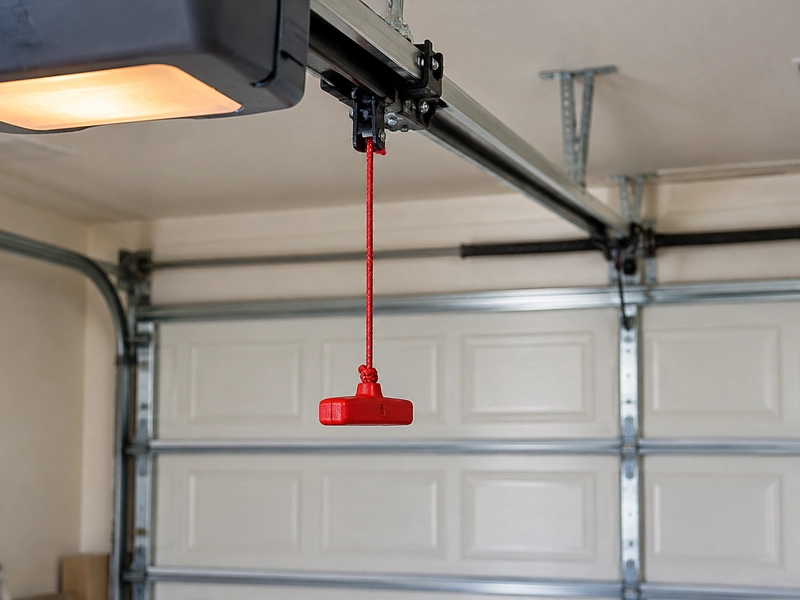
- Pull the red release cord only when the door is fully closed. Releasing an open or half-open door with a broken spring or cable can drop it like a guillotine.
- Keep kids, pets and cars clear of a door that is crooked, off its tracks or hanging on one cable. Do not try to force it back into the rails.
If the door is closed and you need the car out, two adults can usually lift a released door with no spring help, then clamp the track so it stays up. If you are alone, or the door feels impossibly heavy, leave it closed and wait for a technician. A trapped car is a nuisance. A door falling on someone is far worse.
Common garage door problems in Nampa homes
Most calls fall into one of eleven problems. Each page below goes deep on one of them: the warning signs, the Nampa conditions behind it, what you can check safely, and what a technician should do once they are on site.
Broken spring repair
A loud bang, then a door that lifts six inches and quits. The single most common major repair.
Opener repair
Humming motor, clicking, a dead remote or a door that only works from the wall button.
Opener installation
Replacing a 15 to 25-year-old opener, adding battery backup for outages, quieter belt drives.
Cable repair
A door hanging lower on one side, a frayed lift cable, or a cable that jumped off the drum.
Off-track and track repair
Rollers out of the rail, a bent track after a bumper tap, a door jammed at an angle.
Sensor repair
The door starts down and pops back up, or the opener light blinks and nothing happens.
Noisy door repair
Grinding, squealing and rattling from worn rollers, dry hinges and loose hardware.
Panel repair
Dents, cracked bottom sections and wind damage. When one new section is enough.
Weather seal replacement
Light, drafts, dust or mice under the door, and seals frozen to the concrete.
Tune-up and maintenance
Balance, lubrication and safety checks before the first hard freeze finds the weak part.
New door installation
Insulated steel, carriage-style and glass doors, HOA approval and Nampa permit rules.
How Kestrill works
Kestrill is a referral service, and we would rather say that plainly than dress it up. We publish practical garage door information for Nampa and connect homeowners with independent garage door companies that serve the area. The company that comes out sets its own prices, schedules its own visits and stands behind its own work. You deal with them directly.
- You read up first. Find your problem on this site, do the safe checks, and note what the door is doing. “It opens about a foot, the motor hums, and there was a bang last night” tells a technician far more than “it is broken.”
- You are connected with a local company. Kestrill passes you to an independent garage door company that covers Nampa. We do not take payment from you for the connection.
- The technician diagnoses before quoting. A good visit starts with an explanation of what failed and why, followed by a written price before any work begins. You decide whether to go ahead.
Garage door repair has a real trust problem, with warnings about companies that advertise a tiny service fee and then present a large bill. Knowing what a normal visit looks like is the strongest protection you have, so this site spells it out.
Why garage doors fail in Nampa
Nampa sits around 2,450 feet up in the high desert, and the climate swings hard between seasons. Seven local conditions explain most garage door failures here.
1. Cold snaps that finish off tired springs
Boise-area weather normals put the valley at roughly 108 nights a year at or below freezing, with January lows averaging about 21°F. Springs near the end of their cycle life tend to give out on the first truly cold mornings, when stiff grease makes the whole door work harder. In mid-January 2024 the valley dropped to single digits and Nampa took around seven inches of snow in a day, exactly the kind of week when springs snap. Details on the broken spring repair page.
2. Snow, meltwater and refreezing
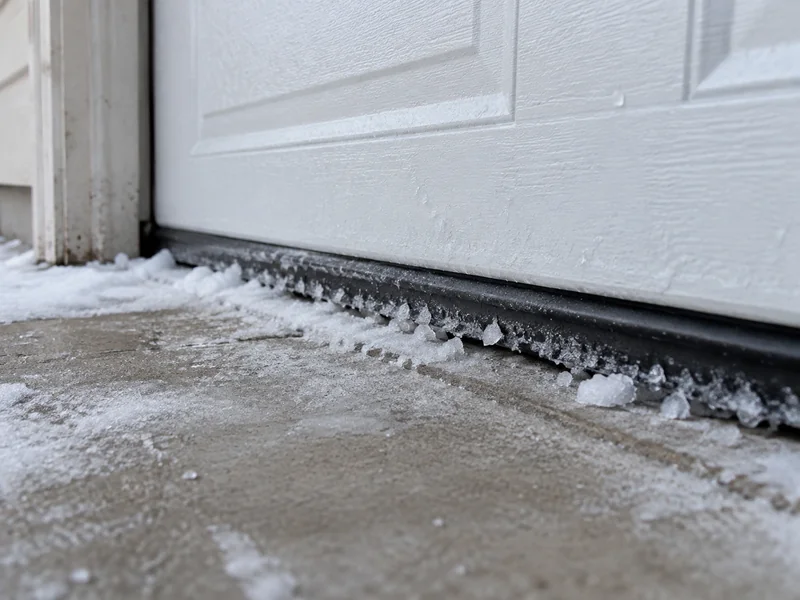
About 19 inches of snow falls in an average Nampa winter, and January humidity runs near 67 percent. Snow melts off a warm car, runs to the threshold and refreezes overnight. By morning the rubber bottom seal is glued to the slab. Press the button and the opener either strains and reverses or tears the seal right off.
Loosen it gently with warm water or a hair dryer, then dry the threshold. If the seal is cracked or flattened, weather seal replacement stops it happening every cold snap.
3. Summer heat and low afternoon sun
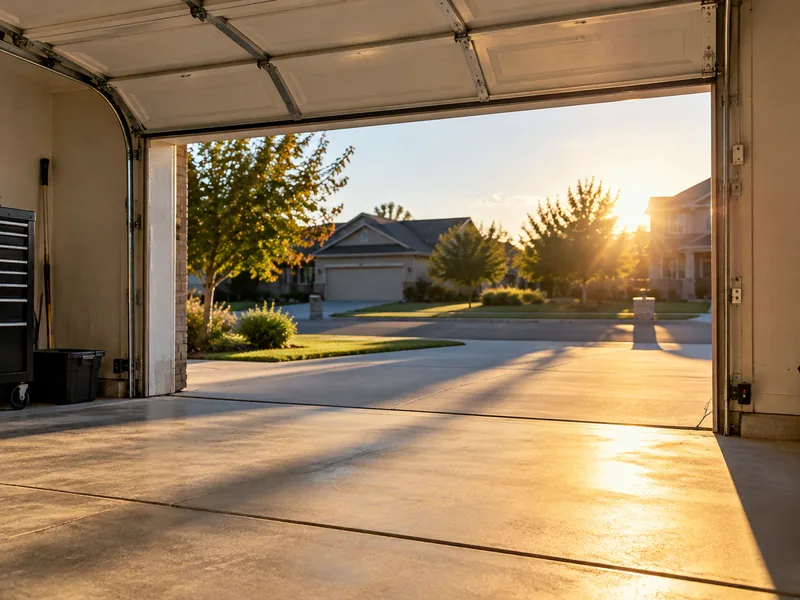
Nampa averages about 55 days a year at 90°F or warmer and roughly 210 sunny days. Heat dries out lubricant and cracks rubber seals. The sneakier problem is light: on west-facing garages, low afternoon sun shines straight into the receiving photo-eye, so the door refuses to close in the late afternoon and works fine at night.
If that sounds familiar, the sensor repair page covers the checks, including a simple shade trick that solves it more often than not.
4. Dust, grit and windstorms
Canyon County has more farms than any other county in Idaho, and dry summer air carries field dust into every garage. Grit collects in tracks and roller bearings, coats sensor lenses and mixes with old grease into a gray paste. Storms can push gusts past 50 mph and occasionally bow a door inward. Expect louder rollers, jerky travel and, after a big storm, panel damage or a door knocked off its tracks.
5. Power outages
Outages here are frequent enough to plan for. PowerOutage.us logged 55 separate outages in Nampa over the 90 days to late October 2026, with power typically back in about four hours. During those hours an opener is just a heavy motor on the ceiling. People pull the release cord with the door open and it crashes down, and surges when power returns can kill an opener’s logic board. Battery backup, covered on the opener installation page, keeps most doors working through a typical outage.
6. A wave of ageing original hardware
Nampa’s single biggest group of homes, about 11,539 houses, went up between 2000 and 2009. Those original doors are now 17 to 26 years old, their openers are past the 10 to 15 years most last, their springs are on a second or third set, and their cables have been fraying quietly for years.
7. Builder-grade parts in newer subdivisions
Thousands more homes went up after 2010, about 7,857 between 2010 and 2019 and another 2,636 since 2020. Builders typically fit standard springs rated around 10,000 cycles and plain steel rollers. A household that opens and closes the door four times a day uses about 1,460 cycles a year, so a first spring break at year six or seven is normal, not bad luck. Rollers get noisy sooner than that. A garage door tune-up around year five catches most of it early.
One pattern ties all seven together: one failure loads the next part. A broken spring forces the opener to lift the full weight, and a slack cable pulls rollers out of the track. A technician who checks the whole door, not just the part you noticed, usually saves you a second visit.
What a fair garage door repair visit looks like
Most people hire a garage door technician once every few years, so it is hard to know what normal looks like. A good visit includes:
- The technician explains what failed and why, ideally showing you the broken part.
- You get a written price before work starts, listing parts and labor.
- Pairs are explained: if one spring or one cable broke, the other has the same wear. Replacing both is standard practice, not an upsell.
- After the repair the door is balanced and tested, including the auto-reverse.
- You leave with an itemized invoice that names the parts installed.
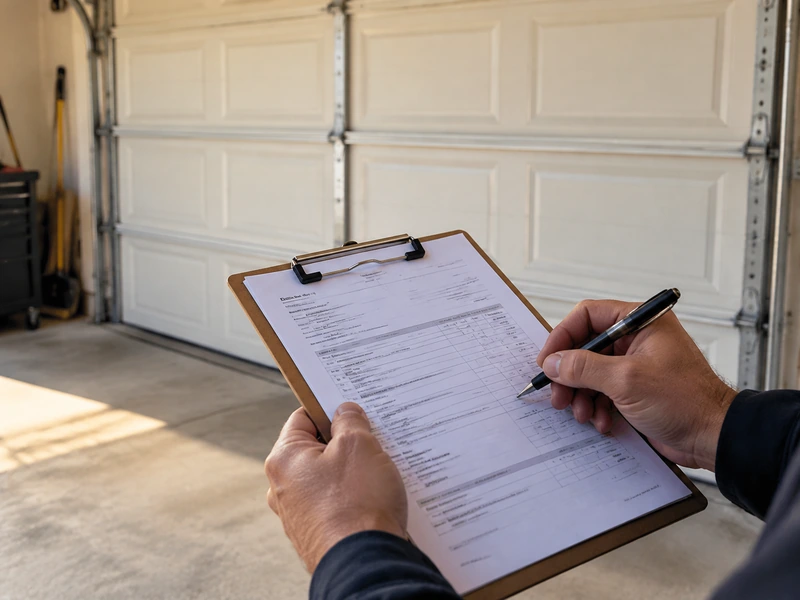
Red flags worth walking away from
- A very low advertised service fee followed by a sudden list of “urgent” extras.
- Pressure to approve a whole new door or opener on the spot, before anyone has explained the fault.
- No written estimate, or a demand for full payment before the work is finished.
- A generic company name with no traceable business behind it and no straight answer about who will actually show up.
These match the warning signs in a March 2026 Better Business Bureau warning about garage door repair scams. A good company does not mind questions about what failed and why.
Garage door safety checks every Nampa household should know
An automatic garage door is the heaviest moving object in most homes. The CPSC garage door safety guidance recommends a quick inspection every 30 days, and the two tests below take less than five minutes.
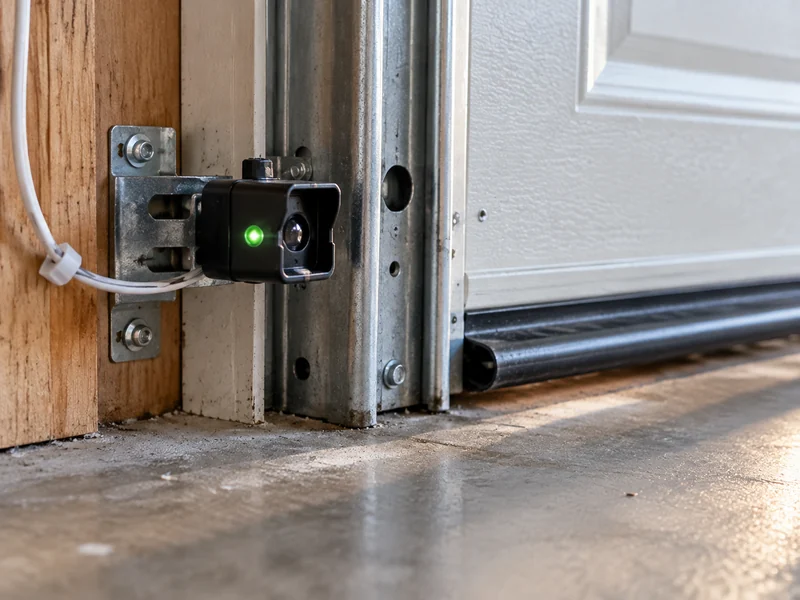
Photo-eye test
With the door closing, wave a broom handle or a roll of paper towels through the invisible beam between the two sensors. The door should stop and go back up. The sensors themselves should sit about 4 to 6 inches above the floor, facing each other, with steady indicator lights.
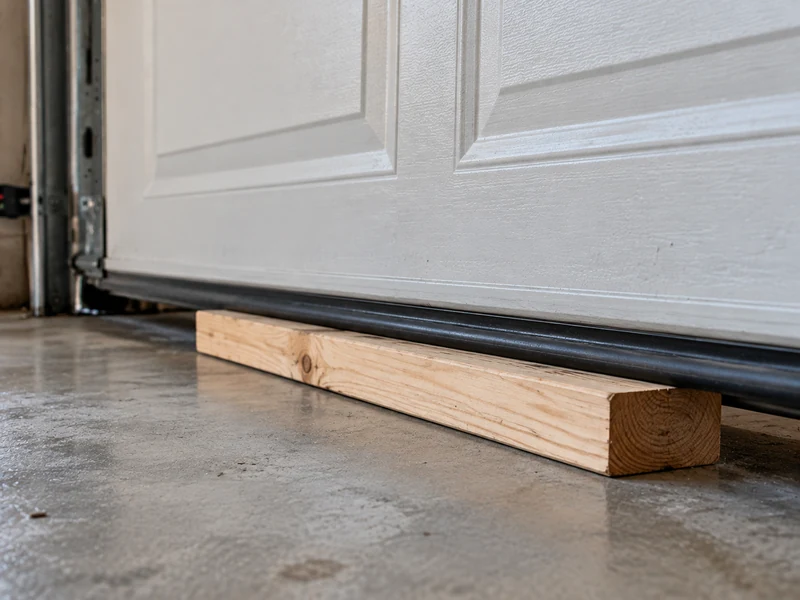
Auto-reverse test
Lay a 2×4 flat on the floor in the door’s path and close the door. When the bottom edge touches the board, the door should reverse. If it does not, stop using the opener until it has been adjusted or repaired.
Three hard rules
- Springs and the cables attached to them are not DIY parts. They hold enough stored force to break bones. No video makes that job safe for a first-timer.
- Never disable or bypass the sensors. Holding the wall button to close the door while you watch it is fine in a pinch. Permanently defeating the safety system is not.
- Retire pre-1993 openers. Openers sold in the U.S. after 1991 must reverse on contact, and photo-eyes or edge sensors became required in 1993 under the federal garage door opener standard (16 CFR 1211). Older units in some downtown and Old Nampa homes have neither.
Repair or replace? A practical rule of thumb
Most garage door problems are repairs, not replacements. The usual rule: replace the door only when the repair bill would run past about half the price of a new door, or when a door over roughly 20 years old has several parts failing at once. For openers, age and missing safety features matter more than the repair cost.
| Part | Typical working life | Replace rather than repair when |
|---|---|---|
| Torsion springs | About 7–12 years (around 10,000 cycles on standard springs) | Always replaced, never repaired. Both springs of a pair are done together. |
| Lift cables | About 8–10 years | Frayed, rusted or snapped. Both sides replaced together. |
| Opener | About 10–15 years | Repeated gear or board failures, struggles with a balanced door, or made before 1993. |
| Rollers | 3–5 years for plain steel; 10–15 for sealed nylon | Cracked, flat-spotted or grinding. |
| Whole door | About 15–30 years depending on material | Several damaged sections, rust-through, discontinued panels. |
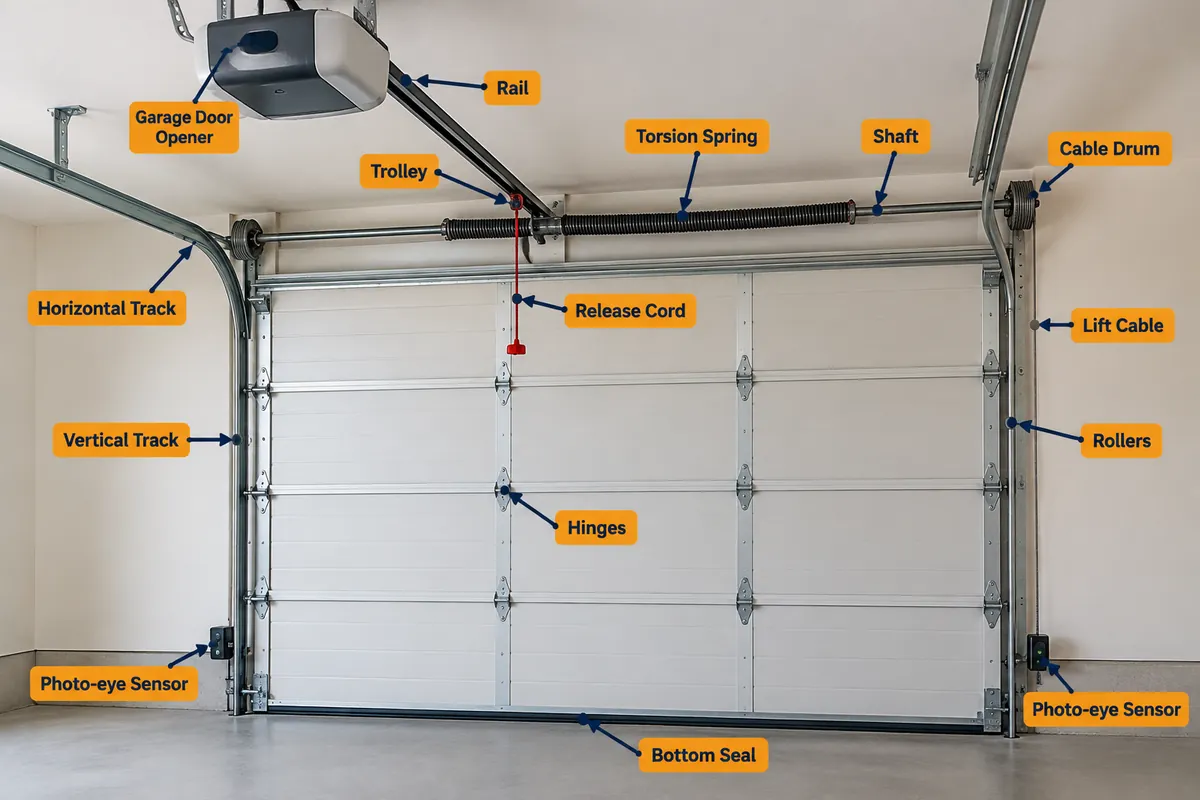
Knowing the names helps you describe the problem. Springs sit on a shaft above the door, cables run from drums at each end down to the bottom corners, rollers ride in the tracks, and the opener simply guides a door the springs have already balanced.
Thinking about a new door instead? The garage door installation page covers insulation, styles, HOA approval and when the City of Nampa requires a permit.
Nampa homes and what breaks in each
About 70 percent of Nampa homes are owner-occupied, according to U.S. Census QuickFacts for Nampa, and most of them are detached houses with attached garages. Different eras of housing fail in different ways.
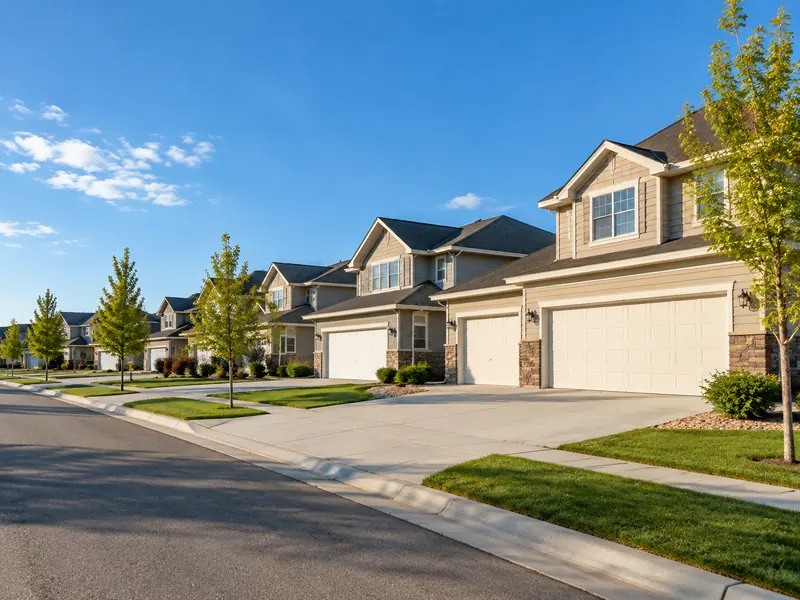
Newer subdivisions
Places like Peregrine Estates, Silver Star and Jasper Ridge in North Nampa, or Redhawk Ridge, Sagewater and Osprey Estates on the south side. Expect first spring failures around years six to eight, noisy builder rollers, and smart-opener Wi-Fi trouble in garages far from the router.
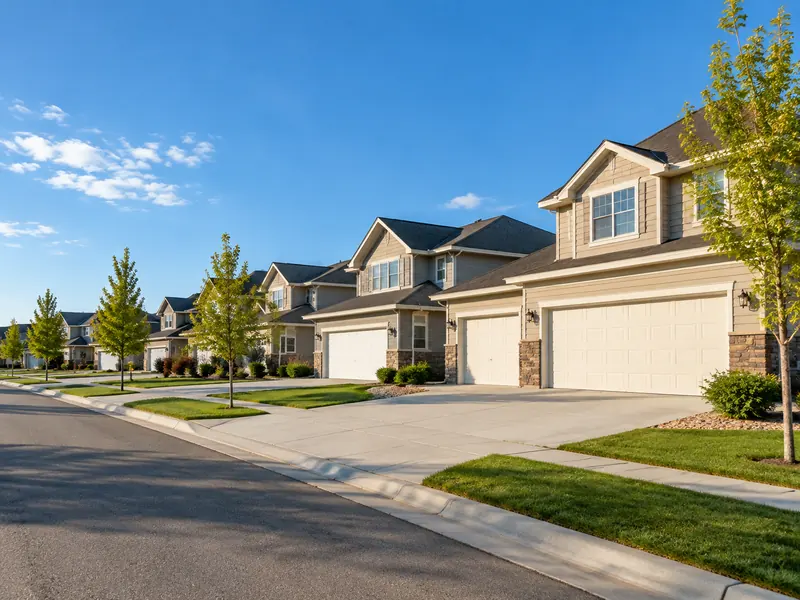
2000s homes and older
The big 2000s wave needs openers, second spring sets and cables. Older homes near downtown and in the Old Nampa area may still have wood or one-piece tilt-up doors, heavy unbalanced doors, and openers that predate photo-eyes.
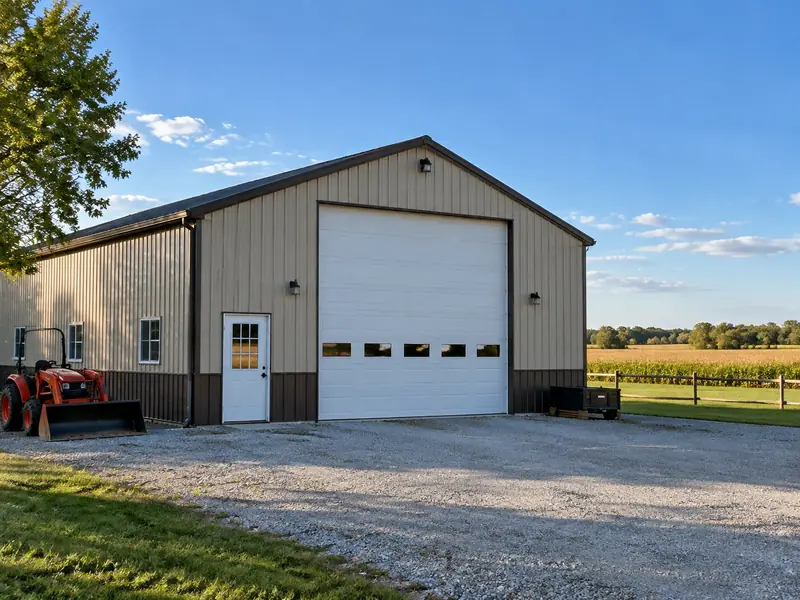
Acreage, shops and RV doors
Around Lake Lowell and out toward the county roads, many properties have a detached shop with a tall, wide door. Those heavier doors need bigger springs and stronger openers, and they take the full force of wind and dust.
Areas we help in and around Nampa
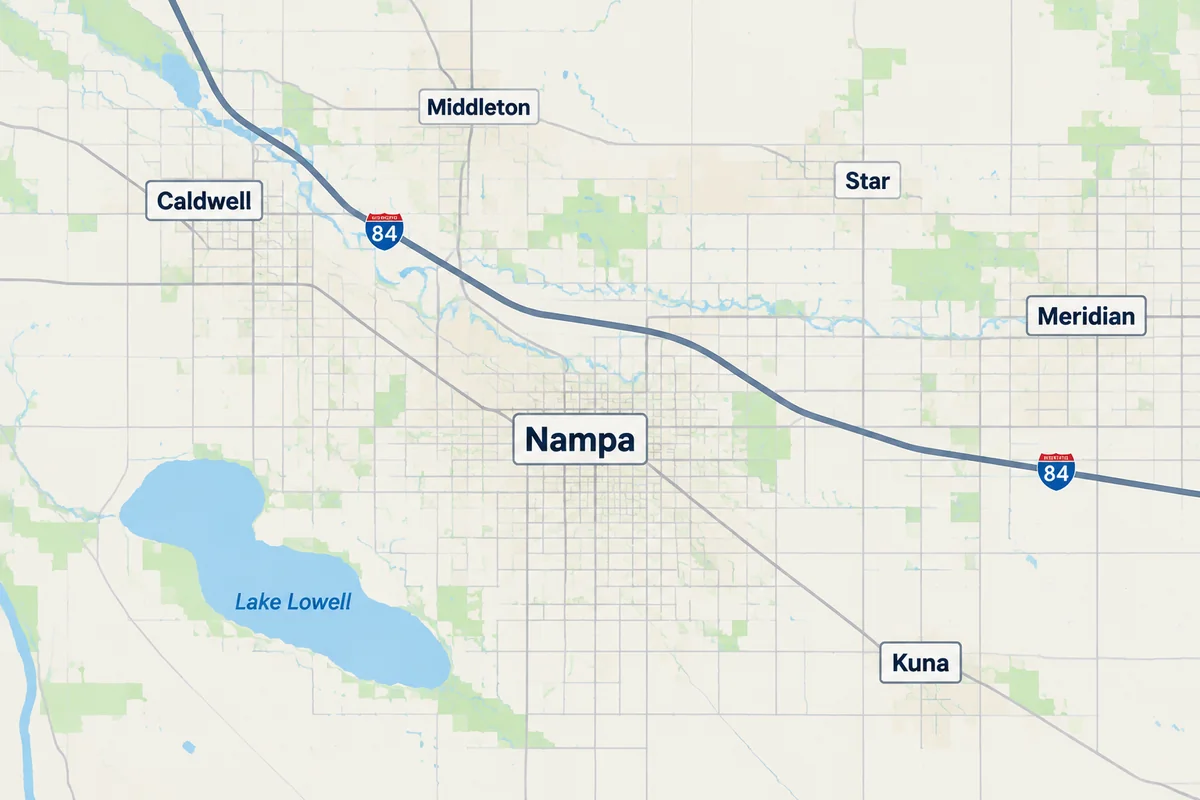
Most requests come from Nampa’s three main ZIP codes: 83651 on the west side and downtown, 83686 across the south side toward Lake Lowell, and 83687 covering the north and east. Those ZIPs reach roughly 137,000 people because they stretch well beyond city limits into farm and acreage country, so a Nampa address can mean a cul-de-sac off Midland Boulevard or ten acres off a county road.
Kestrill also helps homeowners in nearby towns, each with its own page: Caldwell, Kuna, Middleton, Star and Meridian. Homes in Melba, Greenleaf, Notus, Parma and Wilder can use the Nampa pages; the advice is the same.
Garage door repair: Nampa questions, straight answers
Where can I get my garage door repaired in Nampa, Idaho?
Independent garage door companies across the Treasure Valley cover Nampa, from one-person outfits to regional firms. Kestrill connects homeowners with local companies that serve the city. Whoever you use, ask for a diagnosis and a written price before work starts.
What are the most common garage door problems?
Broken springs top the list, followed by opener faults, dirty or misaligned sensors, frayed cables, doors off their tracks, worn rollers and failed seals. Cold snaps and summer sun make springs, seals and sensors especially common in Nampa.
How do I choose a garage door repair company?
Look for a company with a traceable business name and a straight answer about who will come out. Ask them to diagnose before quoting, get the price in writing, and expect them to explain why parts like springs and cables are replaced in pairs.
Does it cost less to repair or replace a garage door?
Repair costs less in most cases. Replacement starts to make sense when a repair would cost more than about half the price of a new door, or when an older door has several failing parts, damaged sections or panels that are no longer made.
Can I fix my garage door myself?
Some things, yes: remote batteries, cleaning and aligning sensors, tightening visible hinge bolts, clearing the tracks and lubrication. Springs, cables, bottom brackets and off-track doors are under heavy tension and cause serious injuries every year.
Why do garage door repairs cost so much?
Price depends on door size and weight, the number and type of springs, how many parts failed together, and timing. A double insulated door needs heavier springs than a single steel one, and evening or weekend visits usually cost more.
What is the average lifespan of a garage door?
Roughly 15 to 30 years depending on material and use. Single-layer steel sits at the low end, insulated multi-layer steel at the high end. Springs, cables, rollers and openers wear out sooner and get replaced along the way.
Does homeowners insurance cover a damaged garage door?
Policies usually cover sudden damage, such as a windstorm, a falling tree or vandalism, but not wear and tear like an aged spring. If a car hit the door, the driver’s auto policy may apply. Check your own policy wording before assuming either way.
How does Kestrill work, and does it cost anything?
Kestrill is a referral service. We publish garage door information for Nampa and connect homeowners with independent local companies. You never pay Kestrill; you deal directly with the company you choose, which sets its own prices and stands behind its own work.
Sources: climate figures from the City of Nampa climate summary and NOAA 1991–2020 normals for the Boise Air Terminal station; housing ages from Census housing-age data for Nampa; population and ownership from U.S. Census QuickFacts for Nampa; outage counts from PowerOutage.us; farm counts from Idaho Business Review; safety guidance from the CPSC garage door safety guidance.