
Kestrill Garage Door Repair Nampa
Garage Door Sensor Repair in Nampa
The door goes down, then pops back up? The opener light keeps blinking? Most of the time it is the safety sensors. Many fixes take five minutes; a few need a technician.
Kestrill is a referral service. We connect Nampa homeowners with independent local garage door companies and do not carry out repairs or installations ourselves.
Before paying for garage door sensor repair, Nampa homeowners can usually rule out the simple causes in about five minutes. Dirty lenses, a bracket knocked out of line and low summer sun account for a large share of doors that refuse to close.
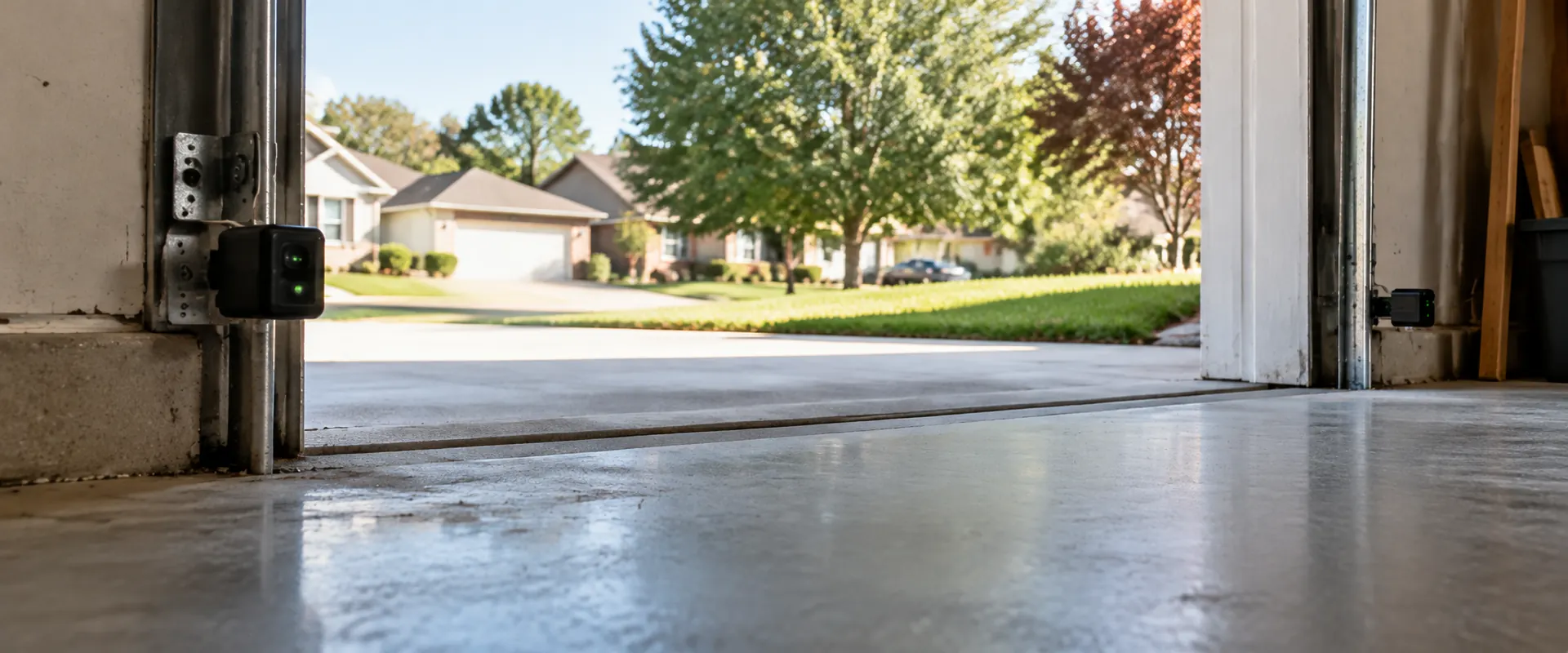
The sensors are the two small units near the floor on either side of the door. They are also the most important safety feature on the opener, which is why the door stops working rather than taking a chance. This page explains what the sensor lights mean, the checks you can make safely, why sensors misbehave here in particular, and when a technician is the right answer.
Door will not close? Check the sensors first
- Look at the lights on both sensors. If one is off or blinking, the beam is not getting through.
- Clear anything in the beam’s path, even a cobweb or a leaf.
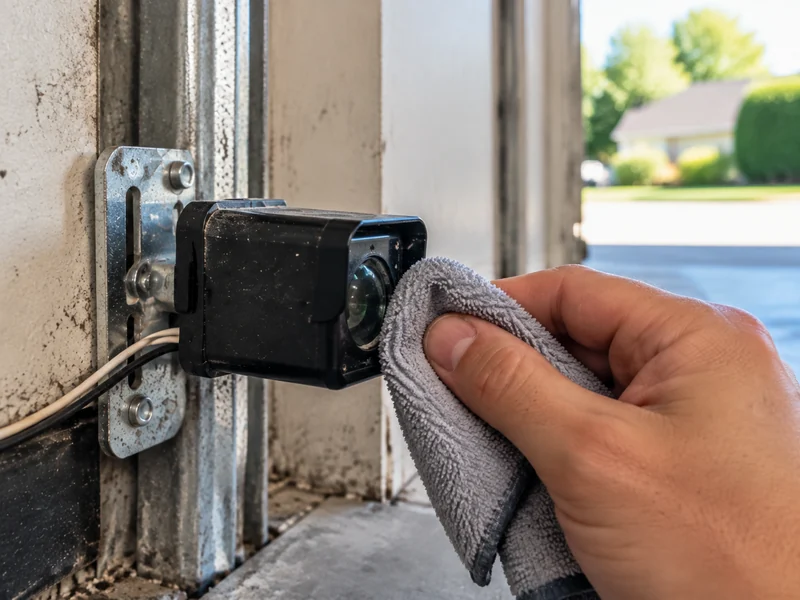
- Wipe both lenses with a soft, dry cloth.
- Hold the wall button down. If the door closes while you hold it, the sensors are the problem, not the opener.
- Check the time of day. If it only fails in the late afternoon, sun on the sensor is the likely cause.
Signs a garage door sensor is failing
- The door closes a few feet, then reverses back to the top, with nothing in the way.
- One sensor light is off or blinking while the other is steady.
- The opener’s own light flashes several times when you try to close the door.
- It fails in the afternoon and works at night, a classic sign of sun glare.
- It works one day and not the next, often after rain, a dust storm or a hot spell.
- The door closes only while you hold the wall button down. That is the clearest sign of all: the opener is fine, the sensor circuit is not.
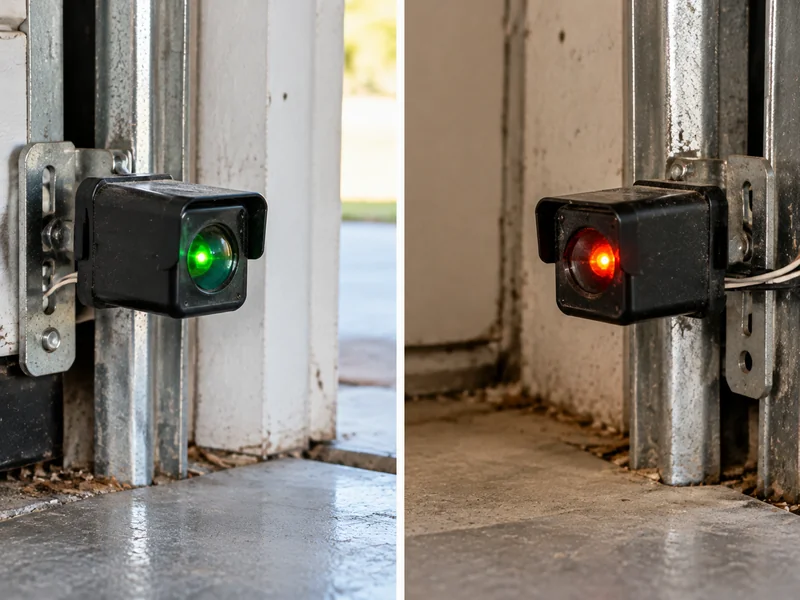
Sensors are a pair: a sending unit that projects an invisible infrared beam across the door opening, and a receiving unit on the other side. If the receiver loses the beam for any reason, the opener assumes something is in the way and refuses to close, or reverses if it is already moving. That is exactly what it is supposed to do.
What the sensor lights are telling you
Colours vary by opener, but most sensor pairs follow the same logic: the sending unit shows that it has power, and the receiving unit shows that it can see the beam.
| What you see | What it usually means | What to try |
|---|---|---|
| Both lights steady | Power and alignment are fine | Look elsewhere: travel limits, a binding door or the close force setting |
| Receiver light off, dim or blinking | The beam is blocked or misaligned | Clear the path, wipe both lenses, re-aim the receiver until its light is steady |
| Sender light off | No power reaching that sensor | Check the wire at the sensor and along the wall for a break or staple through it |
| Both lights off | Wiring fault, or a problem at the opener’s terminals or board | Check the connections at the opener head; if they look fine, it is a repair job |
| Lights fine, but fails in late afternoon | Sunlight overwhelming the receiver | Shade the receiver or swap the sensors to opposite sides |
Safe checks you can do yourself
- Clear the path. Move bins, boots, a broom, even a spider web. Anything in the beam counts.
- Clean both lenses with a soft, dry cloth. Dust from Canyon County fields builds up faster than you would think.
- Check alignment. If a bracket has been knocked, loosen the wing nut, aim the receiver at the sender until its light goes steady, then tighten it.
- Follow the wires from each sensor up the wall. Look for a staple pinching the wire, a cut from a shelf, or chewing by mice.
- Test the fix. Close the door and wave a broom handle through the beam. The door should stop and reverse.
These checks solve a large share of sensor complaints. If the lights are steady and the beam test works but the door still reverses near the floor, the problem is probably the opener’s travel limit or force setting, or a door that binds. That calls for a technician, because force settings are part of the safety system.
Why sensors act up in Nampa
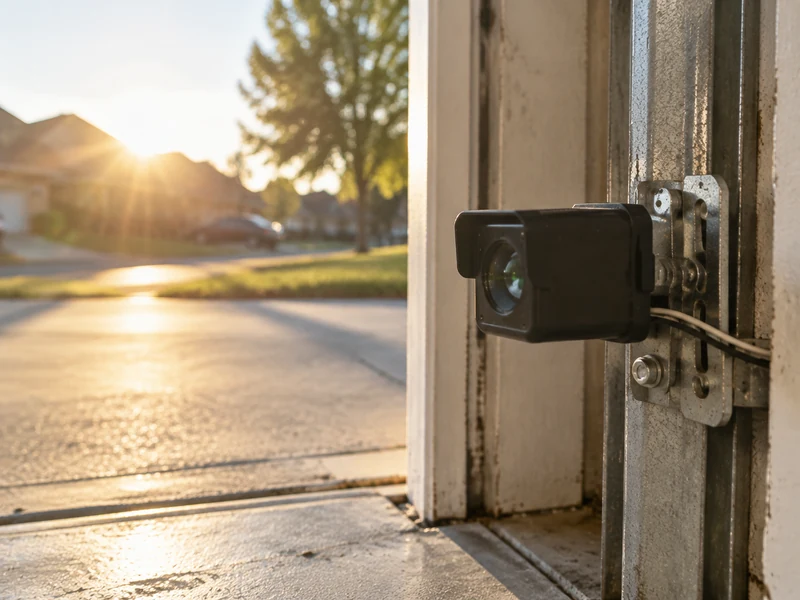
Low afternoon sun. Nampa gets roughly 210 sunny days a year, according to the City of Nampa climate summary. On west-facing garages, the late sun drops low enough in summer to shine straight into the receiving sensor. The infrared beam gets drowned out and the door will not close until the sun moves. Shading the receiver with a short tube or hood, or swapping the sender and receiver so the receiver faces away from the sun, usually fixes it for good.
Dust and storms. Dry summers, farm dust and spring windstorms coat lenses quickly. A dusty lens works until the day it does not.
Mice and wiring. Homes near farmland on the edges of Nampa see more field mice moving indoors as the weather cools, and thin low-voltage sensor wire running along the garage floor is an easy target. A chewed wire produces intermittent faults that are maddening to track down. A worn bottom seal is often how they get in; see garage door weather seal replacement.
Bumps and snow. Sensors sit about 4 to 6 inches off the floor, right where shovels, bikes and car tyres pass. A knocked bracket is one of the most common causes of a door that suddenly will not close, and in winter a ridge of shovelled snow or ice can block the beam.
New homes, old homes and sensor quirks
Newer subdivisions. In many Nampa homes built since 2010, the sensor wires were run quickly along the wall during construction and fixed with staples. Over a few years, settling, shelving and the odd stapler mishap nick the insulation, and the result is a sensor that works most days and fails on others. Sensors bolted to thin track brackets also drift out of line as the tracks flex, so a door that closed perfectly when the house was new can start reversing by year five.
Older homes. Around downtown and the Old Nampa area, some garages still run openers older than 1993, built before photo-eyes were required. They will not have sensors at all, or will have an early design that is hard to service. If your opener has no sensors, the fix is not to add a workaround; it is to plan for garage door opener installation so the door has modern protection.
Shop and RV doors. Tall doors on acreage shops often have sensors mounted further apart and closer to gravel or dirt floors, where dust and stones are constant. Mount them on solid brackets and clean them more often than you would in an attached garage.
When it becomes a repair job
Some sensor problems need a technician: a sensor that will not light even with good wiring, wiring damaged inside a wall, a fault at the opener’s terminals or logic board, sensors that will not hold alignment because the bracket or track is bent, or a door that reverses near the floor because of limit and force settings. Sensor units are matched to the opener, so replacements need to be compatible with yours.
A technician will test the circuit, replace damaged wire or sensors, mount them firmly at the right height, set the travel limits and close force, and finish with the photo-eye test and the 2×4 reverse test. If the opener is very old, they may also suggest looking at a new opener, since some older units have poor sensor circuits or none at all.
Expect a written price before any parts are replaced, and ask to see the damaged wire or failed sensor. It takes a minute and tells you the repair was needed.
Why you should never bypass the sensors
It is tempting to tape the sensors together, mount them up near the ceiling or jumper the wires so the door just closes. Please do not. The CPSC garage door safety guidance has counted about 73 children trapped and killed under automatic garage doors since 1982, and photo-eyes mounted 4 to 6 inches off the floor were required on new openers from 1993 precisely to stop that. A sensor mounted high will not see a small child or a pet.
If you need to close the door while waiting for a repair, holding the wall button down closes most openers while you stand and watch. That is an attended override, not a fix, and it is the right way to get through a day or two.
Garage door sensor repair, Nampa: common questions
How do I know if my garage door sensor is broken?
If the door reverses with nothing in the way, a sensor light is off or blinking, and the door closes only while you hold the wall button, the sensor circuit is the likely problem. Clean and realign first; if the lights still will not go steady, a sensor or wire may have failed.
Should both garage door sensor lights be green? What does a red light mean?
Colours vary by opener. Typically one light shows power and the other shows the beam is received. A light that is off, dim or blinking on the receiving side usually means misalignment or a blocked beam. Check your opener manual for its exact colour code.
How do I fix my garage door sensors?
Clear the beam path, wipe both lenses, re-aim the receiving sensor until its light is steady, and check the wires along the wall. If sunlight is the problem, shade the receiver. If none of that works, the wiring, sensors or opener need a technician.
What is the most common cause of garage door sensor failure?
Misalignment from a knocked bracket, followed by dirty lenses and blocked beams. In Nampa, low afternoon sun on west-facing garages is another very common cause, along with wires damaged by mice or staples.
How long do garage door sensors last?
The sensors themselves often last as long as the opener, around 10 to 15 years or more. Wiring and alignment problems are far more common than sensors wearing out.
Will a garage door open without sensors?
Most openers will still open with a sensor fault, but they will not close by remote. You can usually close the door by holding the wall button down and watching it all the way to the floor.
Can you bypass garage door sensors?
You should not. The sensors are a required safety feature that stops the door closing on children, pets and people. Use the wall button override while waiting for a repair rather than disabling the system.
Are garage door sensors universal?
Not really. Sensors are matched to the opener’s circuit, and many brands use different signals and wiring. A replacement pair needs to be compatible with your specific opener.
Can I replace garage door sensors myself?
A handy homeowner can sometimes swap a compatible pair, but alignment, height, wiring and the follow-up safety test all have to be right. If force or limit settings also need adjusting, have a technician do it.
Related garage door problems
Related problems people often run into at the same time:
Opener repair
The motor hums, clicks or does nothing at all. How to tell an opener fault from a door fault.
Weather seal replacement
Daylight, drafts, dust or mice under the door, and seals frozen to the slab in January.
Tune-up and maintenance
Balance, lubrication, hardware and safety checks that catch failures before they strand you.
Not sure which one you are dealing with? The Nampa garage door repair overview walks through every common failure and the safe first steps for each.
Sources: sunshine and climate from the City of Nampa climate summary; sensor height, child safety data and testing from the CPSC garage door safety guidance; requirements from the federal garage door opener standard (16 CFR 1211).