
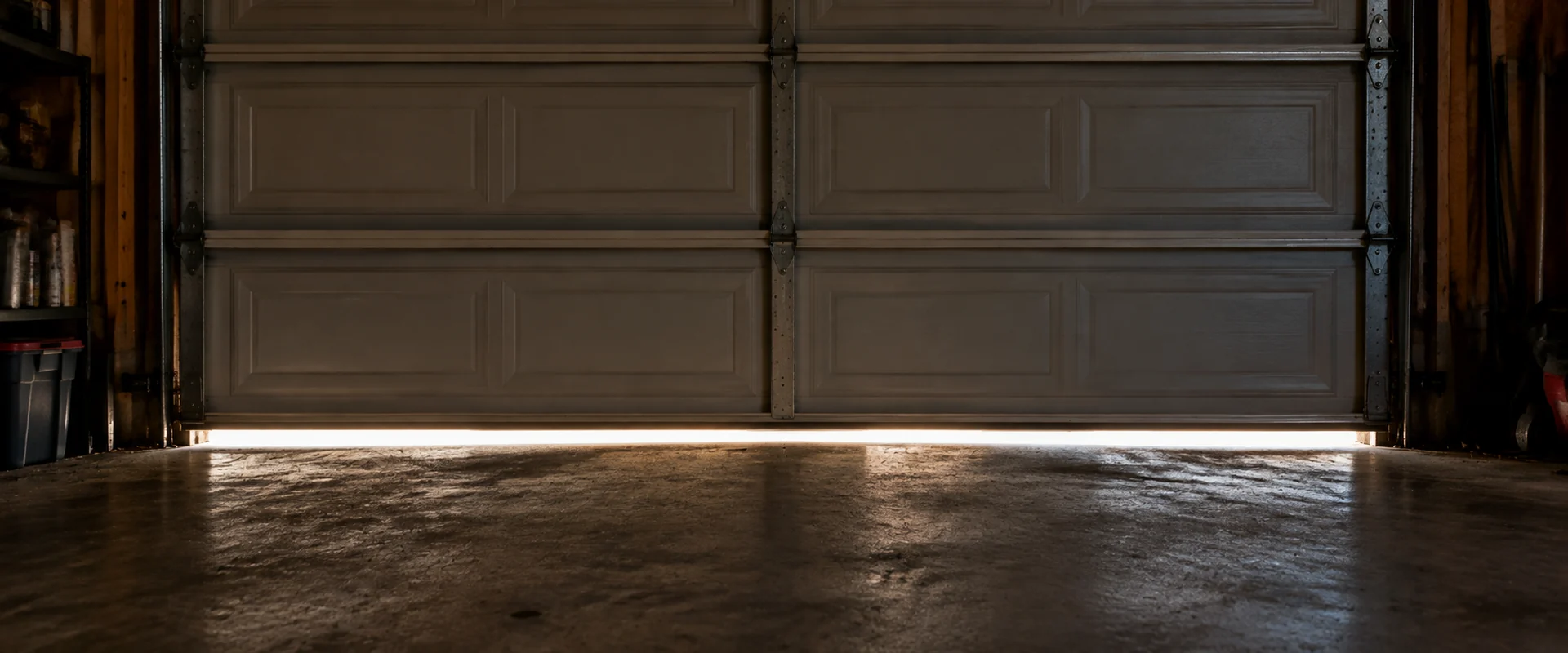
Kestrill Garage Door Repair Nampa
Garage Door Weather Seal Replacement in Nampa
Light under the door, cold drafts, dust drifts, mice or a seal frozen to the slab? Which seal you have, which one to replace, and how to deal with an uneven floor.
Kestrill is a referral service. We connect Nampa homeowners with independent local garage door companies and do not carry out repairs or installations ourselves.
A worn garage door weather seal, Nampa homeowners soon discover, lets in a lot more than cold air. Through a gap barely wider than a pencil come dust from the fields, water from melting snow and, every autumn, mice looking for somewhere warm.
Seals are also one of the few garage door parts that wear out on a calendar rather than a cycle count, because sun, heat and freezing nights do the damage whether the door moves or not. This page shows how to spot a failed seal, explains the different types, and covers uneven floors, mice and frozen doors.
Door frozen to the floor? Do this first
- Stop pressing the button. The opener will strain, reverse or tear the seal off.
- Warm the seal with a hair dryer, or pour warm (not boiling) water along the bottom edge.
- Ease it loose with a plastic scraper, never a metal blade or a chisel.
- Clear the threshold of water, ice and slush, and dry it if you can.
- Run the auto-reverse test afterwards, and check the seal for tears.
Signs your garage door seal has failed
- Daylight along the bottom of the closed door, or at the sides and top.
- Cold drafts in winter and hot air in summer, especially in a garage shared with a laundry room or a bedroom above.
- Dust drifts inside the door after a windy day.
- Water or meltwater running in under the door.
- Mouse droppings along the walls, or chewed corners on the bottom seal.
- A seal that is cracked, flattened, torn or hard instead of soft and flexible.
- The door freezing to the floor on cold mornings.
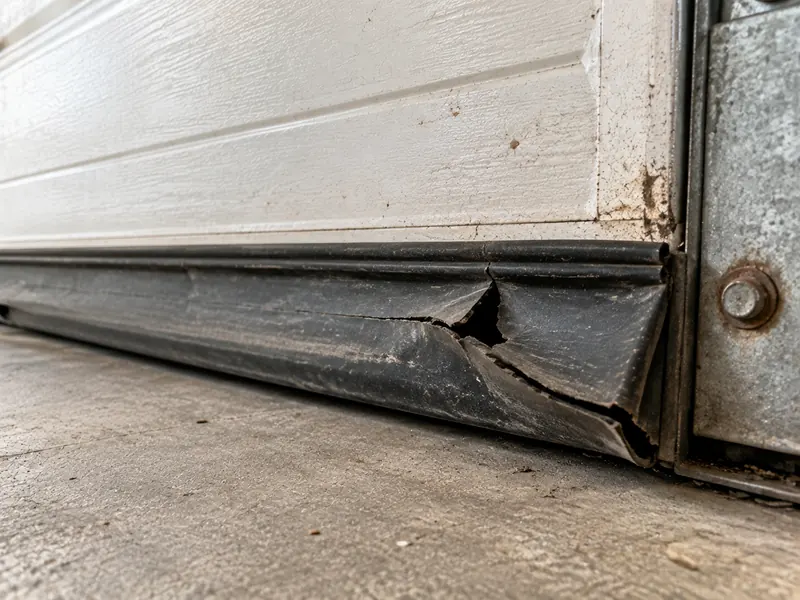
The quickest test: on a sunny afternoon, close the door, turn off the garage lights and look along the bottom and sides. Every line of light is a gap that wind, dust, water and mice can use.
Why seals wear out fast in Nampa
Rubber and vinyl seals have a hard life in the high desert. Nampa throws nearly every kind of stress at them in a single year:
- Freeze and thaw. About 108 nights a year fall to freezing or below, per the NOAA 1991–2020 normals for the Boise Air Terminal station. Meltwater refreezes at the threshold, glues the seal to the slab and tears it when the door opens.
- Damp winters. Humidity runs near 67 percent in January, so seals stay wet and cold for weeks at a time.
- Summer heat and sun. Around 55 days a year reach 90°F or more and the city averages about 210 sunny days, according to the City of Nampa climate summary. UV and heat dry out rubber until it cracks.
- Dust. Windy spells in spring and dry summers push fine dust under any gap. A worn seal lets it pile up inside.
- Field mice. Homes on the edges of Nampa back onto farmland in the most farmed county in Idaho. As fields are harvested and nights cool, mice look for warm gaps, and a chewed bottom seal is an open door.
In practice, many Nampa doors need a new bottom seal every few years, sooner on south and west-facing garages.
Types of garage door seals
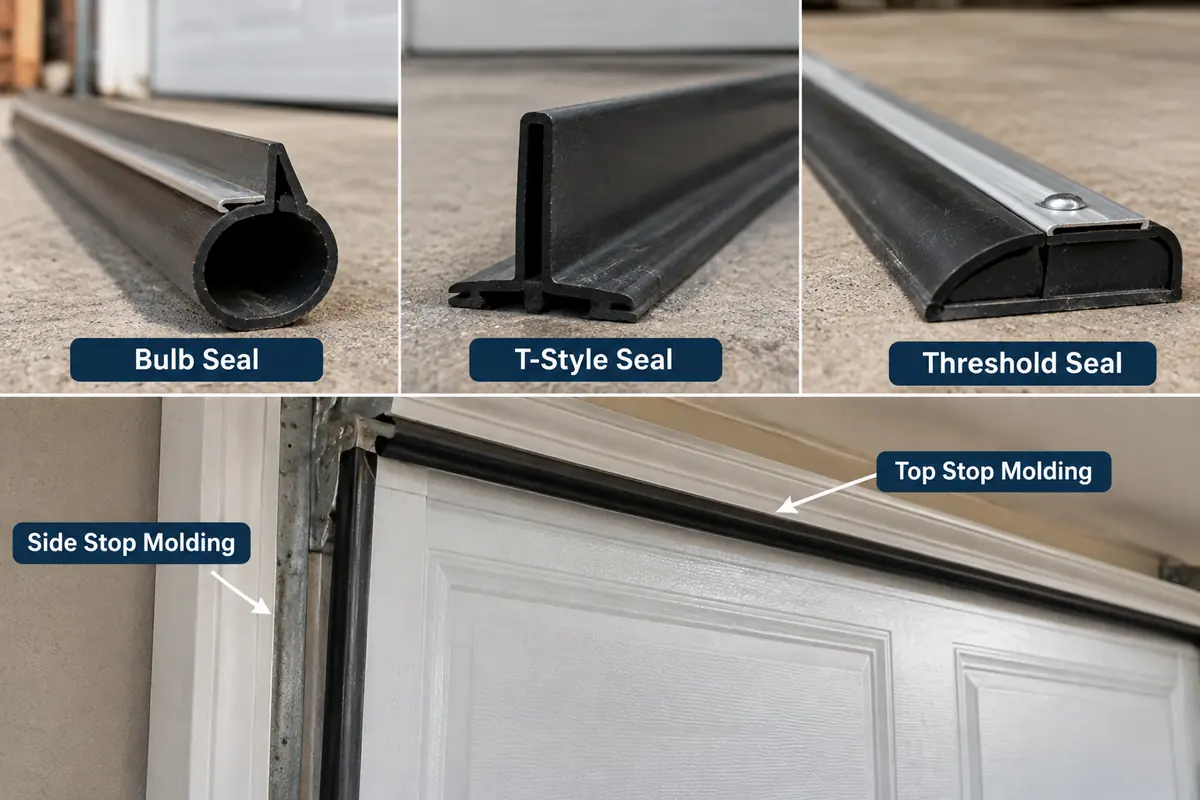
A garage door has seals in up to four places, and each has its own job. Knowing which you have makes it far easier to get the right replacement.
| Seal | Where it goes | What it does |
|---|---|---|
| Bottom seal (bulb, T-style or beaded) | In a retainer channel along the bottom edge of the door | Closes the gap between door and floor; takes the most wear |
| Bottom retainer | The aluminium or steel channel holding the bottom seal | Single or double channel; must match the seal’s edge shape |
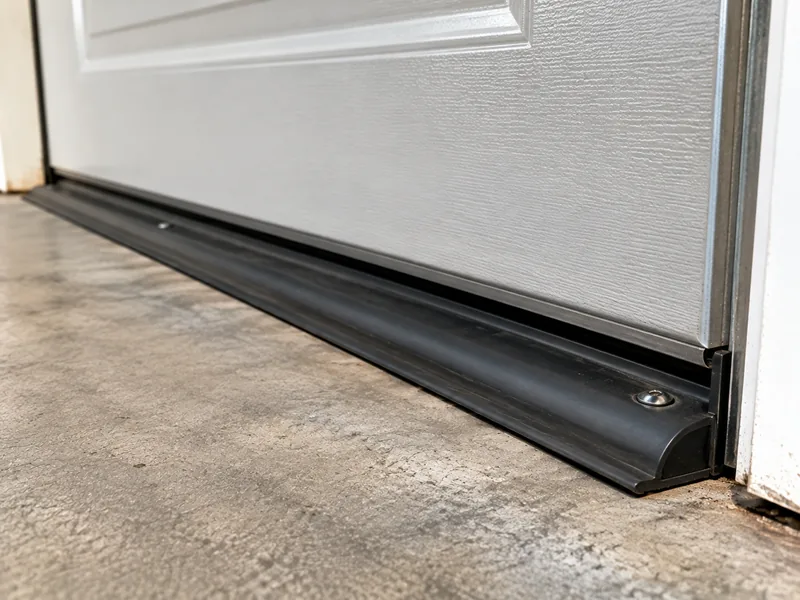
| Threshold seal | Glued to the concrete under the door | Raises the sealing line and blocks water; handy on uneven floors |
| Side and top seals (stop molding) | Nailed or screwed to the door frame around the opening | Seal the sides and top when the door is closed |
| Section joint seals | Between sections on some insulated doors | Stop drafts through the joints |
Bottom seals come in vinyl and rubber. Vinyl is common and less expensive but stiffens in the cold. Rubber, especially EPDM, stays flexible in a Nampa January and handles summer UV better, which is why many technicians favour it here. The edge profile of the seal has to match the retainer channel, so measure the width of the door and take a photo of the end of the old seal before ordering anything.
Uneven concrete and gaps under the door
If light shows at one end of a closed door but not the other, the slab is probably uneven, or it has settled or worn at the threshold over the years. A standard bottom seal can only compress so far, so it seals at the high point and leaves a gap at the low point.
Options, roughly from simplest to most involved: a taller bulb-style bottom seal that can fill a bigger gap; a threshold seal glued to the slab; both together; and, where the slab has heaved or spalled badly, concrete repair. What you should not do is lower the opener’s close limit to force the door down harder. That can bend the bottom section and weaken the safety reversal.
Keeping mice out of the garage
Autumn is when this matters most. As fields around Nampa are harvested and nights drop toward freezing, mice move toward buildings, and an attached garage with a gap under the door is the easiest way in. A mouse can squeeze through a gap about the width of a pencil. The usual entry points on a garage door are a chewed or curled corner of the bottom seal, the gap where the bottom seal meets the side stop molding, and cracked side seals. To close them:
- Replace a chewed bottom seal rather than patching it. Mice return to the same spot.
- Make sure the bottom seal runs the full width of the door, right to each corner.
- Check the side and top seals are tight to the door along their full length.
- Add a threshold seal if the slab is uneven and a gap remains at one end.
- Keep bird seed, pet food and grass seed in sealed containers, so there is less to attract them.
If mice have also chewed the low-voltage wires to the safety sensors, you may notice the door refusing to close. The sensor repair page covers that.
Bent or rusted bottom retainer
Sometimes the seal is fine and the channel holding it is the problem. Steel retainers rust in Nampa’s meltwater; aluminium retainers bend when the door comes down on ice or a stray object. A damaged retainer will not hold a new seal properly, and the seal slips out at the ends.
Replacing a retainer means working along the bottom section, close to the bottom brackets that hold the lift cables under spring tension. Swapping a seal strip into a sound retainer is a manageable job; replacing the retainer itself, or anything near the brackets, is better left to a technician. If the bottom section is also rusted or cracked, see garage door panel repair.
Will a new seal make the garage warmer?
Noticeably, if the old seal was letting daylight through. On a January night near 21°F, a half-inch gap along a 16-foot door is a long, thin vent, and it is often the main reason a garage feels as cold as outside. Sealing it helps any room that shares a wall with the garage, and it keeps a garage freezer or a water heater from working quite so hard.
A seal can only do so much on its own, though. A thin, uninsulated steel door still lets heat through its face, and the joints between sections leak air on some older doors. If the garage stays uncomfortable after new seals go on, the door itself may be the weak point. The garage door installation page explains how insulated doors compare.
In summer, the same logic runs in reverse. A sealed, insulated door keeps the afternoon heat out of an attached garage, which matters on the 55 or so days a year that reach 90°F.
What a seal replacement involves
- Checks the door’s balance and how it meets the floor, and identifies the retainer and seal profile.
- Opens the door to a comfortable working height and secures it so it cannot move.
- Slides out the old bottom seal, cleans the retainer channel and checks it for damage.
- Slides in the new seal, trims it to length with a little extra at each end, and crimps or fastens the ends so it stays put.
- Replaces worn side and top stop molding if needed, set so it touches the closed door without dragging.
- Closes the door, checks for light along every edge, adjusts the opener’s close limit if needed and runs the auto-reverse test.
Doing this in October, before the first hard freeze, means fewer frozen-door mornings, a warmer garage and fewer mice moving in for the winter. It pairs well with a garage door tune-up in the same visit.
Garage door weather seal, Nampa: questions and answers
What are the seals around a garage door called?
The strip along the bottom of the door is the bottom seal, held in a retainer. The seals on the frame at the sides and top are called stop molding or perimeter seals. A seal glued to the concrete under the door is a threshold seal.
How do I tell which garage door bottom seal I have?
Look at the end of the old seal where it slides into the retainer. The edge shape, such as a T, a bead or a flat edge, and whether the retainer has one or two channels decide which replacement fits. Measure the door width and take a photo of the profile.
How often should garage door seals be replaced?
In Nampa, bottom seals often need replacing every few years, sooner on south or west-facing doors and wherever the door freezes to the slab. Replace them whenever you see light, cracks, flattening or chew marks.
Do you have to remove the garage door to replace weather stripping?
No. The bottom seal slides out of its retainer with the door raised to a working height and secured, and side and top seals are fixed to the frame. The door stays in place.
Is vinyl or rubber better for a garage door bottom seal?
Rubber, especially EPDM, usually performs better in Nampa because it stays flexible in freezing weather and resists summer UV. Vinyl costs less and works, but it stiffens in the cold and cracks sooner.
Which garage door seal works for an uneven floor?
A taller bulb-style bottom seal handles moderate gaps. For larger or uneven gaps, add a threshold seal on the concrete. Badly heaved or broken concrete may need repair before any seal will close the gap.
How hard is it to replace garage door weather stripping?
Swapping a bottom seal strip into a sound retainer is one of the easier garage door jobs. Replacing a bent or rusted retainer, or any work near the bottom brackets, involves spring tension and is a job for a technician.
Related garage door problems
Related problems people often run into at the same time:
Panel repair and replacement
A dent from a bumper, a cracked bottom section or wind damage. Repair one section or the door?
Tune-up and maintenance
Balance, lubrication, hardware and safety checks that catch failures before they strand you.
Sensor repair
The door starts down, then pops back up. Sun, dust and alignment are the usual suspects.
Not sure which one you are dealing with? The Nampa garage door repair overview walks through every common failure and the safe first steps for each.
Sources: temperature, humidity and sunshine from the NOAA 1991–2020 normals for the Boise Air Terminal station and the City of Nampa climate summary; farm statistics from the Idaho Business Review; safety guidance from the CPSC garage door safety guidance.