Why Is My Garage Door Crooked?
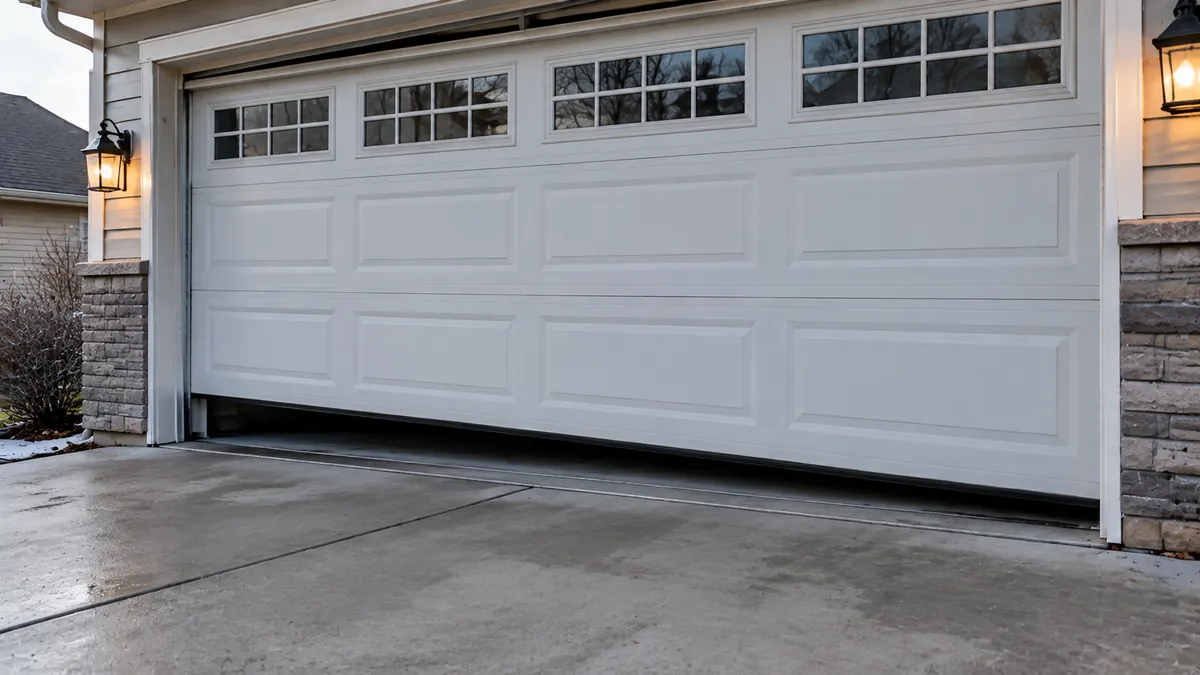
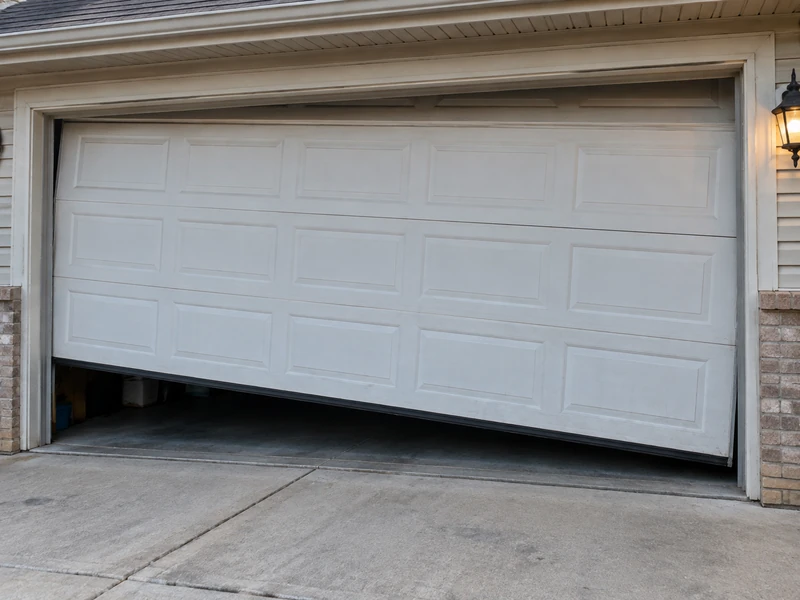
Why is my garage door crooked? In most cases a lift cable has slipped off its drum or snapped on the low side, or one spring of a pair has broken. Either way, the door is no longer evenly supported, so stop using it and keep everyone clear.
This guide covers what to do right now, the five usual causes, how to tell them apart, why straightening it yourself is a bad idea, what the repair involves and why crooked doors are so common on older Nampa homes.
First: stop and keep clear
A crooked garage door is a door that has lost the even support it was designed around. Each side normally hangs on a steel lift cable wound onto a drum at the top, and both cables are held taut by the springs. When one side drops, something in that system has failed, and the next movement can pull rollers out of the track or let the low side fall further.
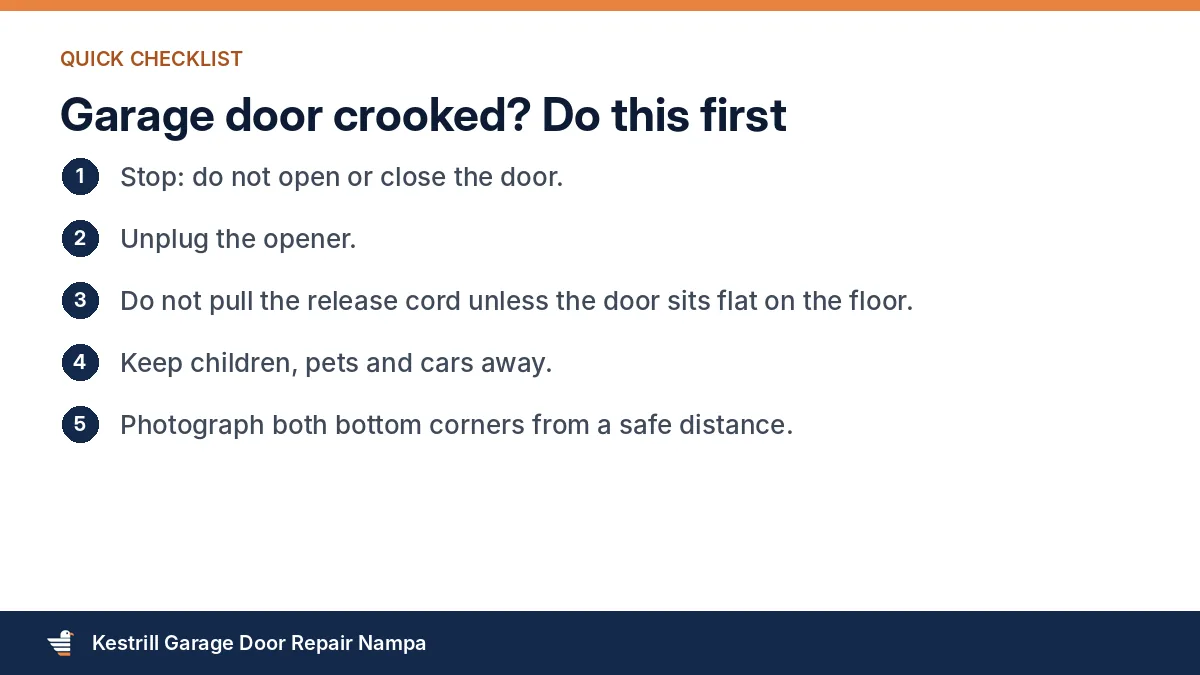
- Do not open or close it, by remote, wall button or hand.
- Unplug the opener so nobody runs it out of habit.
- Do not pull the release cord unless the door is fully closed and resting on the floor along its whole width.
- Keep children, pets and cars away, especially if the door is open or hanging partway.
- Take a photo from a safe distance of each bottom corner and the top of the door; it helps the technician bring the right parts.
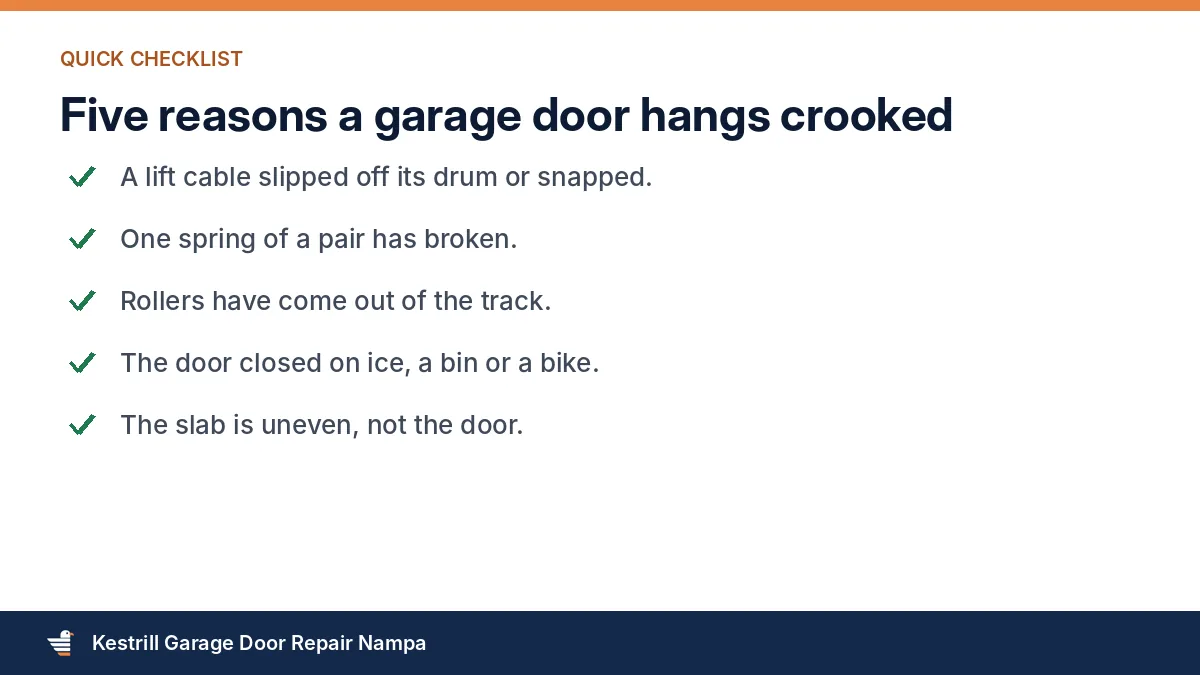
Why is my garage door crooked? Five causes
1. A slipped or snapped lift cable
The most common cause. If a cable slips off its drum or snaps, that side of the door loses its lift and drops. You will usually see the cable hanging slack, looped beside the track, or unwound at the top corner. Cables are often replaced in pairs because they wear at the same rate; the garage door cable repair page explains why.
2. One spring of a pair has broken
On doors with two torsion springs, one breaking leaves the door unevenly supported, so it rises crooked or tilts as it moves. Look at the bar above the door for a gap in one coil. On older doors with extension springs along the tracks, one stretched or broken spring causes the same tilt.
3. The door is coming off its track
A roller out of the track lets one side twist or drop. It often follows a car bumping the door, a cable failure or worn rollers climbing out. You will see rollers outside the rail and the door twisted in its opening. Treat it as the most dangerous version of a crooked door and see off-track repair.
4. Something under one side
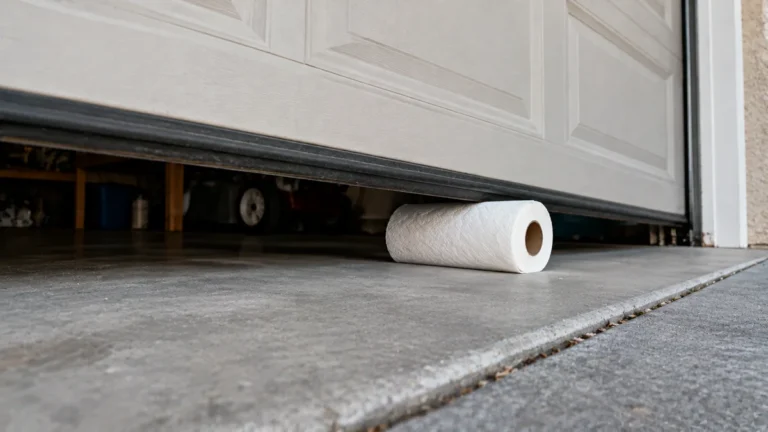
A door that closed on a bin, a bike wheel, a ridge of ice or a lump of packed snow stops on that side while the other keeps going. The cable on the blocked side goes slack and can jump its drum. In a Nampa winter, ice at the threshold is a regular culprit.
5. The slab, not the door
Sometimes the door is level and the floor is not. If the door closes with a gap at one end but moves smoothly and evenly, the concrete may be uneven or worn at the threshold. That is a seal problem rather than a hardware fault, covered on the weather seal page.
How to tell which one you have
| What you see | Most likely cause |
|---|---|
| A cable slack or off the drum on the low side | Slipped or snapped cable |
| A gap in one spring above the door | Broken spring |
| Rollers outside the track, door twisted | Off track |
| Something under the low corner | Obstruction, often followed by a slipped cable |
| Door moves evenly but leaves a tapered gap at the floor | Uneven slab or worn seal |
Why you should not straighten it yourself
It is tempting to rewind a slipped cable or lever the low side up. Please do not. The cables are held under spring tension, the bottom brackets that anchor them are dangerous to loosen, and re-seating a cable means unwinding the springs first. The CPSC garage door safety guidance recommends having unbalanced doors serviced by a professional, and a crooked door is the clearest example of one.
Why waiting makes it worse
A crooked door rarely stays the same. Every time it moves, the low side drags on its track and the high side carries more than its share of the load. The remaining cable, already the same age as the one that failed, takes the full strain. Rollers on the low side twist in their hinges and can climb out of the track. Hinges between sections bend. A repair that would have been two cables and a rebalance on Monday can become cables, rollers, a track section and a bent panel by Friday.
If the door has to stay shut for a day or two, that is fine. Lock the interior door to the garage, unplug the opener, and resist the urge to “just try it once” to get the car out.
Crooked shop and RV doors
On acreage properties around Nampa and Lake Lowell, tall shop and RV doors use longer, heavier cables on bigger drums, and they face open fields and the full force of spring windstorms. When one side of a 12 or 14-foot door drops, the forces involved are much larger than on a house door, and the door can swing out of the opening entirely. Keep well clear, and when you arrange a repair, give the door’s height and width so the technician brings cables long enough to replace both sides.
What the repair usually involves
A technician secures the door with clamps, releases the spring tension, inspects the cables, drums, brackets and rollers, and replaces whatever failed, usually both cables together. They reseat the door in its tracks if needed, rewind the springs, set equal tension so the door hangs level, and test the balance, the opener settings and the auto-reverse. Ask for the price in writing first; it should list each part.
If the cause was ice or an obstruction, ask the technician to check that the opener’s close force is set correctly. An opener set to push too hard keeps driving a door that has hit something, which is how a minor snag becomes a slipped cable.
Why crooked doors are common in older Nampa homes
Cables last roughly 8 to 10 years. On the thousands of Nampa doors installed during the 2000s, many cables have never been replaced, and meltwater sitting at the threshold every winter rusts their bottom ends where they attach to the door. Add a cold-morning spring break or a door closing onto ice, and one tired cable gives way. Checking the bottom brackets for frayed strands a couple of times a year, and having cables looked at during a tune-up, catches most of these before the door drops.
After the repair
Watch the door for a few days. It should open and close evenly, meet the floor along its whole width and stay put when stopped halfway with the opener disconnected. If it starts drifting crooked again, stop using it and have the technician come back. A cable that slips twice usually points to a worn drum, a bearing or a bent track that was missed the first time.
Garage door crooked: quick answers
Why is my garage door crooked?
Usually because a lift cable slipped or snapped on the low side, or one of two springs broke. A door coming off its track, something under one corner, or an uneven slab can also make it look crooked.
Is it safe to use a crooked garage door?
No. The door is unevenly supported and can twist out of its tracks or drop further. Stop using it, unplug the opener and keep people and pets away until it has been repaired.
Can I fix a crooked garage door myself?
Not safely. Fixing it involves cables and brackets under spring tension and often unwinding the springs. That is a job for a garage door technician.
Why does my garage door close crooked but open fine?
If it moves evenly but leaves a tapered gap at the floor, the slab may be uneven or the seal worn. If it tilts as it moves, a cable or spring is more likely, and it should be checked.
How long does it take to fix a crooked garage door?
Replacing a pair of cables and rebalancing a standard door usually takes an hour or two. If rollers, track sections or springs also need replacing, or the door came off its tracks, it takes longer.
Will homeowners insurance cover a crooked garage door?
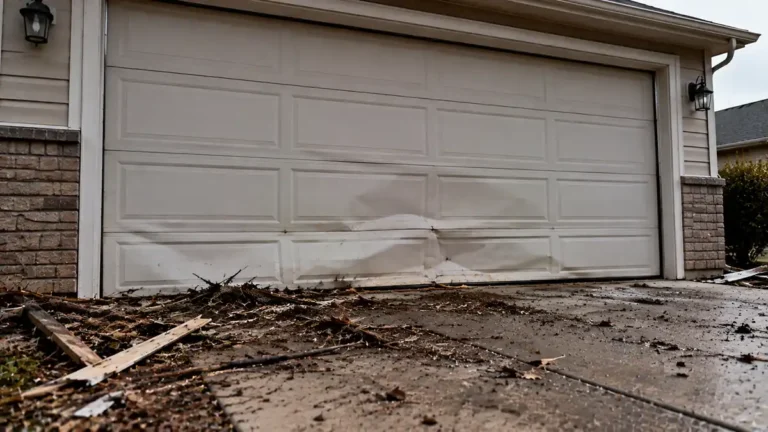
Wear and tear such as an old cable usually is not covered. Sudden damage, such as a vehicle impact or storm, may be. Check your policy and take photos before the repair.
Sources: safety guidance from the CPSC garage door safety guidance; housing ages from Census housing-age data for Nampa; winter weather from the City of Nampa climate summary.