
Kestrill Garage Door Repair Nampa
Garage Door Off Track Repair in Nampa
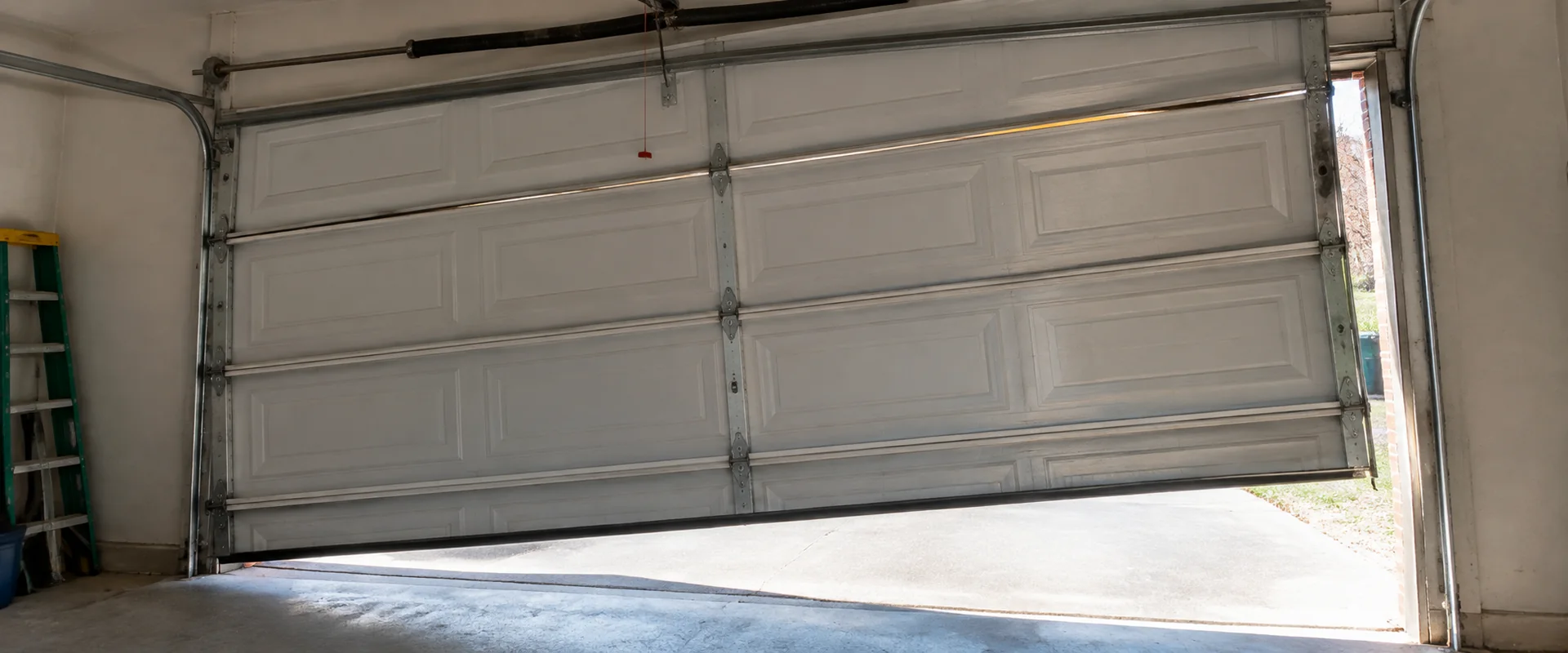
Rollers out of the rail, the door jammed at an angle or hanging in the opening? Stop there. An off-track door is one of the few garage door problems that can fall without warning.
Kestrill is a referral service. We connect Nampa homeowners with independent local garage door companies and do not carry out repairs or installations ourselves.
Garage door off track repair, Nampa homeowners should know, is the one job where “just push it back in” goes badly wrong. A door that has left its tracks is still held by springs and cables under heavy tension, but nothing is guiding where its weight goes.
This page covers the early warning signs, the most common causes in Nampa garages, why you should not try to fix it yourself, how a technician puts the door back safely, and what to do about a bent track so it does not happen again.
Off track? Do this first
- Stop. Do not open or close the door, by remote, wall button or hand.
- Unplug the opener so nobody runs it out of habit.
- Do not pull the red release cord. On an off-track door it can let the door drop or swing.
- Keep everyone away from the door and out from under it, including pets.
- Leave rollers, brackets and cables alone. Secure the house through the interior door instead, and wait for a technician.
Signs a door is coming off its tracks
Doors rarely jump the rails in one go. There are usually warnings first:
- A roller riding on the lip of the track instead of sitting inside the channel.
- A widening gap between the rollers and the track on one side.
- Scraping, shuddering or a grinding stop at the same point every time the door moves.
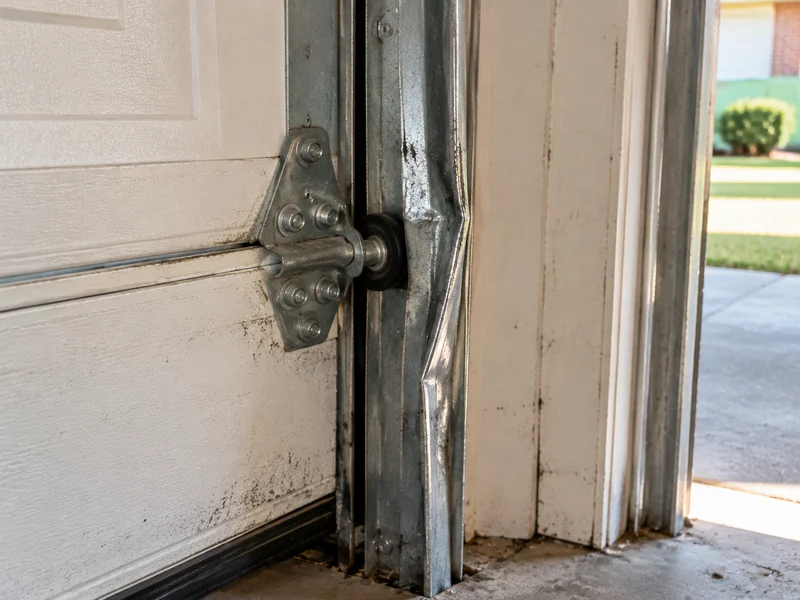
- A visible kink or dent in the vertical track, often low down where bumpers and bikes hit.
- Loose track brackets that rattle or let the track flex when the door moves.
- The door stops crooked, higher on one side, or binds partway.
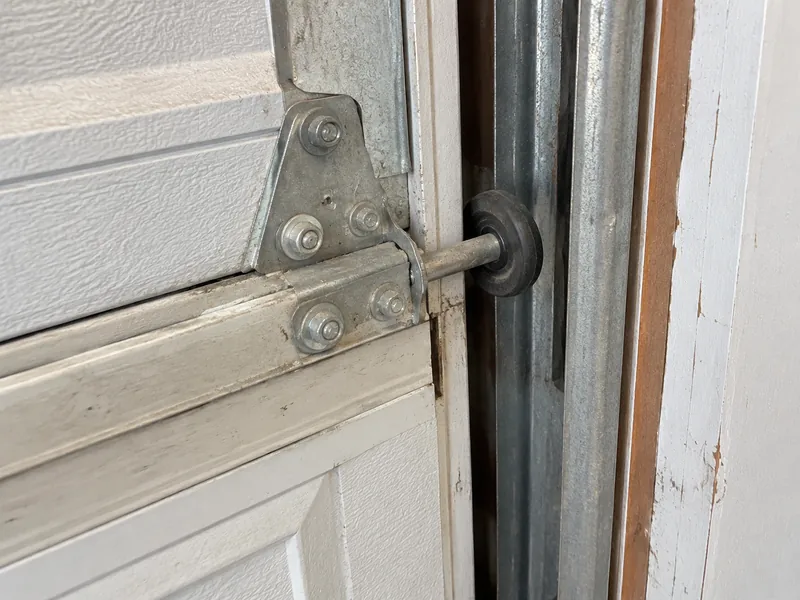
Once a roller is fully out, you will see it: one or more wheels sitting outside the rail, the door twisted in the opening, sometimes a section bowed inward. At that point the door is no longer held by anything designed to hold it.
What knocks a garage door off its tracks
- A vehicle. Backing out before the door is fully up, or nudging the door with a bumper, bends the bottom section and the track in one go. New teenage drivers are a classic cause.
- A snapped cable or spring. When one side loses its lift, that side drops and the rollers twist out of the rail.
- Worn or cracked rollers. Builder-grade steel rollers wear flat and wobble after a few years; a cracked roller can climb out of the track.
- Loose brackets. Years of vibration loosen the bolts holding the track to the wall, and the track slowly spreads apart.
- Something in the way. A bin, a bike wheel or a lump of ice in the track or under the door stops one side while the other keeps moving.
- Wind. A strong gust against a partly open or poorly braced door can push sections and rollers out of line.
- Too much opener force. An opener set to push hard will keep driving a binding door instead of stopping, forcing the rollers out.
Wind deserves a mention here. Late March is the windiest stretch of the year in Nampa according to the City of Nampa climate summary, and storm systems can bring gusts far above the average, often with dust. A tall door left partway open in a gust, or an older door with tired struts, can take damage in seconds.
Can you put a garage door back on track yourself?
Please do not try. An off-track door is still connected to springs and cables under heavy tension, but the tracks are no longer controlling where it goes. Prying a roller back in, hammering a track straight or running the opener to “pop it back” can release that tension suddenly, or bring a 150-pound door down at an angle. The CPSC garage door safety guidance recommends leaving unbalanced or binding doors to a professional, and an off-track door is the most extreme version of both.
What you can do is secure the house another way, keep the area clear, and take a few photos for the technician from a safe distance.
How a technician fixes an off-track door
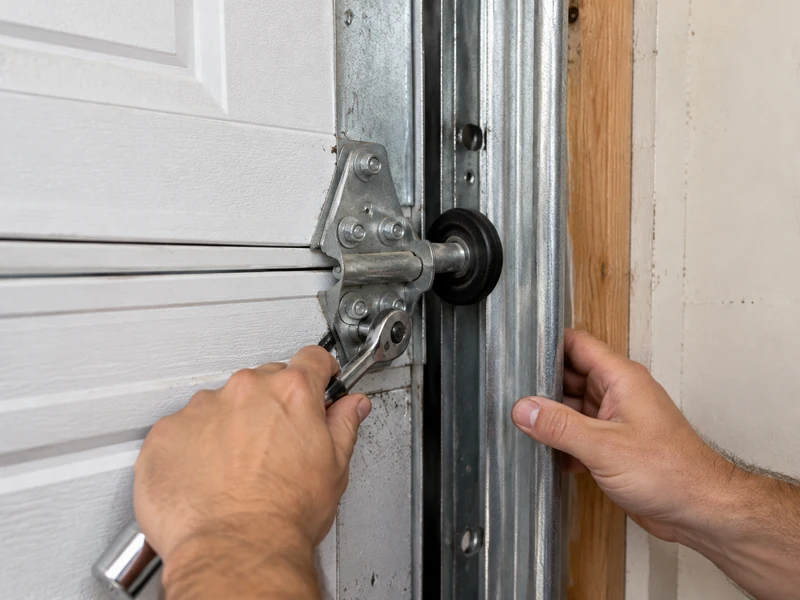
- Clamps and supports the door so it cannot fall or shift, and disconnects the opener.
- Releases the spring tension so the door can be handled without stored force.
- Removes damaged rollers and checks hinges and the bottom section for bends.
- Straightens minor track damage or replaces bent track sections.
- Reseats the rollers section by section, from the top down, and replaces any snapped or stretched cables.
- Plumbs and aligns both tracks, tightens or replaces the brackets, then rewinds the springs and balances the door.
- Tests manual travel, then reconnects the opener, resets its force and runs the auto-reverse test.
Because each off-track door is different, the time and parts vary a lot. A door with one roller out and no other damage is a much smaller job than a door hit by a car with bent sections, a creased track and a snapped cable. Ask for the price in writing once the technician has seen the damage.
While the door is apart, it is a sensible time to replace any remaining worn rollers and cracked hinges, since the labour of reaching them is already done. Ask the technician to point out which parts are genuinely worn and which are fine, so you can decide with the facts in front of you.
Bent track: repair or replace?
Tracks are thin galvanised steel, and they bend more easily than people expect. Whether a bent section can be straightened depends on how badly it is damaged:
| Damage | Usual approach |
|---|---|
| A small dent or slight bow, no crease | Often straightened and realigned |
| A sharp crease, twist or flattened channel | Replace that track section |
| Damage to the curved radius piece at the top | Replace; it is hard to reshape accurately |
| Rust-through or torn mounting holes | Replace the track and brackets |
| Both tracks bent after a vehicle impact | Replace both so the door runs evenly |
A track that has been hammered roughly straight may let the door run again, but rollers catch on any leftover ripple. If a door came off track once at a damaged spot, it will usually come off there again.
Why off-track doors are common in Nampa garages
A few local habits and conditions make this problem more common than it should be:
- Crowded garages. Two cars, bikes, a freezer and storage racks leave little room to spare, so bumpers and handlebars catch the track low down.
- Ageing rollers. On the 11,539 or so Nampa homes built between 2000 and 2009, many doors still run on their original steel rollers. Worn rollers wobble, and a wobbling roller is the one that climbs out.
- Windstorms. A spring windstorm that knocked out power to roughly 2,067 Idaho Power customers in downtown Nampa and 1,451 near the Karcher Mall, as KIVI reported, also caught plenty of doors left partway open.
- Ice ruts and grit. In winter, packed snow and ice at the threshold can stop one side of the door. In summer, dust and gravel build up in the bottom of the vertical tracks.
After the repair: what to watch for
A door that has been off track has usually been through a hard knock, so give it some attention for the first couple of weeks. Listen for new scraping or clicking at the spot where it came out. Check that the bottom edge still meets the floor evenly when closed. Run the photo-eye and 2×4 tests. If the door starts to bind or drift crooked again, stop using it and have the technician come back; a recurring problem usually means a bent section or a worn hinge was missed.
If insurance may be involved, photograph the damage before the repair, keep the written quote and the itemized invoice, and note the date and cause, such as a storm or a vehicle. Those three things make a claim much simpler.
Keeping your door on its tracks
- Replace worn steel rollers with sealed nylon rollers once they start to wobble or grind. See the noisy garage door repair page for the signs.
- Keep the tracks clean, not greasy. Wipe out dust and grit; grease in the track catches more of it. Lubricate the roller bearings and hinges instead.
- Check the track bracket bolts once or twice a year and snug up any that are loose.
- Watch the door close. Keep bins, bikes and ice clear of the door path and the tracks.
- Run the auto-reverse test monthly. A door that does not reverse on a 2×4 may also be set to push too hard.
- Close the door fully in high wind. A partly open door catches gusts like a sail.
Garage door off track repair, Nampa: questions and answers
What causes a garage door to come off its track?
The usual causes are a vehicle hitting the door, a snapped cable or spring, worn or cracked rollers, loose track brackets, something blocking the door path, strong wind and an opener set to push too hard. Often two of these combine.
How do you get a garage door back on its track?
A technician secures the door, releases the spring tension, replaces damaged rollers and straightens or replaces the track, then reseats the rollers section by section and rebalances the door. Because the door is under tension, it is not a homeowner job.
How do you get a garage door roller back in the track?
On a door that has come off track, a roller should only be reseated after the door is secured and the spring tension released, because forcing it can drop the door. If a single roller is wobbling but still inside the track, replacing it soon prevents it climbing out.
What if the cable came off along with the track?
That is common, because a slack cable and an off-track roller often go together. Both need fixing in the same visit. The garage door cable repair page explains how cables are reset and why pairs are replaced.
Can a handyman fix an off-track garage door?
It is better handled by a garage door technician. The job involves releasing and rewinding springs, which needs specific tools and training, and a mistake can drop the door or injure someone.
Can I keep using the door if only one roller has come out?
No. One roller out of the track means that section is no longer guided, and the next cycle can twist the door further or pull more rollers free. Stop using the door and the opener until the roller is reseated and the track checked.
How long does an off-track repair take?
A door with a roller or two out and no bent parts can often be fixed in an hour or two. A door hit by a car, with bent track, damaged sections and a snapped cable, can take considerably longer and sometimes needs parts ordered.
Does homeowners insurance cover a garage door knocked off its tracks?
Sudden damage, such as a windstorm or a falling branch, is often covered, while wear and tear is not. If a car hit the door, the driver’s auto policy may apply. Check your own policy and take photos before the repair.
Related garage door problems
Related problems people often run into at the same time:
Cable repair
One side hangs lower or a cable has jumped the drum. Why this one needs hands-off treatment.
Panel repair and replacement
A dent from a bumper, a cracked bottom section or wind damage. Repair one section or the door?
Noisy door, rollers and hinges
Grinding, squealing or a rattle that gets worse every month. Rollers, hinges and loose hardware.
Not sure which one you are dealing with? The Nampa garage door repair overview walks through every common failure and the safe first steps for each.
Sources: wind patterns from the City of Nampa climate summary; safety guidance from the CPSC garage door safety guidance.