Garage Door Frozen Shut? Safe Fixes for Nampa Winters
Garage door frozen shut on a cold morning? Stop pressing the opener, warm the bottom seal gently with a hair dryer or warm water, and ease it loose with a plastic scraper. Forcing it with the opener is how a ten-minute nuisance becomes a torn seal, a bent panel or a stripped opener gear.
Frozen doors are a regular part of Nampa winters. This guide explains why they freeze, what not to do, the safe way to release one, how to keep it from happening again and when a frozen door points to a bigger problem.
Why garage doors freeze shut in Nampa
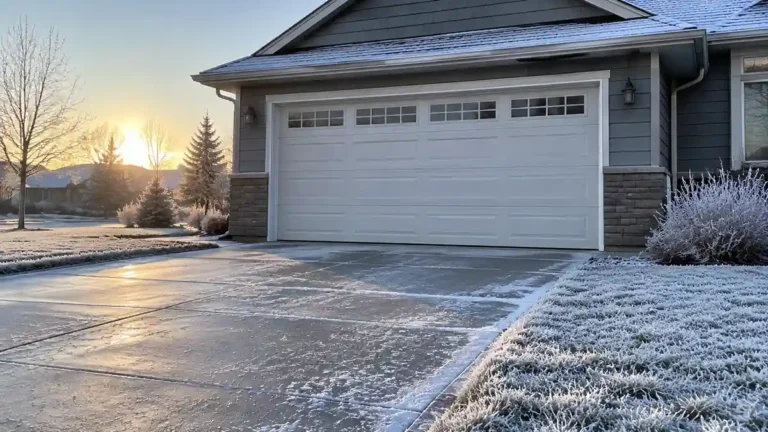
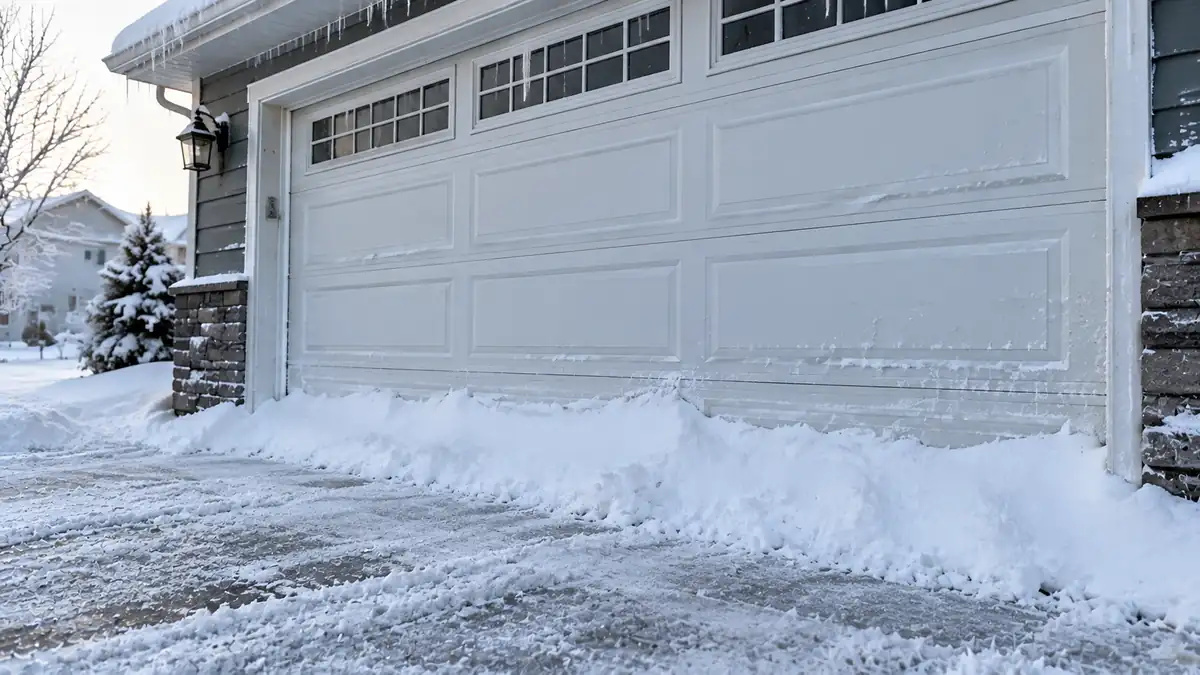
A garage door freezes shut for a simple reason: water gets between the rubber bottom seal and the concrete, then turns to ice overnight. In Nampa that water usually comes from one of three places. Snow melts off a warm car parked inside and runs toward the door. Snow or slush on the driveway melts in the afternoon sun and runs back under the door. Or a wet storm soaks the threshold before a hard freeze.
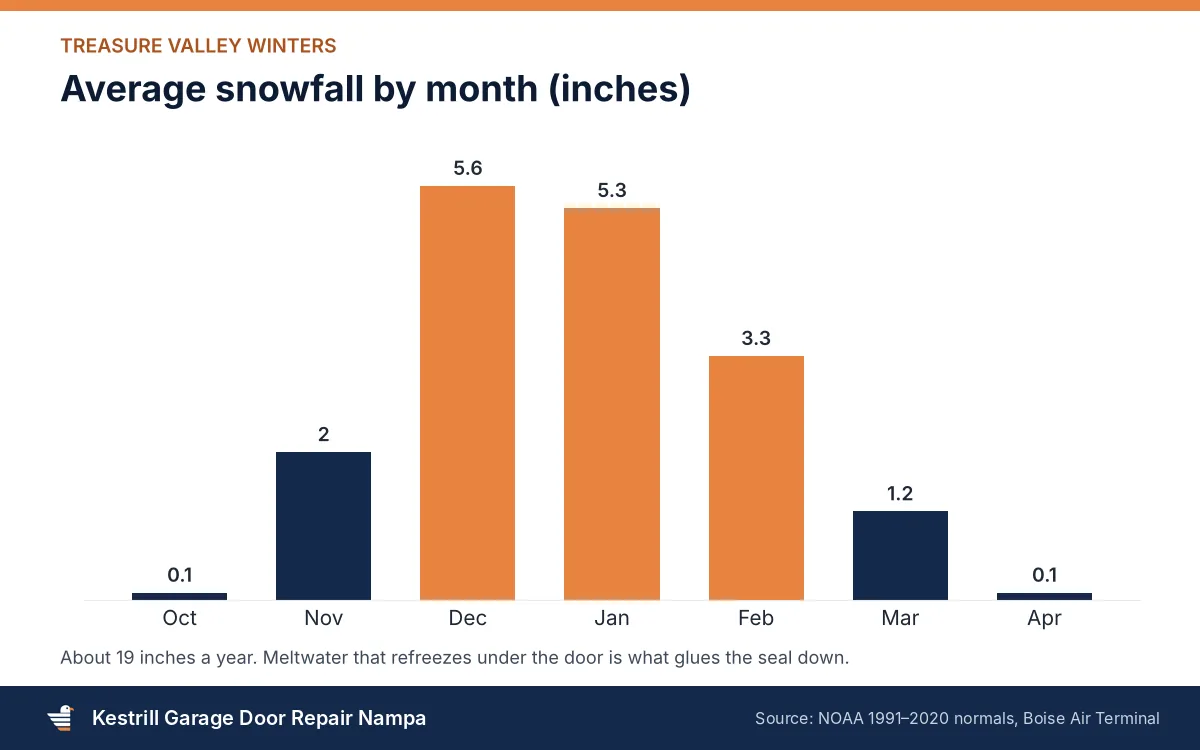
The Treasure Valley averages about 19 inches of snow a year and roughly 108 nights at or below freezing, so the conditions line up regularly from November through March. January humidity runs near 67 percent, which keeps melt and frost around longer than in the drier months. A cracked or flattened seal makes things worse, because water seeps into the gaps and freezes the seal in place more firmly.
What not to do
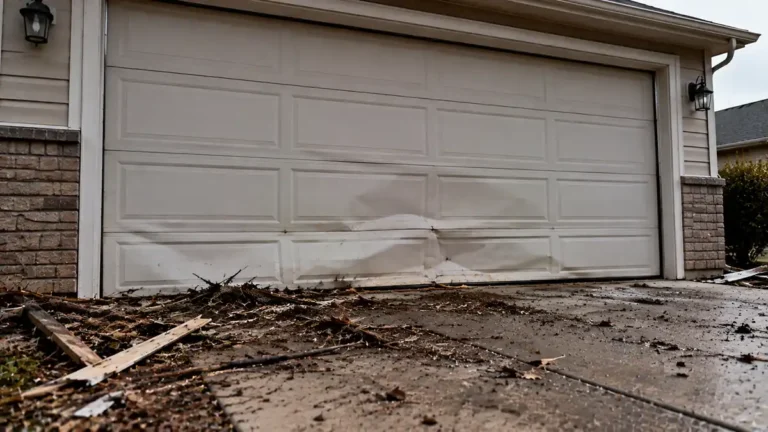
- Do not keep pressing the opener button. The opener will strain, reverse or keep pulling until something gives. That something is usually the seal, the top section of the door, or the opener’s own drive gear.
- Do not chip at the ice with a shovel, ice pick or metal scraper. It tears the seal, gouges the door and can damage the concrete.
- Do not pour boiling water along the bottom. It can crack cold concrete and refreezes into a thicker sheet of ice.
- Do not use a torch or open flame. It melts vinyl seals and is a fire risk next to a car and stored fuel.
- Do not raise the opener’s force setting to “power through” the ice. That weakens the safety reversal.
Safe fixes for a frozen garage door
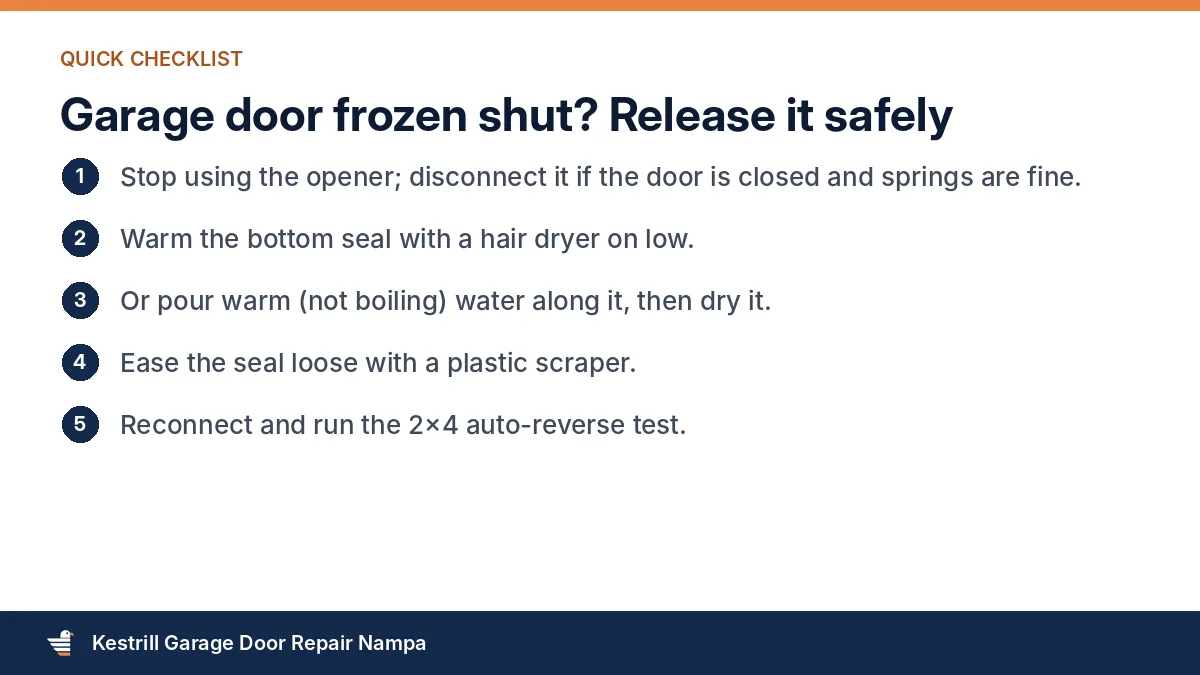
- Disconnect the opener by pulling the red release cord, but only if the door is fully closed and the springs are intact. That stops the opener fighting the ice.
- Warm the seal gently with a hair dryer or heat gun on low, working slowly along the bottom edge from inside the garage.
- Or use warm water, not boiling, poured along the seal from outside. Follow it with a squeegee or towel so it does not refreeze.
- Ease the seal loose with a plastic putty knife or scraper, pushing gently between seal and concrete.
- Lift the door by hand once it is loose, check the seal for tears, then reconnect the opener and run the 2×4 reverse test.
If the whole bottom edge is encased in a ridge of ice from a melted snowbank, clear the snow away from the outside of the door first, then work on the seal. Patience pays: ten minutes with a hair dryer costs far less than a new bottom section. Work from the middle of the door outward, so the loosened seal does not drag across ice still stuck at the ends.
Stopping it happening again
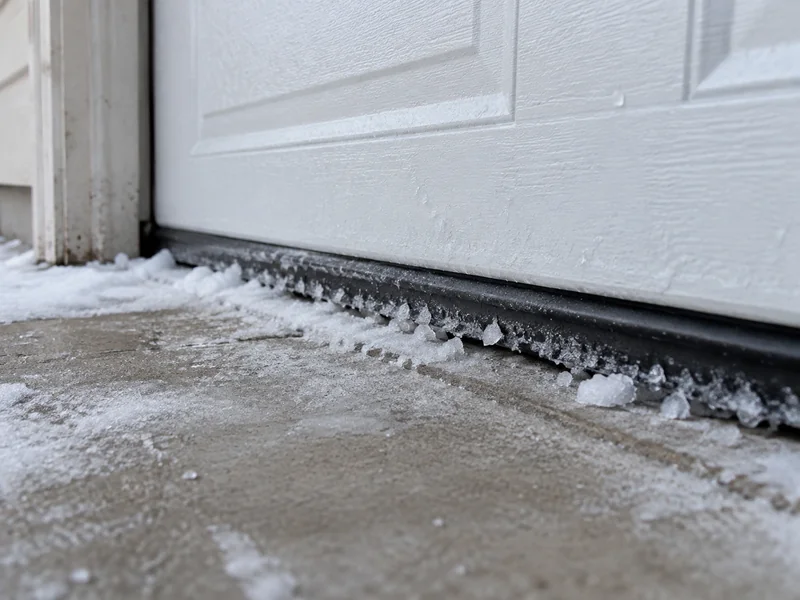
- Sweep and dry the threshold after snow, especially under the door, before the evening freeze.
- Knock snow off the car outside before pulling in, or park with a mat that catches meltwater.
- Clear the driveway apron right in front of the door so afternoon melt does not run back underneath.
- Wipe the seal with a little silicone spray in late fall; it helps the rubber shed water and resist sticking.
- Replace a cracked or flattened seal. A soft, rubber seal that meets the floor evenly leaves less room for water to sit.
- Consider a threshold seal if water pools at a low spot in the slab under the door.
The garage door weather seal replacement page covers seal types, rubber versus vinyl for cold weather, and what to do about an uneven floor.
If the door froze partly open
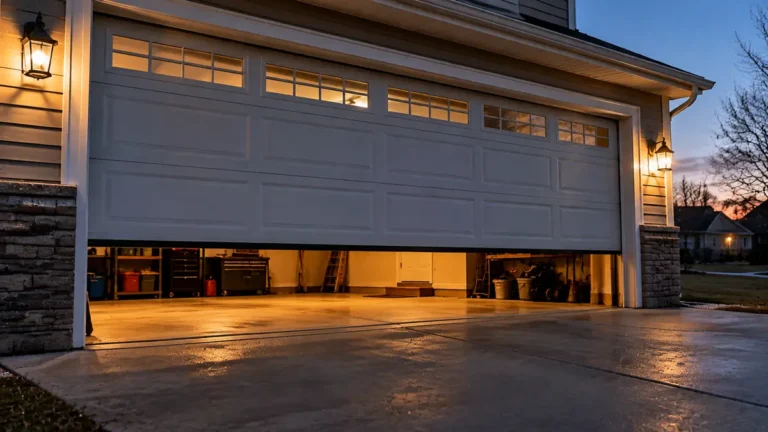
Occasionally a door stops a few inches short of the floor because a ridge of ice or packed snow under it is in the way, and the opener reverses or stalls. Leave the door where it is, clear the ice and snow from underneath with a plastic shovel or warm water, then close it with the wall button while you watch. If the door is crooked, or a cable looks slack on one side, stop and keep clear; one side may have caught on the ice while the other kept moving, which can pull a cable off its drum.
Seals that resist freezing
Not all bottom seals behave the same in a Nampa January. Cheaper vinyl seals stiffen in the cold, lose their shape and leave small gaps where water collects. Rubber seals, particularly EPDM, stay flexible well below freezing and meet the floor more evenly. A taller bulb-style seal can bridge a low spot in the slab, and a threshold seal glued to the concrete raises the sealing line slightly so meltwater runs away instead of pooling under the door.
If your door freezes down every time it snows, the seal is the first thing to look at. A garage door frozen shut once a winter is bad luck; a door that freezes every week is telling you the seal or the threshold needs attention.
When a frozen door means something else is wrong
Sometimes the ice is only part of the story. If the opener ran against a frozen door several times before anyone noticed, check for damage: a bent top section where the opener arm attaches, a stripped opener gear (the motor runs but the door does not move), or a cable that went slack and jumped its drum when one side broke loose first. A door that freezes down on one side only can also be a sign the slab has settled or the seal has worn unevenly.
Cold mornings are also when tired springs break. If you heard a loud bang, or the door is extremely heavy once the ice is gone, look for a gap in the spring above the door before using it. The post on what to do when a spring breaks on a cold morning walks through it.
A frozen door and the opener’s safety settings
After you release a frozen door, run the auto-reverse test the CPSC garage door safety guidance recommends: lay a 2×4 flat on the floor in the door’s path and close the door. It should reverse when it touches the board. Ice and strain can upset the opener’s close limit and force settings, and a door that no longer reverses properly is a real hazard for children and pets. If it fails, disconnect the opener and have it adjusted.
Shop and RV doors
Detached shops and RV garages on acreage around Nampa freeze just as readily, often more so, because they sit on gravel aprons or concrete pads that hold water and are rarely heated. Tall, heavy doors put more load on the seal and the opener when they are stuck. Treat them the same way: warm gently, never force, and check the seal and threshold before winter.
Garage door frozen shut: quick answers
What should I do if my garage door is frozen shut?
Stop using the opener, disconnect it if the door is closed and the springs are fine, then warm the bottom seal with a hair dryer or warm water and ease it loose with a plastic scraper. Dry the threshold afterwards so it does not refreeze.
Can I use salt to stop my garage door freezing?
A little ice melt on the driveway apron can help, but keep it off the seal and away from the door bottom. Salt and chemical de-icers can corrode steel and degrade rubber over time.
Will a frozen garage door damage the opener?
It can if the opener keeps pulling. Repeated attempts can strip the drive gear, bend the top section or tear the seal. Disconnect the opener until the door is loose.
Is it safe to pour hot water on a frozen garage door?
Warm water is fine; boiling water is not. Very hot water can crack cold concrete and refreezes into thicker ice. Pour warm water along the seal, then dry the area so it does not freeze again overnight.
How do I stop my garage door freezing to the ground?
Keep the threshold dry, clear snow from in front of the door, knock snow off the car before parking, treat the seal with silicone in the fall and replace it if it is cracked or flattened.
Sources: snowfall and temperature normals from the NOAA 1991–2020 normals for the Boise Air Terminal station; local climate from the City of Nampa climate summary; reverse test from the CPSC garage door safety guidance.