
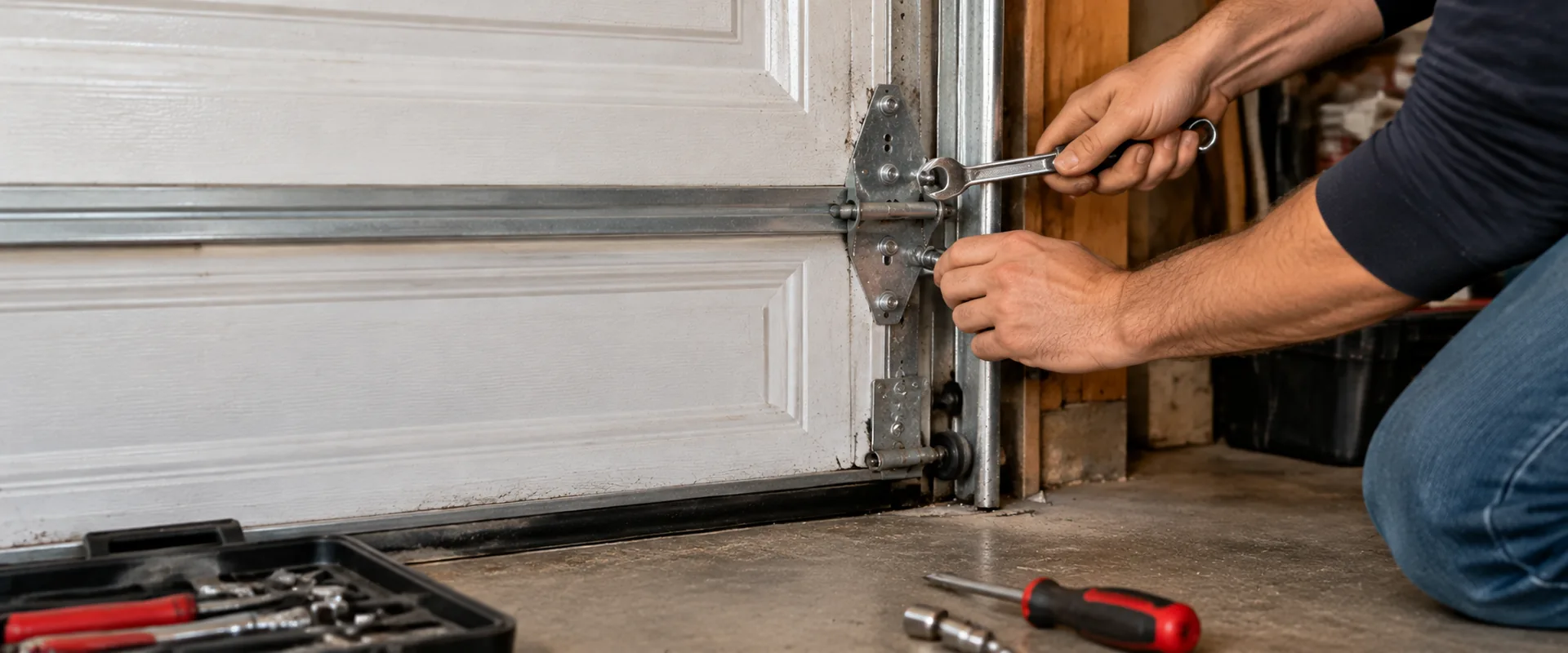
Kestrill Garage Door Repair Nampa
Garage Door Tune-Up in Nampa
A yearly once-over that catches tired springs, dry rollers, loose hardware and failing safety features before the first hard freeze finds them for you.
Kestrill is a referral service. We connect Nampa homeowners with independent local garage door companies and do not carry out repairs or installations ourselves.
A garage door tune-up, Nampa’s freezing nights and dusty summers make clear, is less about pampering the door than about finding the part that is about to fail. Springs, cables and rollers wear out gradually, and nearly every breakdown gives a warning a trained eye can spot months ahead.
This page explains what a proper tune-up covers, the signs your door is overdue, why doors here need one more than doors in milder places, when to book it, what you can do yourself in between, and what a tune-up can and cannot fix.
Five-minute checks you can do today
- Watch and listen to one full cycle. Note any squeal, grind, jerk or pause.
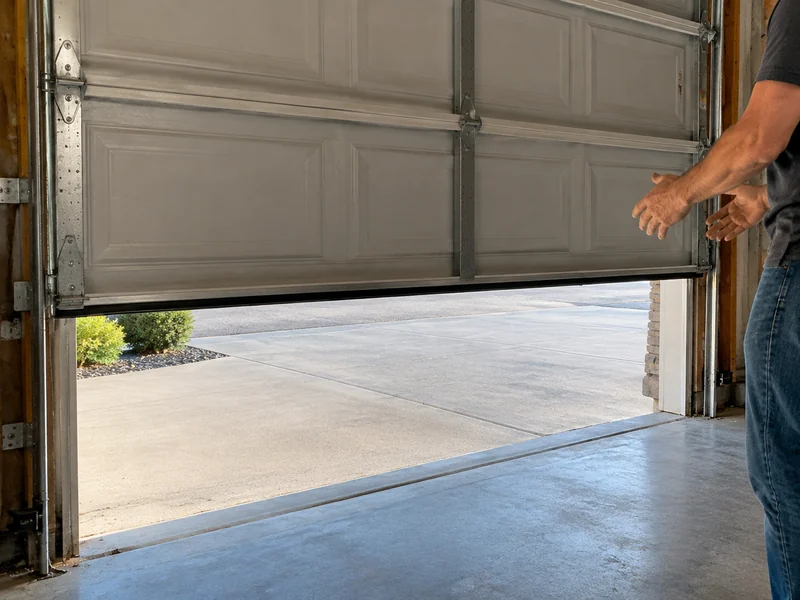
- Balance test: with the door closed, pull the release cord, lift it halfway and let go. It should stay put.
- Photo-eye test: wave a broom handle through the beam as the door closes. It should reverse.
- 2×4 test: lay a 2×4 flat in the door’s path. The door should reverse when it touches it.
- Look, do not touch: check the springs for gaps and the cables for fraying at the bottom corners.
What a garage door tune-up includes
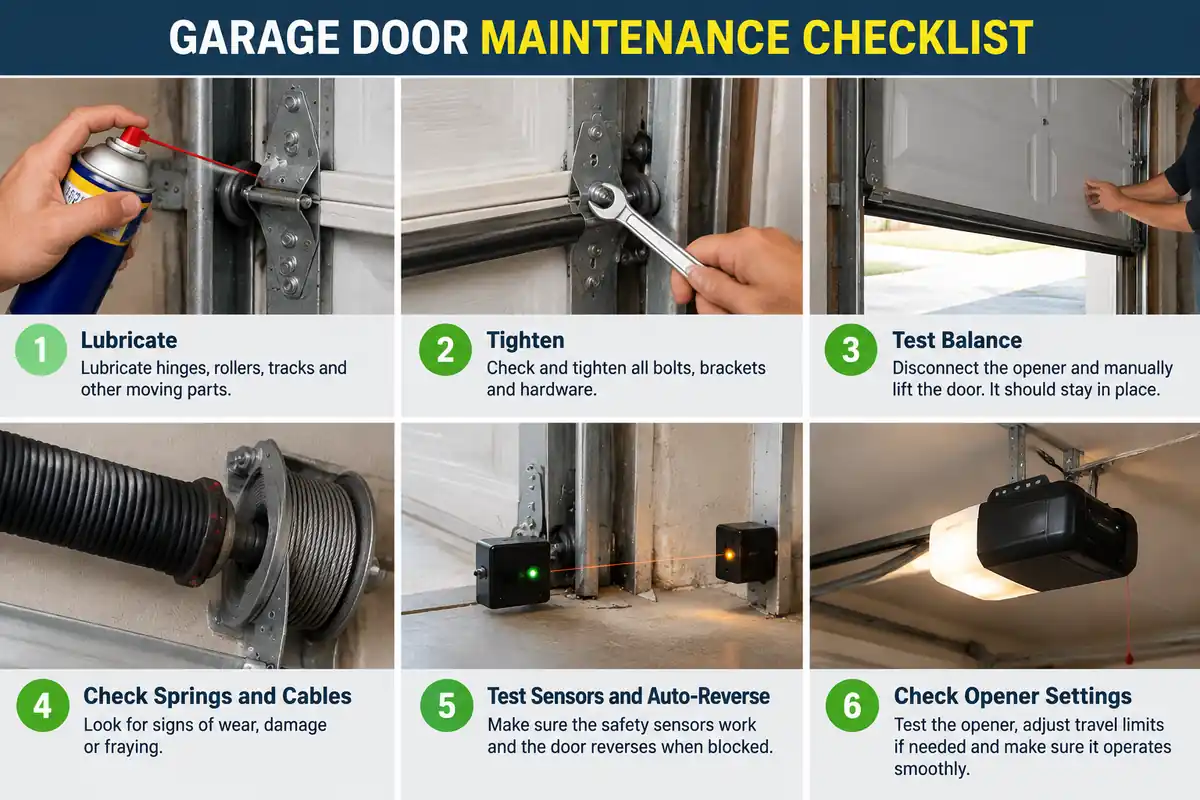
A proper tune-up looks at the whole system, not just the part that squeaks. Expect a technician to work through something close to this list:
- Watch and listen to a full cycle with the opener, then run the door by hand.
- Balance test with the opener disconnected, and spring tension adjusted if the door drifts.
- Inspect both springs for gaps, stretching or rust, and check their remaining life.
- Inspect both lift cables, the drums and the bottom brackets for fraying or slack.
- Check every roller and hinge for wear, wobble and cracks.
- Tighten loose hinge, track bracket and opener fasteners.
- Check track alignment and clean dust and grit out of the tracks.
- Lubricate hinges, roller bearings, spring coils, shaft bearings and the opener rail or chain.
- Check the bottom seal and side seals for gaps and damage.
- Test the opener: travel limits, close force, the wall control, remotes and the keypad.
- Clean, align and test the photo-eye sensors.
- Run the 2×4 auto-reverse test recommended in the CPSC garage door safety guidance.
At the end you should get a short, plain list: what was adjusted, what is fine, and what is wearing out and roughly how long it has left. Anything that needs replacing should come with a written price and no pressure to decide on the spot.
Signs your door is due for a tune-up
- The door is louder than it used to be: squealing, grinding or rattling.
- It moves unevenly, jerks, or slows near the top or bottom.
- It drifts down or shoots up when you stop it halfway by hand.
- The opener strains or the door reverses for no clear reason.
- You can see daylight under the door or along its sides.
- Nobody can remember the last time anyone looked at it.
The balance test is the single most useful check. Close the door, pull the red release cord, lift the door to about halfway and let go. A balanced door stays roughly where you leave it. If it drops or rises, the springs are weakening and the opener is doing work it was never meant to do.
Why Nampa doors need regular tune-ups
Garage doors here face two stress seasons a year, plus dust and wind in between. Each one wears a different part:
| Nampa condition | What it does to the door | What a tune-up catches |
|---|---|---|
| About 108 nights a year at or below freezing | Stiffens grease; finishes off tired springs on cold mornings | Weak springs before they snap; fresh cold-tolerant lubricant |
| About 55 days a year at 90°F or more | Dries lubricant, cracks seals, heats the opener | Dry hinges and rollers; cracked seals; opener settings |
| Dust from farms and windstorms | Grit in tracks and open roller bearings | Clean tracks, worn rollers, dirty sensor lenses |
| Frequent power outages | Surges, manual release misuse | Opener behaviour, release cord and trolley, backup battery health |
| Thousands of doors from the 2000s | Original parts reaching the end of their life together | Which part is next to fail, so you can plan for it |
Many Nampa homes also use the garage as the main way in and out. A household cycling the door six times a day wears it out about three times faster than one using it twice, so busy homes benefit most from a yearly check.
When to schedule it
If you only do it once a year, do it in October. The first freezes usually return in October and November, and a tune-up then means fresh lubricant before the cold, a spring check before the mornings that tend to break springs, and a seal check before meltwater and mice. It also avoids the rush: when a January cold snap breaks springs across the valley, garage door companies get busy fast.
A second, lighter check in spring, after the windy and dusty weeks around March and April, suits doors that run many times a day, shop doors and homes on dusty edges of town. Our fall garage door checklist covers the pre-winter routine step by step.
What the technician does on a tune-up visit
- Talks to you first about any noises, quirks or recent problems.
- Disconnects the opener and checks balance, springs and cables by hand.
- Tightens hardware, cleans tracks and lubricates moving parts.
- Adjusts spring tension if the door is out of balance, using proper winding bars.
- Sets the opener’s limits and force, and checks remotes and the keypad.
- Aligns and tests the sensors, then runs the 2×4 reverse test.
- Walks you through what they found, with written prices for anything that needs replacing.
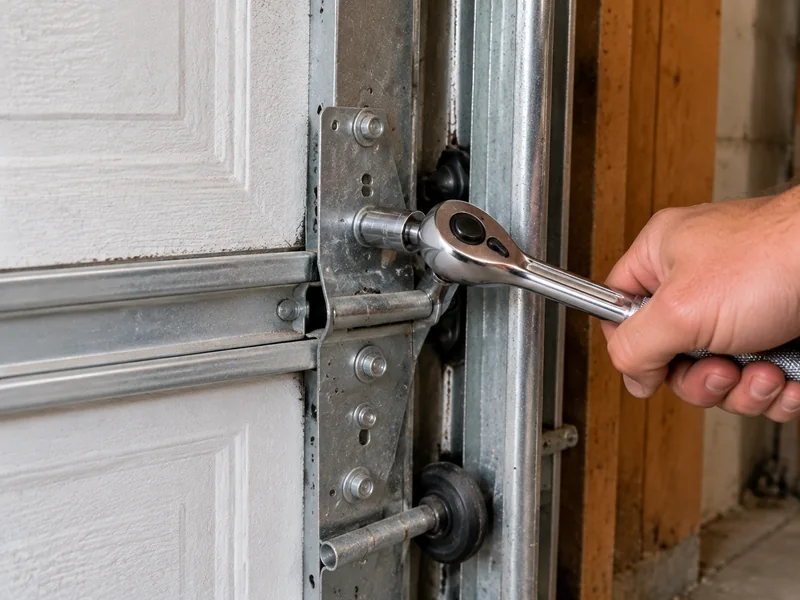
A routine tune-up usually takes around an hour on a standard double door. It may take longer if the door has been neglected for years or if the technician finds parts that need replacing during the visit.
How a tune-up protects the opener
An opener is built to guide a balanced door, not lift a heavy one. When springs weaken, the opener quietly takes up the slack: its motor runs hotter, its gear wears faster and its board works harder. Many openers that “suddenly” strip a gear have been straining against a door out of balance for a year or more.
Restoring the balance during a tune-up takes that load off the opener and often adds years to its life. It also matters for safety. A technician who finds the close force cranked up to make a heavy door close is right to turn it back down and fix the door instead, because high force weakens the opener’s ability to reverse when it hits something.
Shop, RV and heavy-use doors
Detached shops and RV garages on acreage around Nampa, toward Lake Lowell and along the county roads, often have tall, heavy doors that face open fields. They collect more dust, take more wind and carry bigger springs. Some run dozens of times a day during harvest or a busy work season. Those doors benefit from two tune-ups a year, and from having springs and cables checked more closely, since a failure on a 12-foot door is a bigger event than on a standard two-car door.
When you book, mention the door size and how often it runs. Not every residential technician carries parts for oversized doors, and it saves a second trip.
Questions worth asking at the end of a tune-up
- How much life do you think the springs have left?
- Are the cables showing any fraying at the bottom brackets?
- Which rollers or hinges are worn, and which are fine?
- Is the opener’s close force set where it should be?
- Is there anything I should keep an eye on before next year?
The answers turn a routine visit into a plan. Write them down, and you will know roughly when the next spring or opener replacement is coming.
What you can do between tune-ups
- Monthly: the photo-eye test (wave something through the beam as the door closes) and the 2×4 reverse test.
- Monthly: watch a full cycle and listen. New noises are early warnings.
- Twice a year: lubricate hinges, roller bearings and spring coils with a garage door lubricant, not a solvent spray.
- Twice a year: wipe the tracks and sensor lenses clean.
- As needed: remote and keypad batteries; snug any visibly loose hinge bolts.
- Before winter: check the bottom seal for light and keep the threshold clear of meltwater.
Leave springs, cables, bottom brackets and spring adjustments to a technician. Those parts store dangerous amounts of energy, and they are the reason the CPSC tells homeowners to have unbalanced doors serviced professionally.
What a tune-up cannot fix
A tune-up adjusts, cleans and lubricates; it does not make worn-out parts young again. A spring with years of cycles on it will still break, just with more warning. Flat-spotted rollers will still need replacing. An opener past 15 years old will still be past 15 years old. The value is in knowing which part is next, so you can replace it on your schedule instead of on a frozen morning.
If a tune-up turns into a long list of urgent replacements, ask questions. A fair technician will show you the worn parts and explain what happens if you wait. If the door has a specific problem rather than general wear, start with the matching page: noisy garage door repair for grinding and squealing, or broken spring repair if the door will not lift.
Garage door tune-up, Nampa: questions and answers
What does a garage door tune-up include?
Typically a balance test, spring and cable inspection, roller and hinge checks, tightening of hardware, track cleaning, lubrication of moving parts, a seal check, opener limit and force settings, sensor alignment and the 2×4 auto-reverse test, followed by a list of findings.
Is a garage door tune-up worth it?
For most homes, yes. It catches weak springs, worn rollers and safety problems before they strand you, keeps the opener from working against an unbalanced door, and lets you plan repairs instead of reacting to a breakdown.
How often should a garage door be tuned up?
Once a year for most households, ideally in October before the first hard freeze. Busy households, shop doors and doors in dusty areas benefit from a second check in spring.
How often should a garage door be lubricated?
About twice a year, in spring and before winter. Lubricate the hinges, roller bearings, spring coils and shaft bearings, and wipe the tracks clean rather than greasing them.
What lubricant should I use on a garage door?
A silicone spray or white lithium grease sold for garage doors. Avoid general-purpose penetrating or degreasing sprays, which strip existing grease and leave parts drier.
Should I spray a general-purpose solvent spray on my garage door spring?
No. Solvent sprays dissolve the grease that protects the coils and then evaporate. Use a garage door lubricant on the spring coils, and leave any spring adjustment to a technician.
How long do garage door springs last?
Standard torsion springs are rated for about 10,000 cycles, roughly six to seven years for a typical family. A tune-up shows how much life is left so you can replace them before they break.
Related garage door problems
Related problems people often run into at the same time:
Noisy door, rollers and hinges
Grinding, squealing or a rattle that gets worse every month. Rollers, hinges and loose hardware.
Broken spring repair
A loud bang, then a door that feels like it weighs a ton. What a snapped spring means and why pros replace both.
Weather seal replacement
Daylight, drafts, dust or mice under the door, and seals frozen to the slab in January.
Not sure which one you are dealing with? The Nampa garage door repair overview walks through every common failure and the safe first steps for each.
Sources: inspection and testing guidance from the CPSC garage door safety guidance; temperature normals from the NOAA 1991–2020 normals for the Boise Air Terminal station; local climate from the City of Nampa climate summary; outage counts from PowerOutage.us.