
Kestrill Garage Door Repair Nampa
Garage Door Opener Repair in Nampa
Motor hums but the door sits still? Remote dead, keypad ignoring you, light blinking? Here is how to tell an opener fault from a door fault, and when a repair is worth it.
Kestrill is a referral service. We connect Nampa homeowners with independent local garage door companies and do not carry out repairs or installations ourselves.
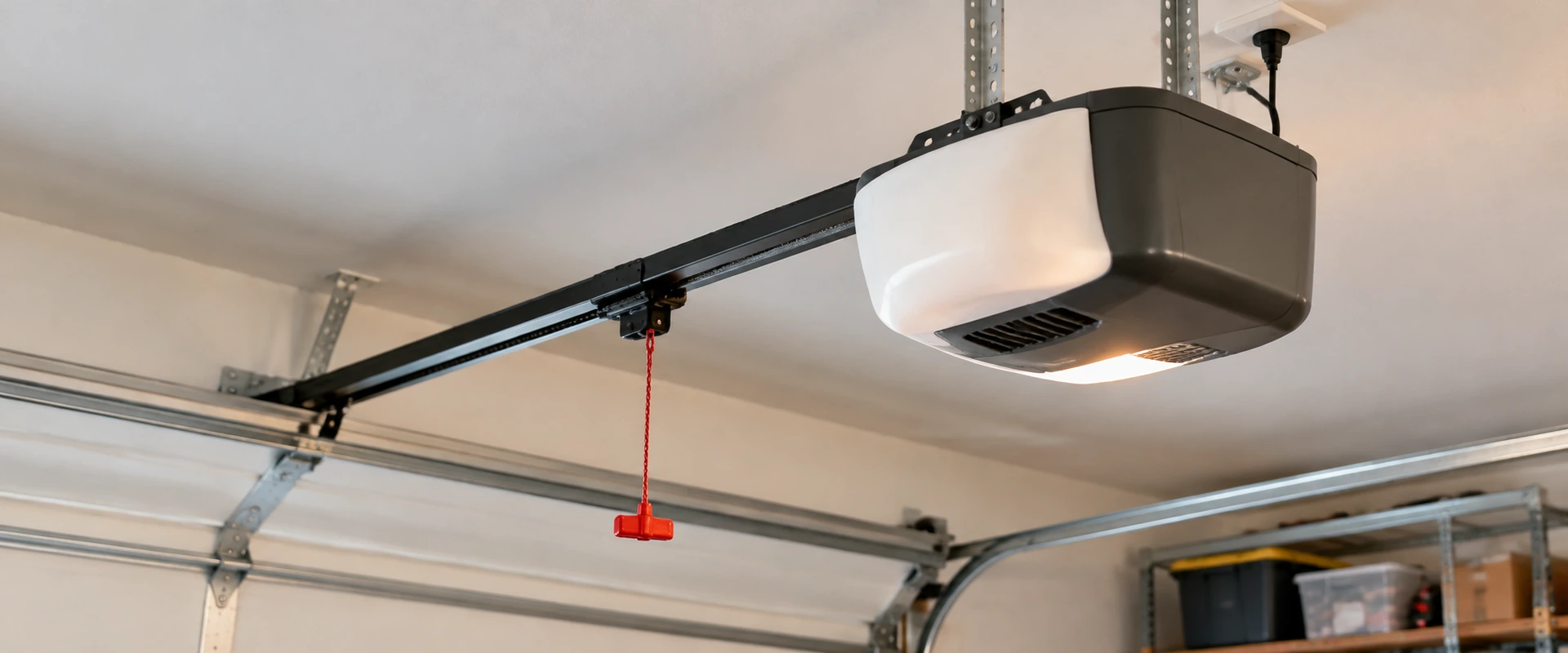
Good garage door opener repair, Nampa homeowners quickly learn, starts with a question most people skip: is the opener actually the problem? An opener is designed to move a door that the springs have already balanced. When the springs, cables or sensors fail, the opener is the first thing to complain, so it gets blamed for faults that are not its own.
This page covers the symptoms that genuinely point to the opener, the checks you can make in a few minutes, the parts that usually fail, and how to decide between fixing an old unit and replacing it. It also covers the two local factors that kill a surprising number of openers here: power outages and summer heat.
Quick checks before anything else
- Check the release. If the red cord has been pulled, the opener runs without moving the door. Close the door by hand and run the opener once to re-latch it.
- Check power. Try the outlet with a lamp, reset any GFCI outlet in the garage, and check the breaker.
- Check the wall control. Make sure the lock or vacation button is not on, and try the wall button as well as the remote.
- Look at the springs before pressing again. A humming opener and a gap in the spring coil means the problem is the spring. Stop using the opener.
- If the door opens by itself, unplug the opener until it has been checked, then keep the door locked by hand.
Signs your garage door opener needs repair
Openers tend to tell you something is wrong well before they quit completely. The common symptoms, roughly in order of how often they come up:
- The motor hums but the door does not move.
- The unit runs and the chain or belt moves, but the door stays put.
- You hear a click and nothing else.
- The door starts, stops and reverses partway for no visible reason.
- It works from the wall button but not the remote, or the other way round.
- The opener light flashes and the door will not close.
- Grinding, rattling or a burning smell from the unit on the ceiling.
- The door opens or closes by itself.
- Nothing works after a power outage, even though the outlet has power.
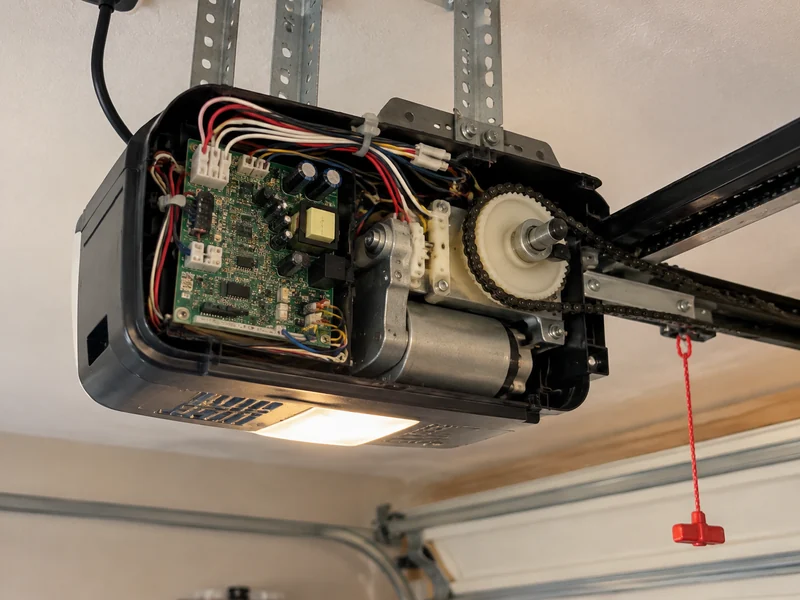
Several of these point away from the opener entirely. A door that reverses is usually a sensor or a binding door. A humming motor is very often a broken spring. That is why a good technician looks at the door first and the opener second.
When the opener runs but the door will not move
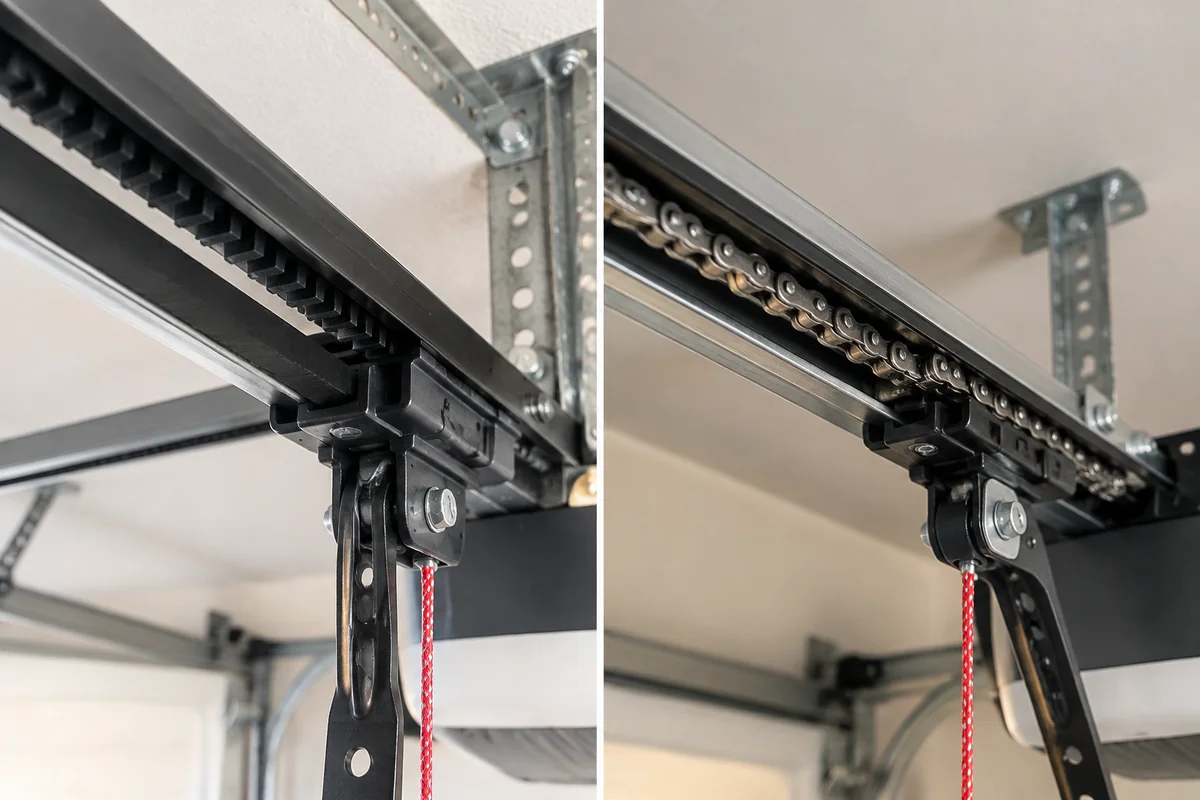
If you can hear the motor and see the chain or belt travel, but the door does not follow, one of four things has happened:
- The trolley is disconnected. Someone pulled the red cord, or it caught on a ladder or car roof rack. Running the opener once with the door closed usually re-latches it.
- The drive gear has stripped. Many chain and belt openers use a plastic gear inside the head unit. After years of work, or after straining against a broken spring, the teeth shear off and the motor spins freely.
- The belt or chain has snapped or jumped its sprocket. A slack chain slaps and rattles for weeks before it lets go.
- A broken spring has left the door too heavy. The opener tries, senses the load and gives up.
A stripped gear on an opener that is otherwise healthy is a reasonable repair. A stripped gear on an opener that is 18 years old, with a worn motor and no battery backup, is usually the moment to consider garage door opener installation instead.
Motor, capacitor and logic board faults
A steady hum with no movement, especially if the door is balanced and the springs are fine, often means a failed start capacitor or a motor that has seized. Capacitors are small, inexpensive parts and a common fix. A seized or burnt-out motor on an older unit generally tips the decision toward replacement.
The logic board is the opener’s brain: it reads the remote, the wall button and the sensors and tells the motor what to do. Boards fail in two main ways in Nampa. Power surges are the first. PowerOutage.us counted 55 separate outages in Nampa in the 90 days to late October 2026, and the surge when power comes back can fry a board that worked fine the day before. Heat is the second. On a 95-degree July afternoon, a closed garage facing west gets far hotter than the house, and electronics that live on the ceiling cook a little more every summer.
Signs of a board problem include a door that ignores every input, lights that flash in odd patterns, an opener that works one day and not the next, and a unit that went silent straight after an outage or a thunderstorm. A technician can test whether the board, the wiring or the motor is at fault before anyone replaces anything.
Remote, keypad and wall button problems
Plenty of “broken opener” problems turn out to be the controls. Work through these before assuming the worst:
- Batteries. Remotes and exterior keypads die quietly, and range drops first. If the remote only works close to the door, start here.
- Lock or vacation mode. Many wall controls have a lock button that blocks all remotes. It is easy to press by accident with a shoulder or a box.
- Lost pairing. Remotes can drop off after a power surge. Re-pairing uses the learn button on the head unit; pair every remote and the keypad in the same session.
- Interference from LED bulbs. Some LED bulbs in or near the opener interfere with its radio. If range collapsed right after you changed bulbs, that is a strong clue.
- Cold and sun on the keypad. Exterior keypads on south and west walls take a beating from summer sun and winter frost, and cracked buttons or a fogged display usually mean replacement.
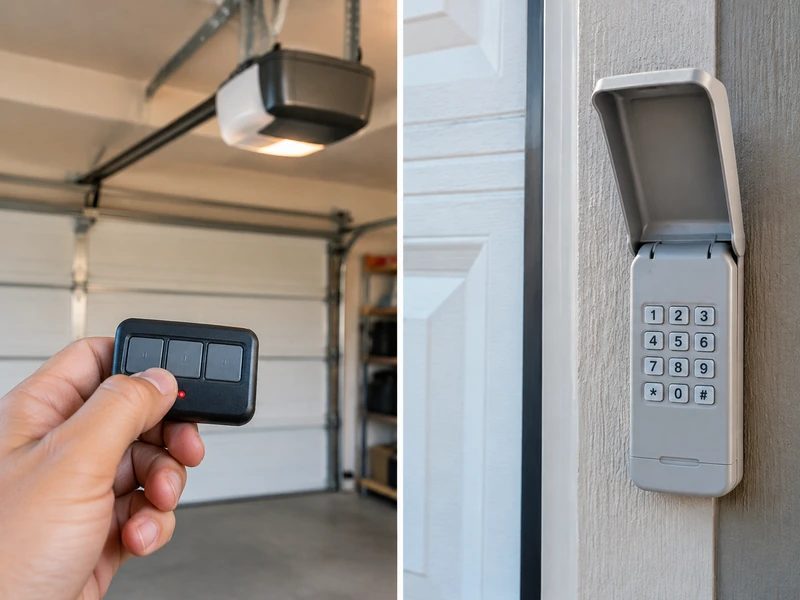
If the wall button works but no remote does after these checks, the receiver or the board is the likely culprit. If nothing works at all, check the outlet, the breaker and any GFCI outlet in the garage before anything else.
Smart openers and Wi-Fi in newer Nampa homes
Many homes built in North and South Nampa subdivisions since about 2015 came with Wi-Fi-ready openers. The most common complaint is not mechanical at all: the app stops connecting. Garages are often the farthest point from the router, with a steel door, a concrete wall and a car in the way. Moving the router, adding a mesh node or a range extender near the garage, and confirming the opener is on the 2.4 GHz band solves most of these. If the opener has never connected reliably, a technician can check whether the built-in radio or an add-on hub is at fault.
Smart features are also handy in a Nampa outage, but only if the opener has battery backup. Without it, the app shows the door status and can do nothing about it.
Why openers wear out in Nampa
- Age. Openers usually last about 10 to 15 years. With roughly 11,539 Nampa homes built between 2000 and 2009, a lot of original openers are well past that.
- Outages and surges. Windstorms and summer thunderstorms knock power out regularly, and surges on restoration are hard on circuit boards.
- Heat. About 55 days a year reach 90°F or more, and an unvented garage runs hotter still.
- Dust. Farm and construction dust gets into the motor housing, the rail and the sensors. Grit on the rail makes the trolley drag.
- Springs that were left too long. An opener that has been lifting a poorly balanced door for months wears its gear and motor much faster.
Repair or replace the opener?
| Situation | Usually worth repairing | Consider replacing when |
|---|---|---|
| Stripped drive gear | Opener under about 10 years old and otherwise healthy | Unit is 15+ years old or the motor is also worn |
| Failed capacitor | Almost always; it is a small part | The motor itself has seized |
| Logic board | Newer opener and the board is still available | Board discontinued or opener is near end of life |
| Remote or keypad issues | Batteries, pairing or a new remote | Opener uses an old fixed-code system |
| No photo-eyes or auto-reverse | Never | Always: openers made before 1993 lack required safety features |
The last row matters. Openers sold in the U.S. after 1991 must reverse when they hit something, and photo-eyes or edge sensors became mandatory in 1993 under the federal garage door opener standard (16 CFR 1211). A few older homes around downtown still run openers older than that. Repairing them keeps a door running without the protections that stop it closing on a child or a pet.
What a technician checks on an opener call
- Disconnects the opener and checks the door by hand: balance, springs, cables and rollers.
- Tests power, the wall control, remotes and the sensor circuit.
- Opens the head unit if needed to inspect the gear, sprocket, capacitor and board.
- Explains the fault and gives a written price for repair, with a replacement option if the unit is near the end of its life.
- After the fix, sets the travel limits and close force, then runs the photo-eye and 2×4 reverse tests.
If the problem turns out to be the door rather than the opener, you will usually be pointed to broken spring repair or sensor repair, which are among the most common causes of a “dead” opener.
Garage door opener repair, Nampa: questions people ask
What are the most common garage door opener problems?
A humming motor with no movement, a stripped drive gear, a dead remote or keypad, a door that reverses because of the sensors, and a logic board damaged by a power surge. In Nampa, outages and summer heat make board failures more common than many people expect.
How do I tell if my garage door opener is going bad?
Watch for slow or jerky travel, new grinding or rattling noises, a door that reverses for no reason, remotes that only work up close, and an opener that needs several presses. If the door is balanced and the springs are fine, those symptoms point at the opener.
Who should I contact to fix a garage door opener?
A garage door company rather than an electrician or general handyman. The fault is often in the door itself, such as a broken spring, and a garage door technician can check the springs, cables and balance as well as the opener.
Is it worth repairing a garage door opener?
Often, yes. Capacitors, gears, remotes and sensors are routine repairs. Repair stops making sense when the opener is past 15 years old, keeps failing, cannot get parts, or was made before 1993 without photo-eyes and auto-reverse.
Does it cost less to repair or replace a garage door opener?
A single repair on a healthy opener usually costs less than a new unit. If the opener is old and needs a major part like a motor or board, the repair can approach the price of a new opener with a warranty, battery backup and better safety features.
How long do garage door openers last?
Most last around 10 to 15 years with normal use. Heavy daily use, a door that runs out of balance, power surges and a hot garage all shorten that.
Does unplugging a garage door opener reset it?
Unplugging it for a minute can clear a glitch after a surge or outage, and it is a sensible first step. It will not fix a stripped gear, a dead capacitor or a damaged board, and it may not restore lost remote pairings.
Is it worth repairing a 20-year-old garage door opener?
Usually not for anything major. At 20 years an opener is past its typical life, parts may be scarce, and it likely lacks battery backup and modern rolling-code security. Small fixes like a capacitor can buy time while you plan a replacement.
Can a handyman replace a garage door opener?
Some can, but an opener should only go on a balanced door with healthy springs, and the force and reverse settings must be set correctly. A garage door technician checks the whole system, which matters for safety.
What should I do with my garage door during a power outage?
If the door is closed, pull the red release cord and lift it by hand, as long as the springs are intact and the door feels light. Do not pull the cord with the door open. When power returns, close the door by hand and run the opener once to re-latch the trolley.
Related garage door problems
Related problems people often run into at the same time:
Opener installation
Choosing a quieter drive, battery backup for outages and the right horsepower for your door.
Sensor repair
The door starts down, then pops back up. Sun, dust and alignment are the usual suspects.
Broken spring repair
A loud bang, then a door that feels like it weighs a ton. What a snapped spring means and why pros replace both.
Not sure which one you are dealing with? The Nampa garage door repair overview walks through every common failure and the safe first steps for each.
Sources: outage counts from PowerOutage.us; temperature normals from the NOAA 1991–2020 normals for the Boise Air Terminal station; opener safety requirements from the federal garage door opener standard (16 CFR 1211) and the CPSC garage door safety guidance; housing ages from Census housing-age data for Nampa.