
Kestrill Garage Door Repair Nampa
Garage Door Panel Repair in Nampa
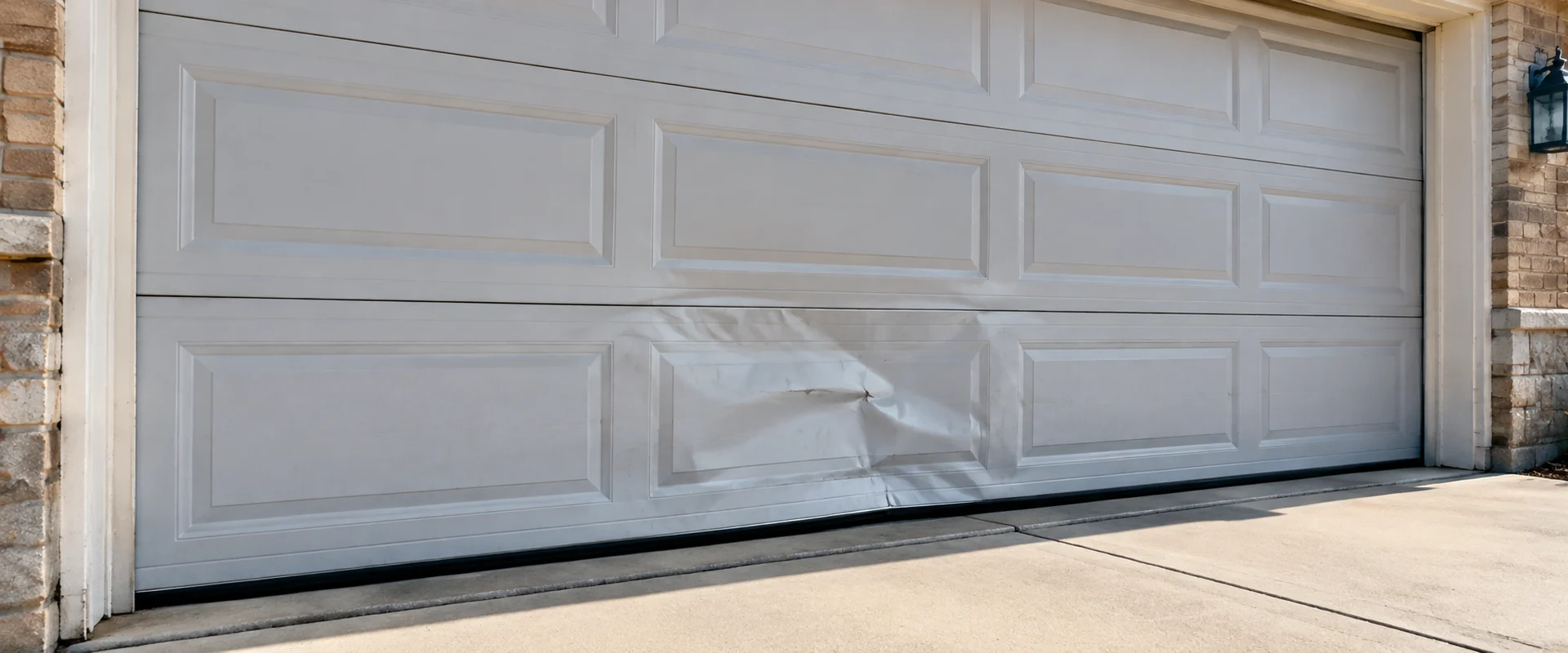
A dent from a bumper, a cracked bottom section, a panel bowed by the wind? When one section can be repaired or replaced, and when the whole door is the smarter call.
Kestrill is a referral service. We connect Nampa homeowners with independent local garage door companies and do not carry out repairs or installations ourselves.
Garage door panel repair, Nampa homeowners usually find, comes down to three questions. How bad is the damage? Can the damaged section still be matched? And is the rest of the door worth keeping?
This page helps you answer all three: how to read dents, creases and cracks, when one new section is enough, why the bottom section is an exception, what Nampa’s sun and wind do to panels, and how insurance usually treats a damaged door.
Door hit by a car? Do this first
- Do not run the opener. A bent section can bind and drag the door off its tracks.
- Check whether any rollers have left the track or the door sits crooked. If so, keep everyone clear.
- Take photos from inside and outside before anything is moved, especially if insurance may be involved.
- Leave a closed door closed and secure the house through the interior door if needed.
- Do not hammer the panel straight or pull the bottom section away from the floor.
Dented, bent or cracked? Read the damage first
Most garage doors in Nampa are steel sectional doors: four or five horizontal sections joined by hinges. People call each one a panel. The type of damage decides almost everything about the fix:
- Shallow dent, no crease. A ball, a bike handle or hail. Often cosmetic; the door works normally.
- Sharp crease or fold. The steel skin has buckled. It weakens the section and rarely pulls out cleanly.
- Bowed or bent section. The whole section curves inward, usually from a bumper or a strong gust. The rollers may bind.
- Cracked or split. Common at the bottom section and around hinge mounting points on thin doors.
- Rot or rust-through. Wood doors that soak up meltwater at the bottom, or steel that has rusted from the inside out.
- Broken window insert. A cracked or missing glass or acrylic lite in an otherwise sound section.
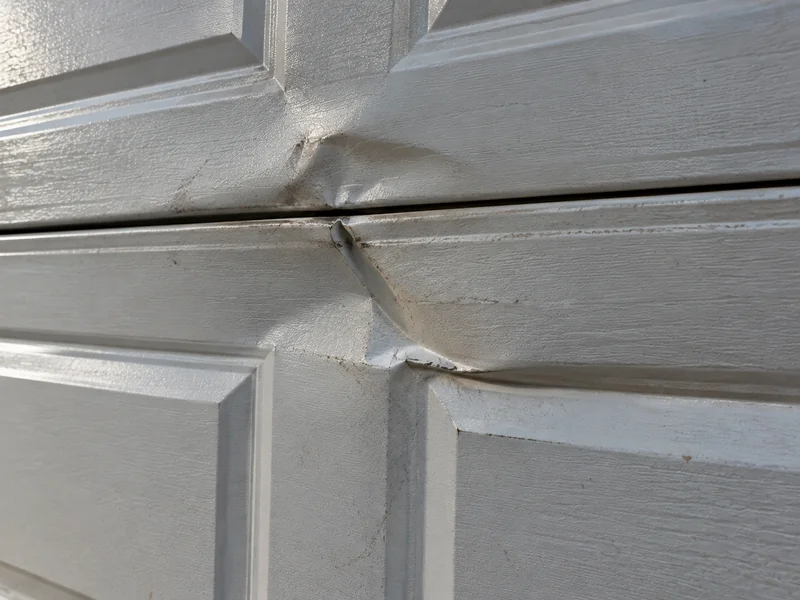
Run your hand along the inside of the damaged section, too. Many dents look minor from the driveway but show a crease or a torn hinge mount from inside, and that changes the answer from a cosmetic fix to a replacement.
Repair the panel or replace the section?
| Damage | Usually | Why |
|---|---|---|
| Small dent, paint intact | Leave it, or pull and fill it | Structural strength is unaffected |
| Large dent or crease | Replace the section | Creased steel stays weak and visible after repair |
| Section bowed but not creased | Sometimes straightened, often replaced | Depends on how far it bent and whether hinges tore |
| Bottom section cracked, rusted or rotted | Replace the section | It carries the bottom brackets and seal retainer |
| Two or more sections badly damaged | Often replace the door | Matching several sections gets close to the price of a new door |
| Broken window insert | Replace the insert | Usually a simple swap if the frame is sound |
A useful rule from the industry: if repairing the door would cost more than about half the price of a new one, or the door is over 20 years old with other parts also failing, replacement usually makes more sense. The garage door installation page covers that decision in detail.
Replacing one section vs the whole door
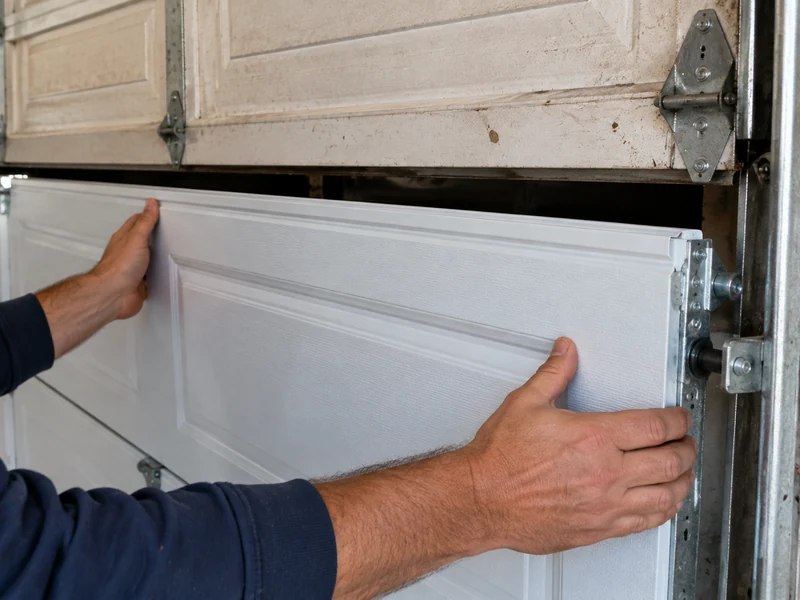
Replacing a single section is a good fix when the damage is confined to it and a matching section is still made. Matching means more than size. The new section needs the same model, panel pattern, thickness, texture and colour, and the hinge and roller positions have to line up with the existing sections.
Two Nampa-specific snags come up often. First, sun. With around 210 sunny days a year, according to the City of Nampa climate summary, a 15-year-old door facing south or west has usually faded, so a brand-new section can stand out like a new tooth. Painting the whole door afterwards is sometimes the answer. Second, discontinued designs. Doors fitted when many 2000s subdivisions were built may use patterns that are no longer made, in which case a matching section simply is not available.
If you live in a neighbourhood with an HOA, check whether a repainted or replacement door needs approval. An identical replacement is usually fine, while a new colour or style often needs architectural sign-off.
What a technician does on a section replacement
- Measures the door and identifies the model, panel pattern, thickness and colour, then orders a matching section if one exists.
- On the day, secures the door and, if the bottom section is involved, releases the spring tension.
- Removes the hinges, rollers and any strut from the damaged section and lifts it out of the stack.
- Fits the new section with new hinges where the old ones are bent, aligns it with the sections above and below, and refits rollers and struts.
- Replaces the bottom seal and retainer if the bottom section was changed, then rewinds the springs and balances the door.
- Runs the door through several cycles, checks it sits level and runs the auto-reverse test.
Because the section usually has to be ordered, expect two visits: one to measure and quote, one to install. If the damaged door cannot be closed safely in the meantime, ask what can be done to secure it until the part arrives.
Why panels take a beating in Nampa
- Strong sun at altitude. Nampa sits around 2,450 feet with roughly 210 sunny days a year. UV fades painted steel and dries out wood, so south and west-facing doors age visibly faster and become harder to match.
- Spring windstorms. Gusty storm systems bow wide doors and catch doors left partly open.
- Winter meltwater. Snow off cars pools at the threshold and refreezes, rusting steel and rotting wood along the bottom edge.
- Busy, crowded garages. Two cars, bikes and storage in a two-car garage mean bumpers and handlebars meet the door more often than anyone admits.
- Ageing doors. Thousands of doors installed during the 2000s building boom are now old enough that a single damaged section may no longer be made.
Older wood and hardboard doors, still common in some pre-1980 homes, add their own issues: warping, delamination and heavy sections that strain the springs. Repairs on those are possible, but past a point a lighter insulated steel door is the more practical fix.
Bottom section damage
The bottom section takes the most abuse. It meets bumpers, snow shovels and the slab, and in Nampa it spends the winter sitting in meltwater that runs off cars and refreezes. Wood bottoms rot and steel bottoms rust from the inside, usually starting along the lower edge behind the seal.
It is also the riskiest section to work on. The bottom brackets that anchor the lift cables are fixed to it, and on a torsion door those brackets are under the full force of the springs. Replacing the bottom section therefore means releasing the springs first. It is not a homeowner job, however simple it looks.
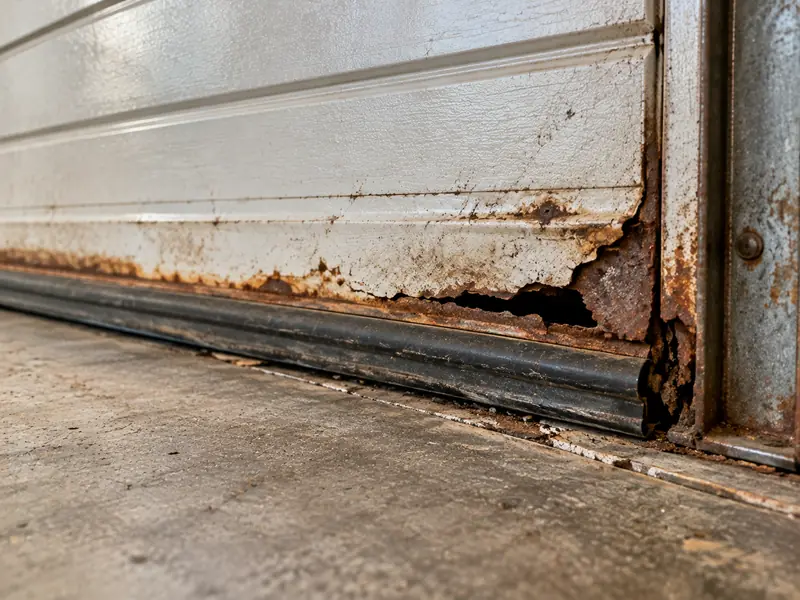
A cracked or rusted bottom section often comes with a torn bottom seal and a bent seal retainer. Doing all three together seals out drafts, dust and mice; see garage door weather seal replacement for the seal options.
Wind damage, struts and windows
Windstorms are the other big source of panel damage here. Spring is the windiest season in Nampa, and storm gusts can far exceed the average breeze. A door left partly open catches wind like a sail; a wide, thin door can bow inward even when closed. After a big storm, look for sections bowed in the middle, hinges pulled loose and rollers sitting at an angle in the track.
- Struts are horizontal steel braces fitted across the inside of a section, usually the top one. They stop wide doors flexing in the wind and under the pull of the opener, and adding one is often part of a section repair.
- Window inserts can crack from impact or temperature swings between January nights and July afternoons. Most are replaced individually, as long as the frame around them is intact.
- Hinges and brackets torn by a bowed section need replacing with the section, or the new panel will flex at the same point.
If the wind pushed the door hard enough to bend it, check the tracks too. A bowed door often drags rollers out of line, which is covered on the off-track repair page.
Does homeowners insurance cover a damaged garage door?
It depends on the cause. Most homeowners policies cover sudden, accidental damage, such as a windstorm, a falling tree or vandalism, and exclude wear and tear like a rusted bottom section or an aged spring. If a car hit the door, the driver’s auto insurance may be the right policy, even if it was your own car. Check your policy wording, and before any repair:
- Photograph the damage from inside and outside.
- Note the date and the cause.
- Keep the written estimate and the final itemized invoice.
Get the written estimate before deciding whether to claim at all. If a single-section repair comes in below your deductible, or a claim might affect your premium, paying directly can be the simpler route. If several sections, the tracks and the springs were damaged in a storm, the numbers often look different.
Garage door panel repair, Nampa: common questions
Can a garage door panel be repaired?
Small dents can often be pulled or filled, and slightly bowed sections can sometimes be straightened. Creased, cracked, rusted or rotted sections are usually replaced, because repaired steel stays weak and the damage tends to show.
Can you replace just one garage door section?
Yes, if a matching section is still made in the same model, pattern, colour and size. On older or discontinued doors a match may not exist, and sun-faded doors may need repainting so the new section blends in.
What are garage door panels called?
On a sectional door they are called sections. Each section may have a raised or recessed pattern that people also call panels. The bottom section, top section and intermediate sections are ordered separately because they have different hardware.
Can I replace garage door panels myself?
It is not recommended. Removing a section means taking hinges and rollers off a door under spring tension, and the bottom section holds the cable brackets. Section replacement is a job for a technician who will release the springs first.
Does homeowners insurance cover garage door replacement?
Sudden damage from storms, falling trees or vandalism is often covered; wear and tear is not. If a vehicle hit the door, the auto policy may apply. Read your own policy and document the damage before any work.
Does it cost less to repair or replace a garage door?
Repair usually costs less. Replacement starts to make sense when several sections are damaged, matching sections are unavailable, the door is old with other failing parts, or the repair would cost more than about half the price of a new door.
Can a dented garage door still be used safely?
A small cosmetic dent is usually fine. If the section is creased or bowed, the door binds, rollers sit at an angle or the door looks crooked, stop using it until it has been checked, because damaged sections can pull the door off its tracks.
Related garage door problems
Related problems people often run into at the same time:
Off-track and track repair
Rollers out of the rail, a bent track or a door jammed at an angle. Keep clear and leave it be.
New door installation
When an old door is costing more than it is worth: insulation, styles, HOA rules and permits.
Weather seal replacement
Daylight, drafts, dust or mice under the door, and seals frozen to the slab in January.
Not sure which one you are dealing with? The Nampa garage door repair overview walks through every common failure and the safe first steps for each.
Sources: sunshine and wind patterns from the City of Nampa climate summary; safety guidance from the CPSC garage door safety guidance.