
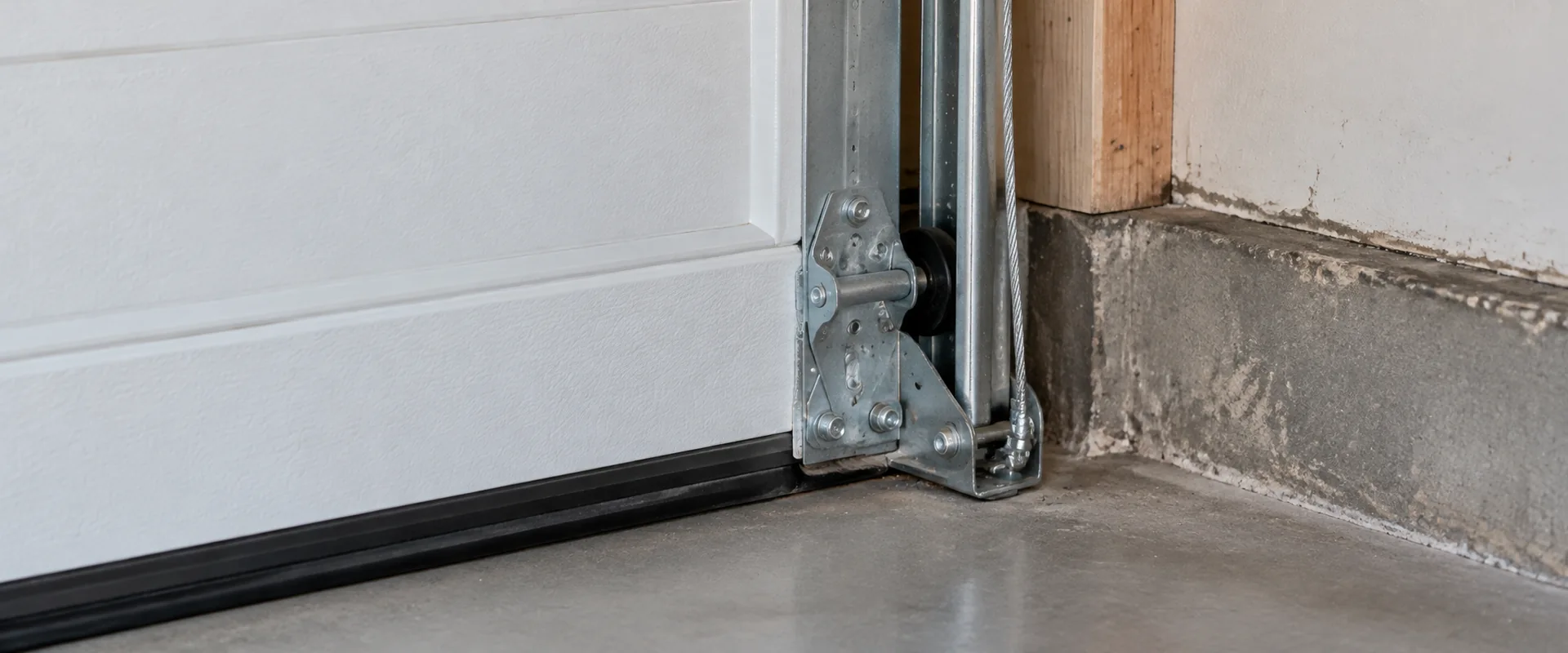
Kestrill Garage Door Repair Nampa
Garage Door Cable Repair in Nampa
Door hanging lower on one side? Cable dangling loose or wrapped off its drum? That door is under heavy tension and can drop. Here is how to keep everyone safe and what the fix involves.
Kestrill is a referral service. We connect Nampa homeowners with independent local garage door companies and do not carry out repairs or installations ourselves.
Garage door cable repair, Nampa homeowners are often surprised to learn, is rarely just about the cable. The two steel lift cables running up the sides of your door do the actual lifting, but they work as a team with the springs, the drums at the top and the brackets at the bottom. When one cable fails, it almost always tells you something about the rest of the system.
This page explains how to spot a cable problem before it snaps, why cables fail, what drums, pulleys and bottom brackets have to do with it, and what a technician should check so the same cable does not slip off again next month.
Do this first
- Stop using the door and the opener. A door hanging on one cable can twist out of its tracks if it moves again.
- Keep people, pets and cars away from the door, especially if it is open or partway open.
- Do not pull the red release cord unless the door is fully closed and sitting level.
- Leave the bottom brackets alone. They hold the cable under full spring tension.
- Unplug the opener so nobody runs it by habit.
Signs of a garage door cable problem
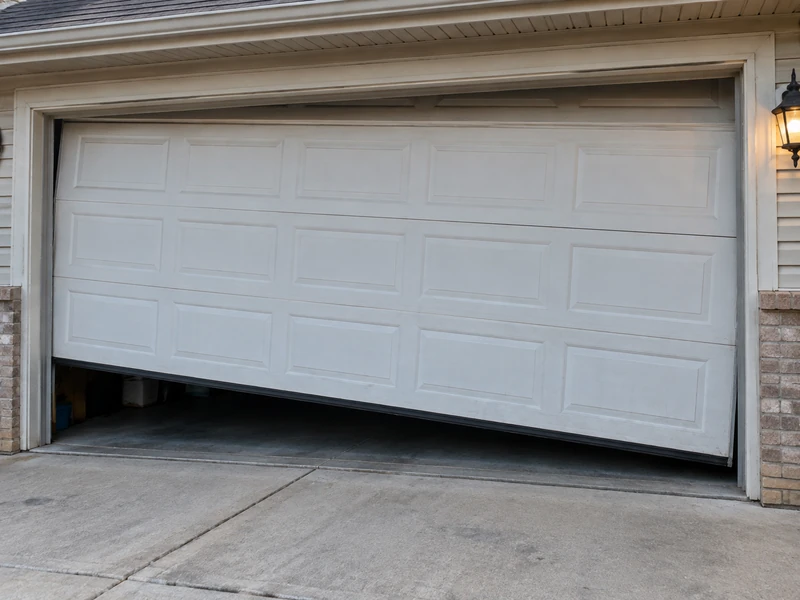
- The door hangs crooked, lower on one side, or the bottom edge no longer meets the floor evenly.
- A cable hangs slack or loops loosely beside the door instead of running tight up the track.
- Frayed or broken strands near the bottom brackets, where the cable attaches to the lowest corners of the door.
- A cable has unwound from its drum at the top corner, or sits outside the drum’s groove.
- The door jerks, shudders or tilts as it moves, or stops partway with one side higher.
- A twang or snap followed by the door dropping on one side.
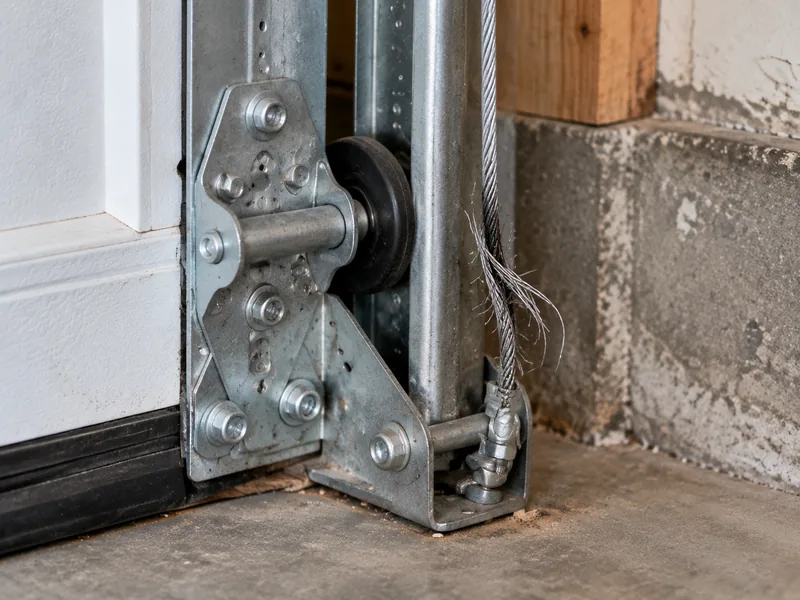
Look closely at the bottom brackets on both sides with the door closed. A cable that has started to fray usually goes there first, because that is where moisture and grit sit longest. A few broken strands today becomes a snapped cable on a cold morning.
Why garage door cables fail
Lift cables are braided steel, and they wear out like any other part that flexes thousands of times a year. Most last about 8 to 10 years. A few things shorten that, and several of them show up a lot in Nampa.
- Age. About 11,539 Nampa homes were built between 2000 and 2009. On a door that age, cables that have never been replaced are living on borrowed time.
- Moisture at the threshold. Snow melts off cars in winter and pools at the bottom of the door. The cable ends and bottom brackets sit in that water, and rust starts where the strands are crimped.
- A broken spring. When a torsion spring snaps, the tension holding the cables tight vanishes. The cables go slack, jump the drums and tangle. Many cable calls are really spring calls.
- Hitting something. A door closing onto packed snow, a bin or a bike stops on one side while the other keeps moving, and the cable on the stopped side slips.
- A door that is out of balance or off its tracks. Uneven tension wears one cable faster and can throw it off the drum.
Dry summers add their own wear. Field dust from Canyon County farmland settles on greased drums and bearings and turns into a fine grinding paste, and a door that drags in its tracks puts uneven load on one cable. Wiping the tracks and keeping moving parts lightly lubricated helps more than most people expect.
Cold-snap weeks bring a cluster of these. When a tired spring breaks on a frosty morning and the opener is run a few more times, both cables often end up off their drums by the time anyone looks.
Drums, pulleys and brackets
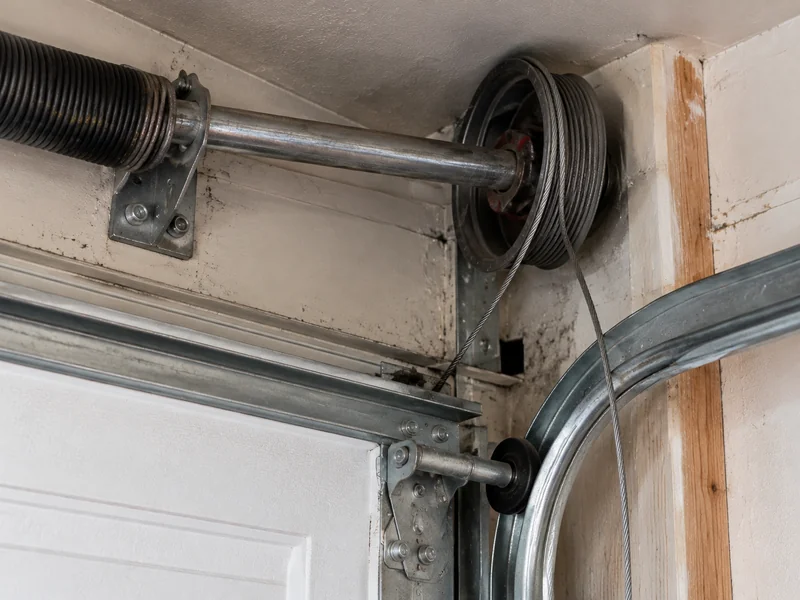
Cables never work alone. On a torsion system, each cable winds onto a grooved drum at the end of the spring shaft. On an extension spring door, cables run over pulleys instead. At the bottom, each cable is fixed to a bracket on the lowest corner of the door.
If a cable keeps slipping off its drum after being put back, the cable is rarely the real cause. Worn drum grooves, a shaft that has shifted sideways, a bad end bearing, a bent track or a door that binds partway can all let a cable go slack and walk off. A fix that only rewinds the cable will not last; the cause has to be found.
Bottom brackets deserve their own warning. On a torsion system they hold the cable under the full force of the springs. Loosening or removing one with tension on the springs is one of the most common ways people get badly hurt working on garage doors.
What a technician does on a cable repair
- Secures the door so it cannot drop or shift, using clamps on the tracks and, if the door is partway open, supports underneath.
- Releases spring tension safely with winding bars before touching either cable.
- Inspects the drums, bottom brackets, pulleys, end bearings and the springs themselves.
- Replaces both cables with the correct diameter and length for the door’s height and weight.
- Seats each cable in its drum groove, sets equal tension on both sides so the door sits level, and rewinds the springs.
- Checks balance and the opener’s travel and force, then runs the auto-reverse test.
Why cables are replaced in pairs
The two cables on a door have done exactly the same work. If one has snapped or frayed, the other is close behind, and a new cable on one side with an old, slightly stretched cable on the other leaves the door sitting crooked. Replacing both is standard. So is checking the springs while the tension is already off, which is why cable and spring work often happen in the same visit.
Extension spring doors and safety cables
Older doors with extension springs have a second kind of cable: a safety cable threaded through the middle of each spring and anchored at both ends. It does not lift anything. Its job is to stop a snapped spring from flying across the garage. If your extension springs have no safety cables, ask for them to be added. It is a small job that prevents a nasty injury.
Cable, spring or track? How to tell
A crooked or stuck door can come from three different failures, and they often arrive together. A quick look, without touching anything, usually narrows it down:
| What you see | Most likely cause | Where to read more |
|---|---|---|
| A gap in the coil above the door, both cables slack | Broken torsion spring | Broken spring repair |
| One cable loose or off its drum, door lower on that side | Slipped or snapped lift cable | This page |
| Rollers outside the rail, door twisted in the opening | Door off track | Off-track repair |
| Door level but very heavy, cables tight | Weak springs or opener trouble | Opener repair |
If you cannot tell, describe what you see when you arrange a repair: which side is low, whether a cable is visible and slack, and whether you heard a bang. That helps the technician bring the right parts the first time.
Cables on shop, RV and oversized doors
Acreage homes around Nampa often have a shop or RV garage with a door 10 to 14 feet tall. Taller doors use longer, heavier cables and bigger drums, and they carry far more weight. A frayed cable on a door that size is a serious hazard, because when it lets go the door can swing out of the opening entirely. These doors also sit exposed to wind and field dust, which grinds into drums and bearings. If your shop door has not had its cables and springs looked at in several years, it is worth doing before winter.
What drives the price of a cable repair is mostly the door: its height and weight, whether springs are replaced at the same time, whether the drums or bottom brackets are worn, and whether the door has come out of its tracks. A written quote should list each of those separately.
Can you fix a garage door cable yourself?
Not safely, for most people. A lift cable on a torsion door is part of the spring system: to replace it, the springs have to be unwound, and the bottom bracket that holds it is under spring tension. The CPSC garage door safety guidance advises having an unbalanced door serviced by a professional, and a crooked door is unbalanced by definition.
What you can safely do is look. Check both bottom brackets for frayed strands a couple of times a year, keep the threshold clear of meltwater and ice in winter, and pay attention if the door starts to sit unevenly when it closes.
If a cable has come out of the tracks along with the rollers, the door may also be off track, which needs its own careful handling. The garage door off track repair page explains what to expect.
Garage door cable repair, Nampa: questions and answers
What causes a garage door cable to come off the drum or pulley?
Usually slack. A broken spring, a door that hit an obstruction on one side, a door that is out of balance, worn drum grooves or a shifted shaft can all let a cable loosen and slip off. Finding that root cause is what stops it happening again.
My garage door cable broke on one side. What now?
Stop using the door and the opener, keep everyone clear, and leave the door where it is if it is closed. Do not pull the release cord on a door that is open or hanging crooked. Both cables, and usually the springs, should be checked together.
Is it safe to use a garage door with a frayed cable?
No. A frayed cable can snap without warning, and the door can drop or swing sideways out of its tracks. Treat fraying as a reason to stop using the door until the cables are replaced.
Can I fix a broken garage door cable myself?
It is not a safe DIY job. Replacing a lift cable means releasing and rewinding the springs and working on bottom brackets that hold spring tension. Leave it to a technician with the right tools.
Why is my garage door crooked?
A crooked door usually means a cable has slipped, stretched or snapped on one side, or one of a pair of springs has broken. A door knocked partly out of its tracks can also hang unevenly. In all of these cases, stop using it.
Why are cables often replaced along with springs?
The springs have to be unwound to replace cables, and the two parts wear together. If the springs are near the end of their life, doing both in one visit avoids paying for a second service call a few months later.
How long do garage door cables last?
Around 8 to 10 years in normal use. Rust from standing water at the threshold, frequent use and a door that runs out of balance shorten that.
Related garage door problems
Related problems people often run into at the same time:
Broken spring repair
A loud bang, then a door that feels like it weighs a ton. What a snapped spring means and why pros replace both.
Off-track and track repair
Rollers out of the rail, a bent track or a door jammed at an angle. Keep clear and leave it be.
Tune-up and maintenance
Balance, lubrication, hardware and safety checks that catch failures before they strand you.
Not sure which one you are dealing with? The Nampa garage door repair overview walks through every common failure and the safe first steps for each.
Sources: safety guidance from the CPSC garage door safety guidance; housing ages from Census housing-age data for Nampa; winter weather from the City of Nampa climate summary.