Common Garage Door Problems and What’s Safe to Check Yourself
Most common garage door problems come down to a handful of parts: springs, cables, rollers and tracks, the opener, the safety sensors and the seals. Knowing which symptom points to which part tells you whether it is a five-minute fix or a job for a technician.
This guide sorts problems by what you actually notice, explains what each usually means, lists the checks that are safe to do yourself, and spells out the jobs that should always be left to a professional.
Know the parts before you diagnose
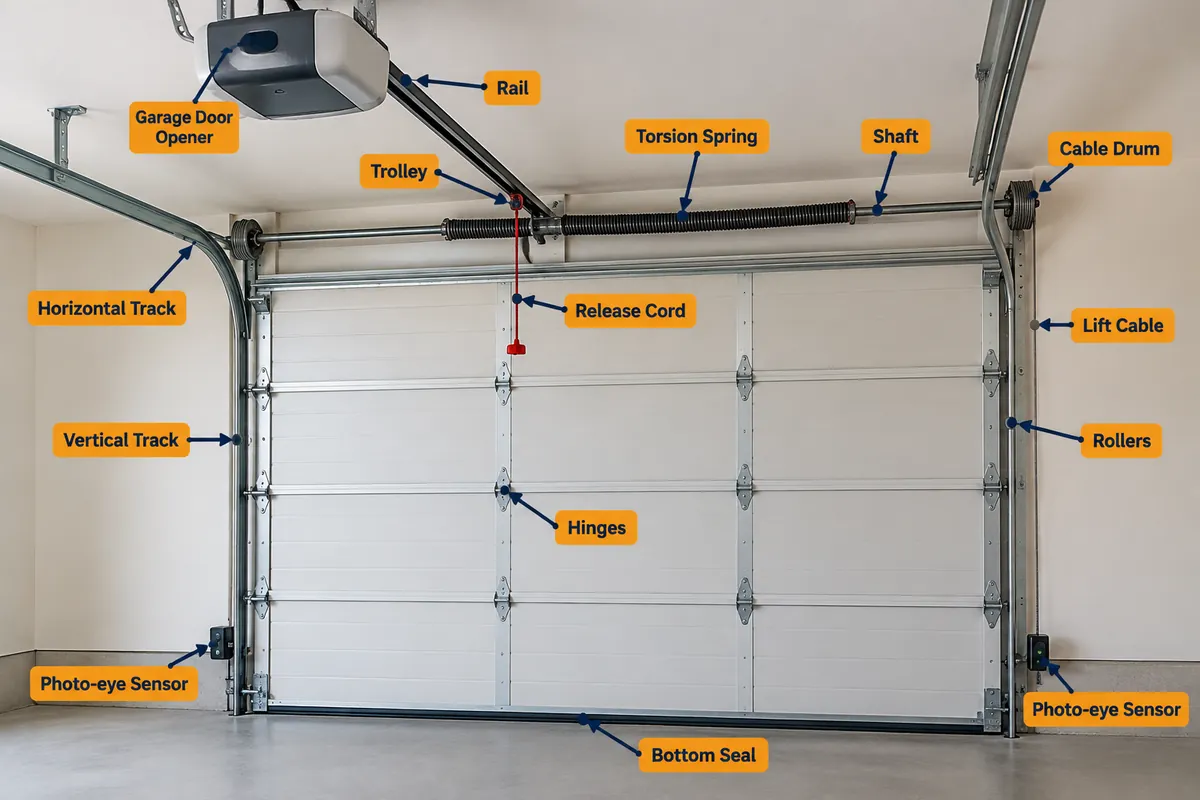
A sectional garage door has a few main systems. The springs above the door carry its weight. Two lift cables run from drums at each end of the spring shaft down to the bottom corners. Rollers ride in the tracks, hinges join the sections, and the opener simply guides a door the springs have already balanced. Photo-eye sensors near the floor and the opener’s force setting make up the safety system, and weather seals close the gaps. Most problems start in one of those places.
Common garage door problems by symptom
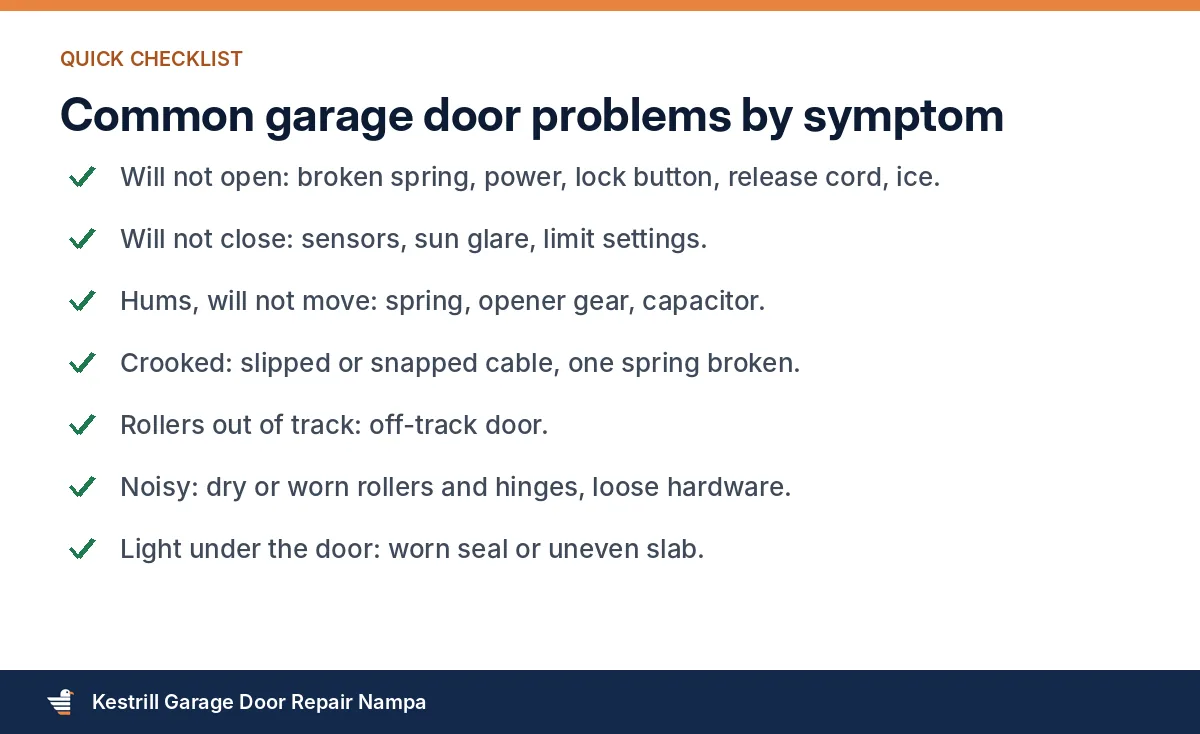
The door will not open
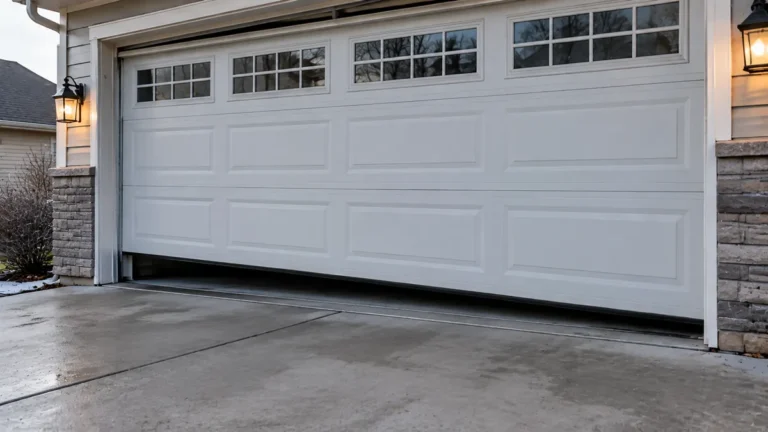
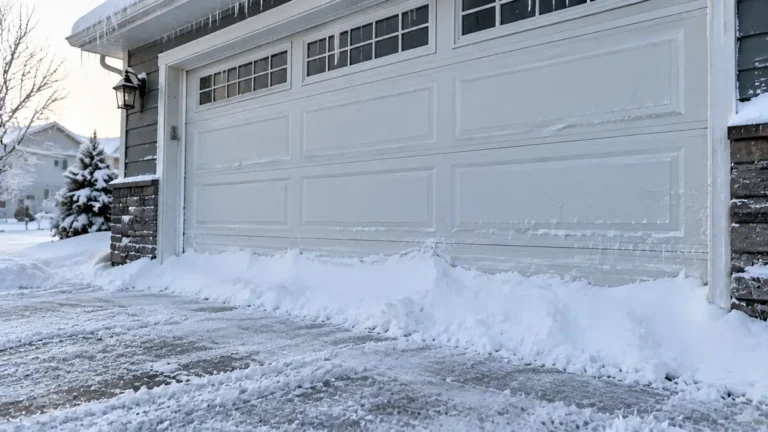
Check for a broken spring first: a gap in the coil above the door, often after a loud bang. Then check power, remote batteries, the lock button on the wall control and whether the red release cord has been pulled. In winter, the seal may be frozen to the floor. See broken spring repair if the spring has snapped.
The door will not close, or goes back up
Almost always the safety sensors: dirty lenses, a knocked bracket or low sun shining into the receiver. Wipe and realign them. If the door reverses only near the floor, the opener’s limit or force setting may need adjusting. See sensor repair.
The motor hums but nothing moves
A broken spring, a stripped opener gear or a failed capacitor. Check the spring before pressing the button again. See opener repair.
The door is crooked or one side is low
A slipped or snapped cable, or one spring of a pair broken. Stop using it. See cable repair.
Rollers are out of the track
The door has come off track, often after a bump, a cable failure or worn rollers. Keep clear and leave it to a technician. See off-track repair.
The door is noisy
Dry hinges and rollers, worn steel rollers, loose hardware or a slack opener chain. A single loud bang is different: that is usually a spring. See noisy door repair.
Light, drafts, dust or mice under the door
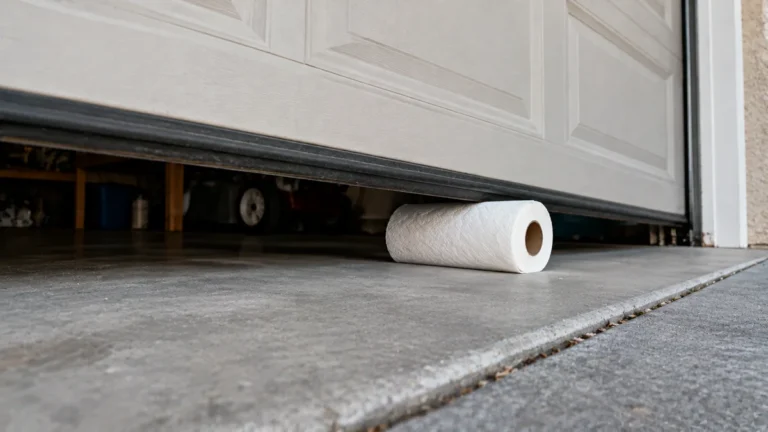
A worn or cracked bottom seal, or an uneven slab. See weather seal replacement.
A dent or a bowed section
A bumper, a ball or a windstorm. Small dents are cosmetic; creases and bows usually mean a new section. See panel repair.
What is safe to check yourself
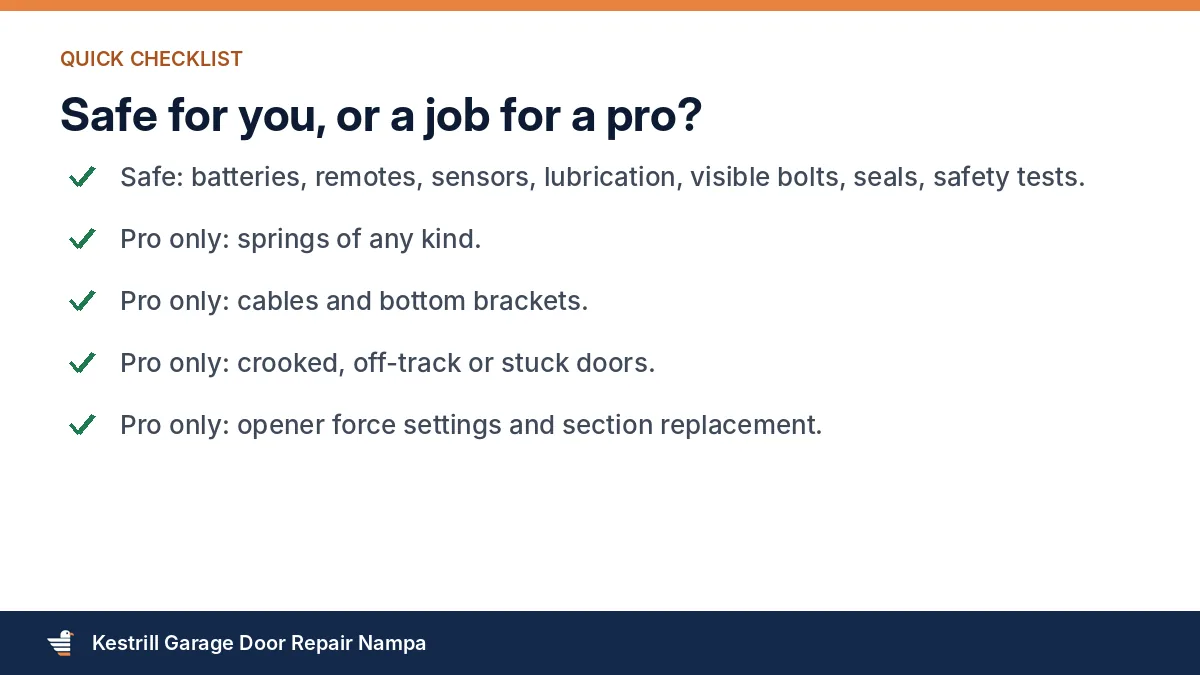
- Replacing remote and keypad batteries, and re-pairing remotes.
- Checking the outlet, breaker, GFCI and the wall control’s lock button.
- Cleaning and realigning the photo-eye sensors.
- Tightening visible hinge and track bracket bolts.
- Lubricating hinges, roller bearings and spring coils with a garage door lubricant.
- Wiping the tracks clean and clearing the threshold.
- Running the photo-eye, 2×4 and balance tests.
- Replacing a bottom seal strip in a sound retainer.
What to leave to a professional
- Anything involving the springs: replacing, adjusting or “just tightening” them.
- Lift cables and the bottom brackets that anchor them.
- A door that is crooked, off its tracks or stuck partway.
- Opener force and travel settings, and anything inside the opener housing.
- Replacing sections, especially the bottom section.
Springs and the parts connected to them store enough energy to break bones, and the CPSC garage door safety guidance advises having unbalanced doors serviced by a professional. When in doubt, look but do not touch.
How to describe the problem when you arrange a repair
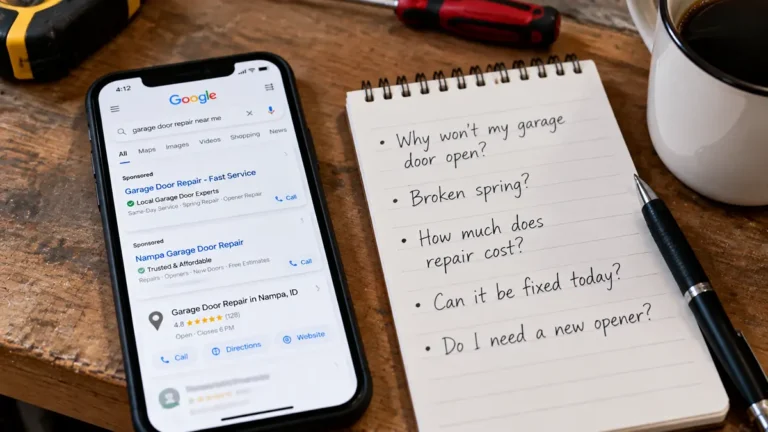
A clear description saves time and often a second visit, because the technician arrives with the right parts. Before you get in touch with a garage door company, note:
- What the door does: will not open, will not close, reverses, hums, is crooked or noisy.
- When it started, and whether anything happened just before: a bang, a storm, an outage, a bump with the car.
- Whether you can see a gap in the spring or a slack cable, without touching either.
- The door size, whether it is insulated or wood, and the rough age of the opener.
- Whether the door is closed, open or stuck partway right now.
Then ask for a diagnosis before any quote, a written price before any work, and an itemized invoice at the end. Those three habits protect you whichever company comes out.
When one problem hides another
Garage door failures often travel in pairs. A broken spring makes the opener strain, which strips its gear. A slipped cable lets rollers twist out of the track. A door that has been closing on a frozen seal may have bent its top section. When you get a problem fixed, it is worth asking the technician to look over the rest of the door while they are there, especially the springs, cables and rollers, so a second failure does not follow a few weeks later.
Why problems cluster in Nampa
Nampa’s climate and housing explain why the same problems come up again and again here. About 108 freezing nights a year finish off tired springs and freeze seals to the slab. About 55 days at 90°F or more dry out grease and seals, and long sunny afternoons blind sensors on west-facing garages. Dust from Canyon County farmland gets into tracks and rollers, and frequent outages trouble openers. Add roughly 11,539 homes built between 2000 and 2009, with original parts now 17 to 26 years old, and you have a city full of doors wearing out on similar schedules. The Nampa garage door repair overview covers these local causes in more depth.
Prevention in one paragraph
Test the safety features monthly, lubricate twice a year, check the seal before winter, and have a professional tune-up roughly once a year, ideally in October. That routine catches most failures while they are still small. Our fall garage door checklist turns it into ten simple steps.
Common garage door problems: quick answers
What are the most common garage door problems?
Broken springs, opener faults, sensor problems, slipped or snapped cables, doors off their tracks, noisy rollers and hinges, worn weather seals and dented sections.
What is the most common garage door repair?
Spring replacement. Standard springs are rated for about 10,000 cycles, which a busy household uses in six to seven years, and they often break on cold mornings.
Can I fix my garage door myself?
You can safely handle batteries, sensors, lubrication, visible bolts, seals and the safety tests. Leave springs, cables, bottom brackets, off-track doors and opener settings to a professional.
How do I know if my garage door problem is serious?
Treat a loud bang, a crooked door, rollers out of the track, a door that will not reverse on the 2×4 test, or frayed cables as serious. Stop using the door and have it checked.
Sources: safety guidance from the CPSC garage door safety guidance; climate from the NOAA 1991–2020 normals for the Boise Air Terminal station; housing ages from Census housing-age data for Nampa.