Why Does My Opener Hum but the Door Won’t Move?
When an opener hums but the door will not move, the motor is getting power and cannot do its job. Most often a broken spring has left the door too heavy to lift; the next most likely causes are a stripped drive gear or a failed start capacitor inside the opener.
The good news is that you can narrow it down safely in a few minutes. This guide explains what the hum means, the five common causes, the checks you can do yourself, how to read other opener sounds, and when to repair or replace.
What the hum is telling you
An opener hums when its motor is getting power but cannot turn, or turns without moving the door. Think of it as the opener saying “I am trying.” The question is what is stopping it, and the answer falls into two camps: the door is too heavy or stuck, or something inside the opener has failed.
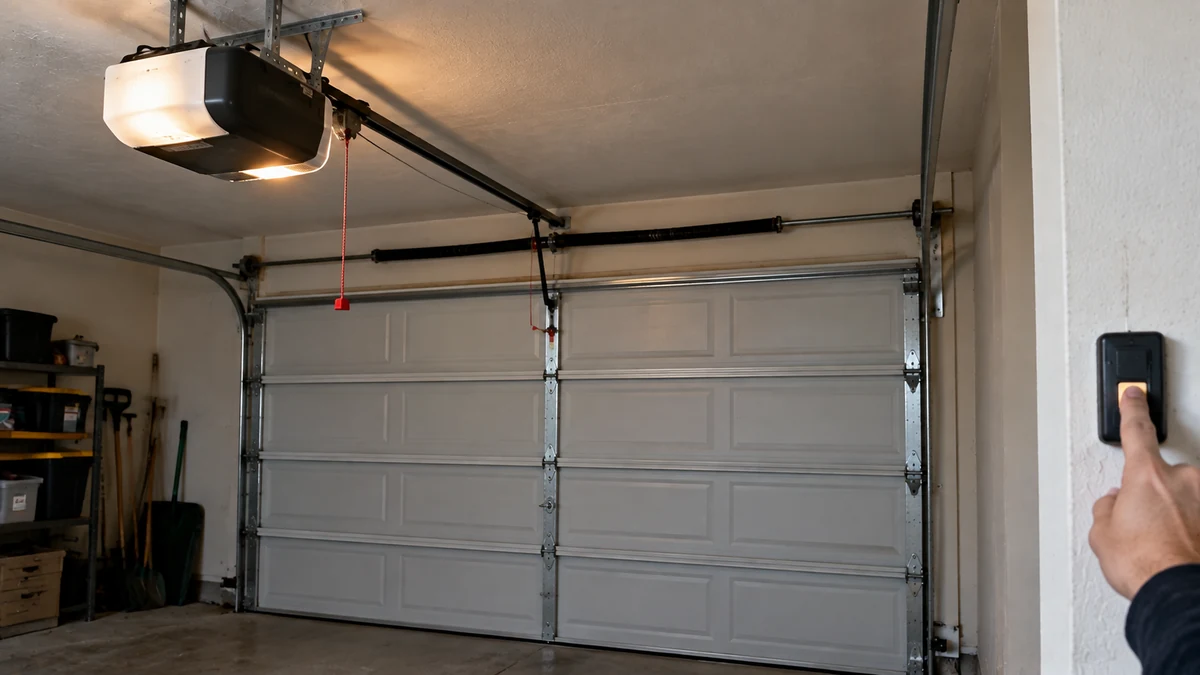
The single most useful check takes thirty seconds and keeps you safe: with the door closed, look up at the spring on the bar above the door. If there is a gap in the coil, the spring has broken, the door is carrying its full weight, and the opener is humming because it simply cannot lift it. Stop there. Do not press the button again, and see the broken spring repair page.
Five common causes, from most to least likely
1. A broken spring
By far the most common reason for an opener that hums with a closed door, especially after a loud bang or on a cold morning. Many openers sense the extra load and stop after an inch or two, or reverse. Running the opener against a broken spring repeatedly can strip its gear, so this is the first thing to rule out.
2. A stripped drive gear
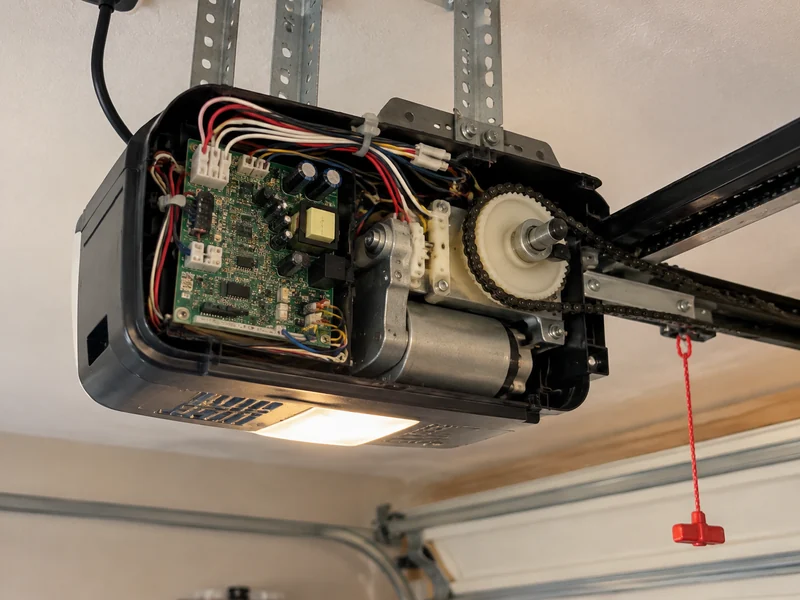
Many chain and belt openers use a nylon or plastic gear inside the motor housing. After years of use, or after straining against a heavy door, the teeth wear off. The motor spins and hums, you may hear a grinding or whirring sound, and the chain or belt does not move at all. It is a common repair on openers that are otherwise in decent shape.
3. A failed start capacitor
The capacitor gives the motor the kick it needs to start. When it fails, the motor hums but never gets going, with no grinding, just a steady buzz. Capacitors are small, inexpensive parts, and replacing one can bring a healthy opener back to life. Heat in a closed west-facing garage during Nampa summers is hard on capacitors and other electronics.
4. The door is locked or jammed
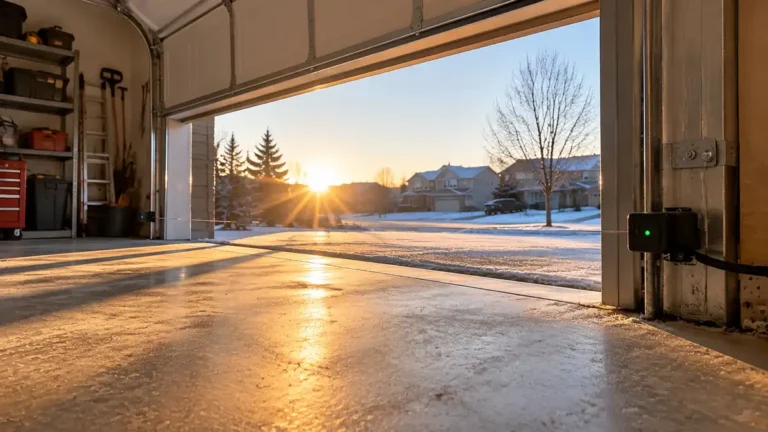
Some doors have a manual slide lock on the inside. If someone has engaged it, the opener hums against a door that cannot move. A door that is frozen to the slab, has a roller jammed in a bent track or has come off its tracks produces the same symptom. Check the lock, look at the tracks and, in winter, look at the bottom seal.
5. A seized or burnt-out motor
Less common, but it happens on older units: the motor itself has seized or its windings have failed. You may notice a burning smell or that the unit is very hot to the touch. On an opener past about 15 years old, this usually means replacement rather than repair.
Safe checks you can do yourself
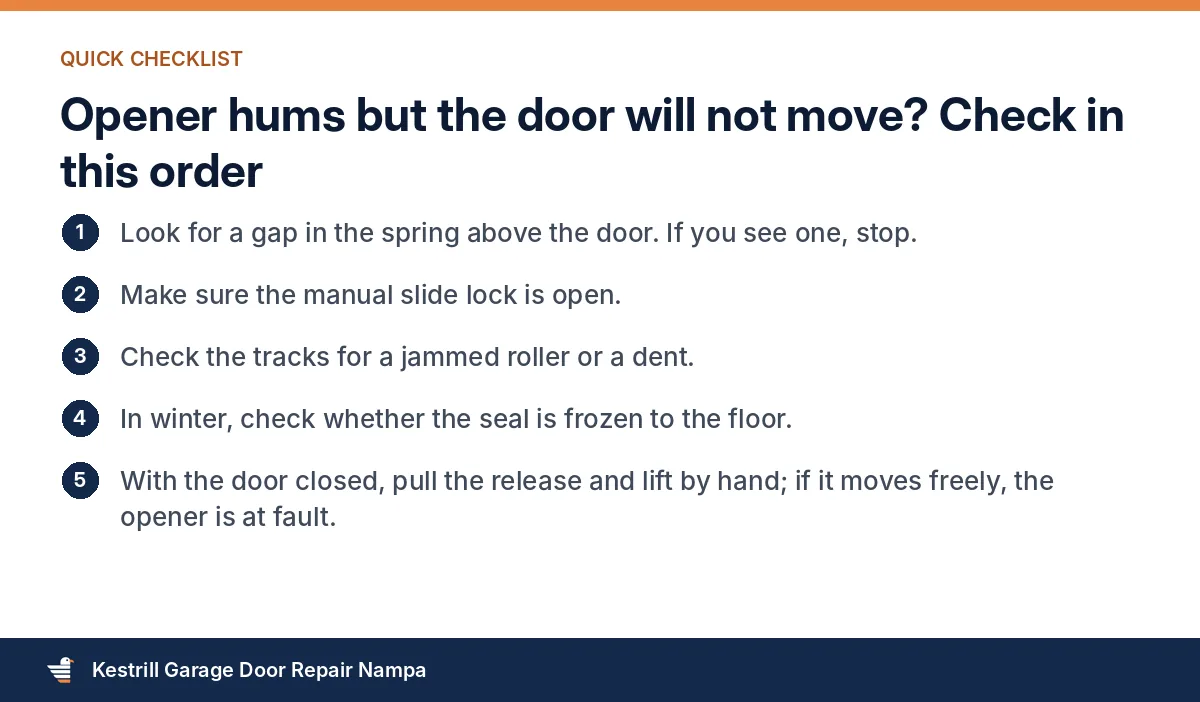
- Look for a gap in the spring above the door. If you find one, stop.
- Check that the manual slide lock on the door is open.
- Look along both tracks for a roller out of line, a dent, or something wedged in the track.
- In winter, check whether the bottom seal is frozen to the floor.
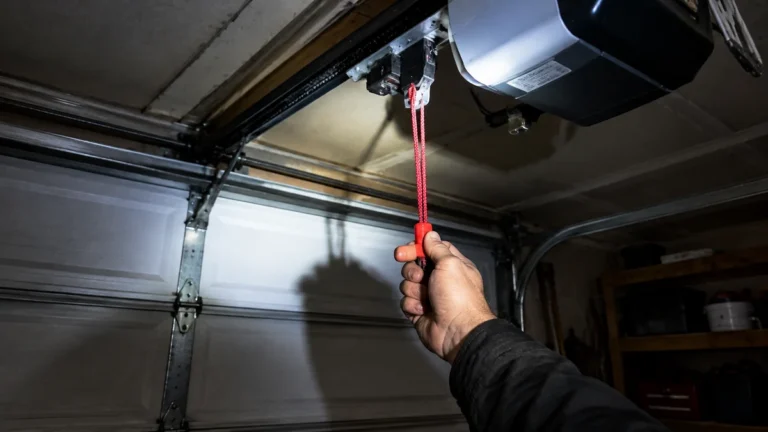
- With the door fully closed and the springs intact, pull the red release cord and lift the door by hand. If it moves easily and stays put halfway, the door is fine and the opener is the problem.
- Unplug the opener for a minute and try again; occasionally a power glitch leaves the logic confused.
Do not open the opener housing while it is plugged in, and do not try to adjust spring tension, the bottom brackets or the opener’s force settings yourself.
Hum, click or silence: what each one means
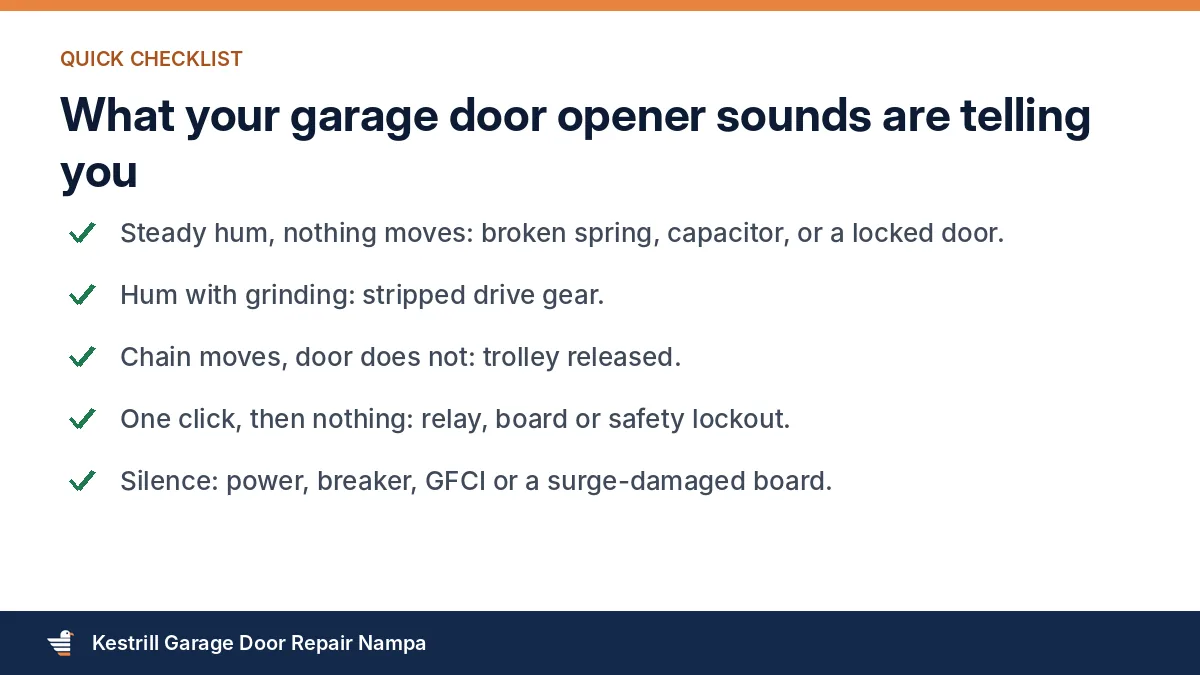
| What you hear | Most likely cause |
|---|---|
| A steady hum, nothing moves | Broken spring, failed capacitor, locked or jammed door |
| A hum with grinding or whirring, chain or belt not moving | Stripped drive gear |
| The chain or belt moves, the door does not | Trolley disconnected by the release cord |
| A single click, then nothing | Relay or logic board fault, or a safety lockout |
| Nothing at all | No power: outlet, breaker, GFCI, or a board damaged by a surge |
Nampa’s frequent outages make that last row common. If the opener went silent straight after a storm or an outage, a surge may have damaged the logic board. The garage door opener repair page covers board problems in more detail.
Why Nampa openers start humming
Three local conditions make humming openers more common here than in milder places. The first is age: Nampa’s biggest group of homes was built between 2000 and 2009, and plenty of those garages still have the original opener, well past the 10 to 15 years most last. Worn gears and tired capacitors are exactly what fails at that age.
The second is heat. About 55 days a year reach 90°F or more in the Treasure Valley, and a closed garage facing west gets considerably hotter than the outdoors by late afternoon. Electronic parts on the ceiling cook a little more every summer. The third is winter: about 108 nights a year at or below freezing finish off old springs, and a broken spring is the leading cause of a humming opener. Put those together and a humming opener on a January morning in a 20-year-old house is almost a local tradition.
What a technician does on a humming-opener call
- Checks the door first: springs, cables, balance and tracks, with the opener disconnected.
- Tests power, the wall control and the safety sensors.
- Opens the opener housing to inspect the drive gear, sprocket, capacitor and motor.
- Explains the fault and gives a written price for the repair, plus a replacement option if the opener is near the end of its life.
- After the fix, sets the travel limits and close force and runs the auto-reverse test.
If the real cause was a broken spring, expect the springs to be replaced first and the opener checked afterwards; a new gear on an opener lifting an unbalanced door will not last.
Repair or replace the opener?
A gear kit or a capacitor on an opener under about ten years old is usually a sensible repair. Replacement makes more sense when the opener is 15 years old or more, the motor itself has failed, the board is discontinued, or it lacks features you now want, such as battery backup for outages or quieter belt drive. Thousands of Nampa homes built in the 2000s still have their original openers, so this decision comes up a lot. The opener installation page explains the options.
Why the hum keeps coming back
If you have replaced a gear and the opener starts humming again within a year or two, the opener probably is not the root cause. The usual culprit is a door that is out of balance, so the opener is lifting weight the springs should be carrying. Run the balance check: with the opener disconnected, lift the door halfway and let go. If it drops or rises, have the springs adjusted or replaced. A garage door tune-up covers this and protects the new gear.
When the opener hums: quick answers
Why does my garage door opener hum but not open?
The most common cause is a broken spring that leaves the door too heavy to lift. Other causes are a stripped drive gear, a failed start capacitor, a locked or frozen door, or a seized motor. Check the spring first, before pressing the button again.
Can I fix an opener that hums myself?
You can safely check the spring, the door lock, the tracks and whether the door moves freely by hand. Replacing gears or capacitors involves opening the unit and is better handled by a technician, and springs should always be left to a professional.
Is it bad to keep pressing the button when the opener hums?
Yes. Each attempt strains the motor and gear, and if a spring is broken it can strip the gear or bend the door. Unplug the opener until the cause is found.
What does it mean if the opener hums and the light blinks?
On many openers a blinking light points to the safety sensors or a lockout after the motor strained. Combined with a hum, check the spring first, then the sensors. If neither explains it, the opener needs testing by a technician.
How long do garage door openers last?
Most last about 10 to 15 years. A humming opener near or past that age, especially one that has needed repairs before, is often worth replacing rather than fixing.
Sources: outage counts from PowerOutage.us; balance test from the CPSC garage door safety guidance; housing ages from Census housing-age data for Nampa.