Garage Door Spring Broke on a Cold Morning: What to Do in Nampa
If your garage door spring broke on a cold morning, leave the door closed, stop using the opener and do not touch the spring. Those three things keep a frustrating morning from turning into an injury or a bigger repair.
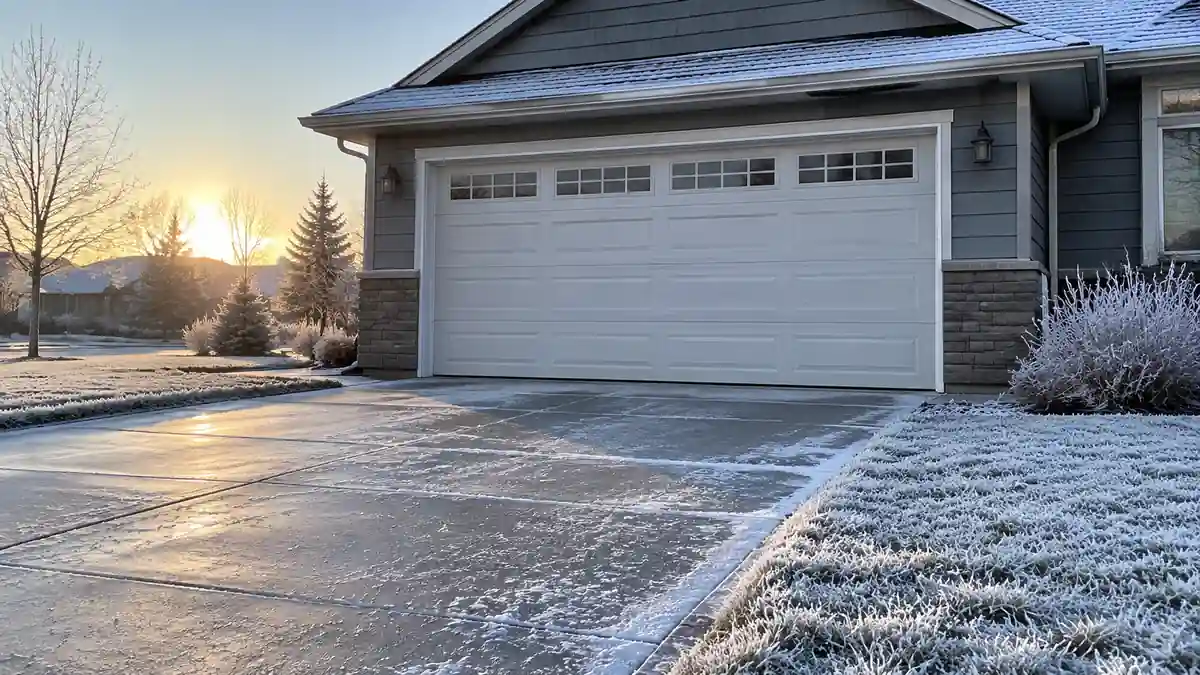
It is no coincidence that it happened when it did. Springs in the Treasure Valley have a habit of giving out on the first truly cold mornings of winter. This guide explains why, what to do right now, how to get the car out if you really have to, and how to make next winter easier.
Why springs choose the coldest mornings
Torsion springs fail from metal fatigue. Every time the door opens and closes, the steel coil twists and relaxes, and after enough of those cycles a microscopic crack forms and slowly grows. Standard springs are rated for roughly 10,000 cycles, which a family using the door four times a day burns through in six to seven years.
Cold does not break a healthy spring, but it is very good at finishing off a tired one. Steel is a little less forgiving when it is cold, the grease on the rollers and hinges stiffens overnight, and the first cycle of the morning asks the spring to do its hardest work while everything else in the door is resisting. A crack that has been growing for months gives way at exactly that moment, usually with a bang loud enough to be mistaken for a car backfiring or something falling in the garage.
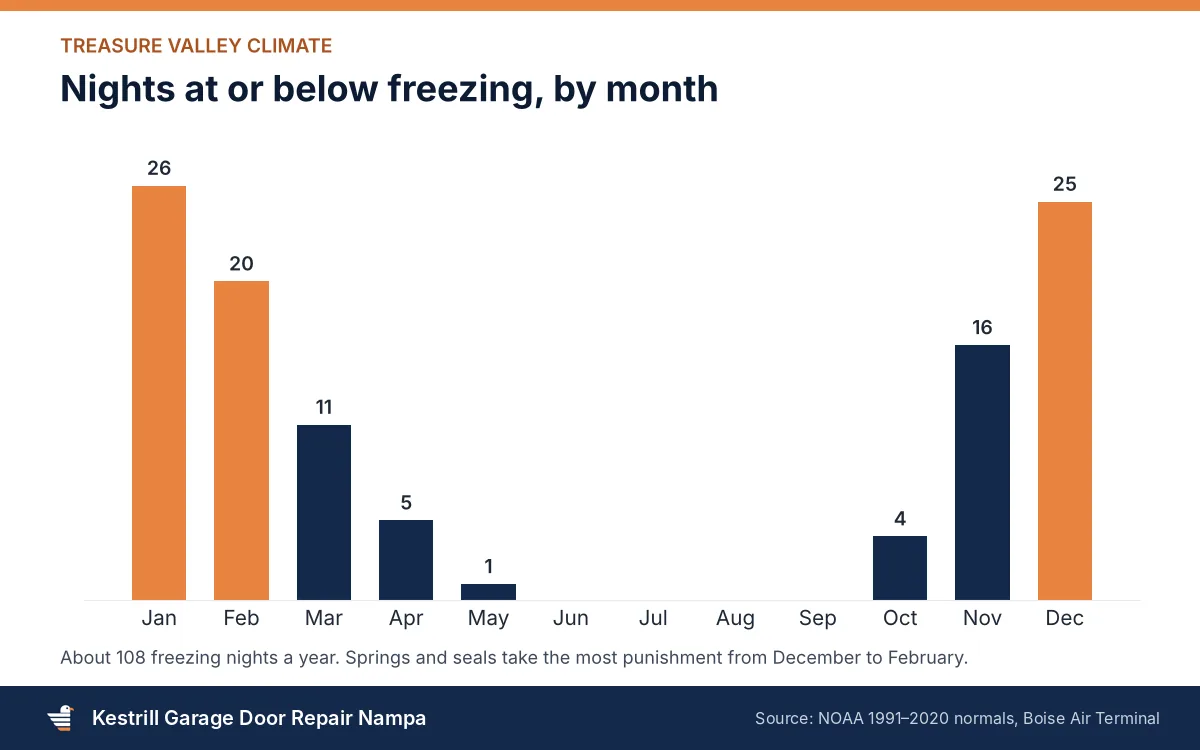
The Treasure Valley averages about 108 nights a year at or below freezing, with most of them packed into December, January and February. When an arctic outbreak arrives, as it did in mid-January 2024 when temperatures fell into the single digits and Nampa took around seven inches of snow in a day, garage door companies across the valley see a cluster of broken springs within days. If yours broke on a morning like that, you have plenty of company.
The first ten minutes
Here is the short version. The broken spring repair page has the full detail on what a technician does afterwards.
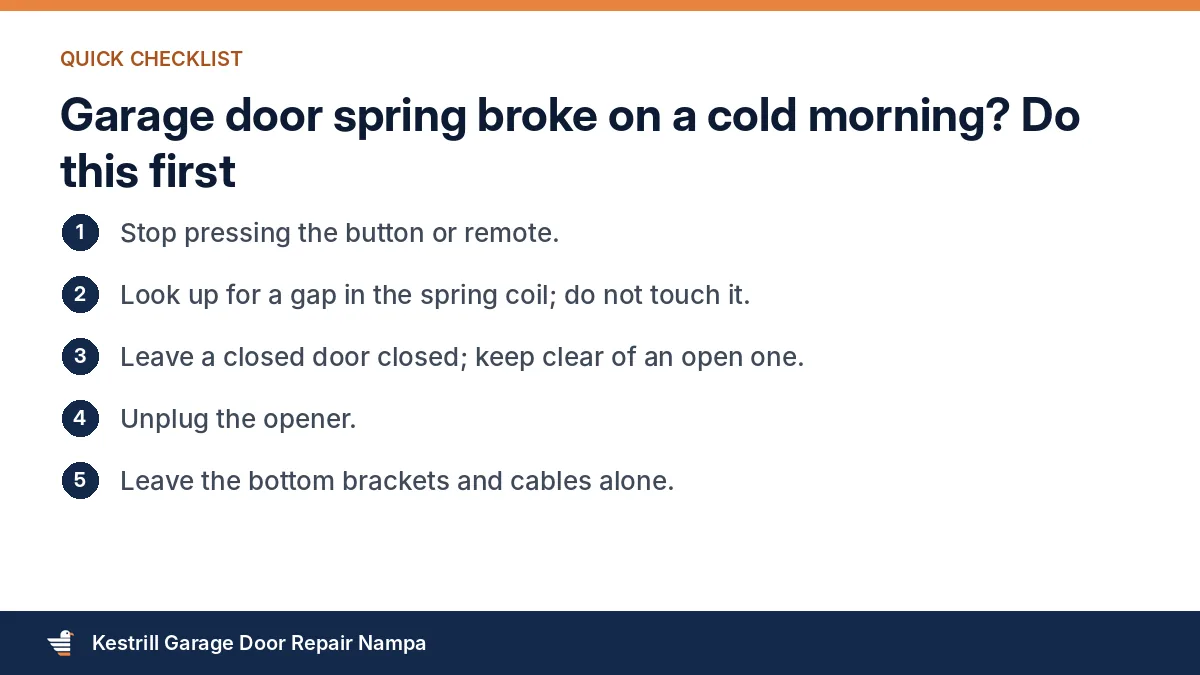
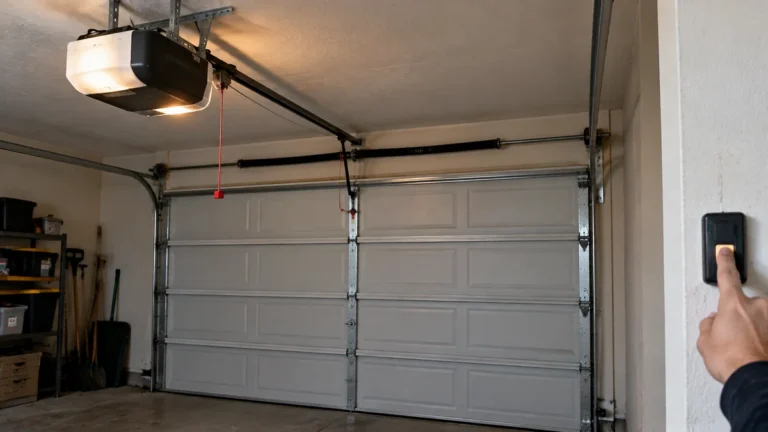
- Stop pressing the button. An opener that strains against a door with a broken spring can strip its drive gear or bend the top section of the door. One failed part can become three.
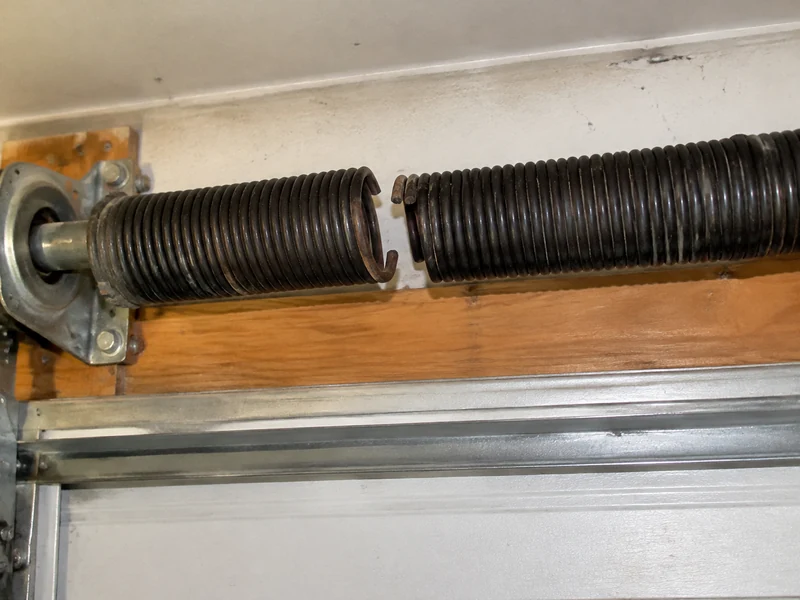
- Look up, do not touch. With the door closed, look at the bar above it. A gap of an inch or two in the coil confirms the spring has snapped.
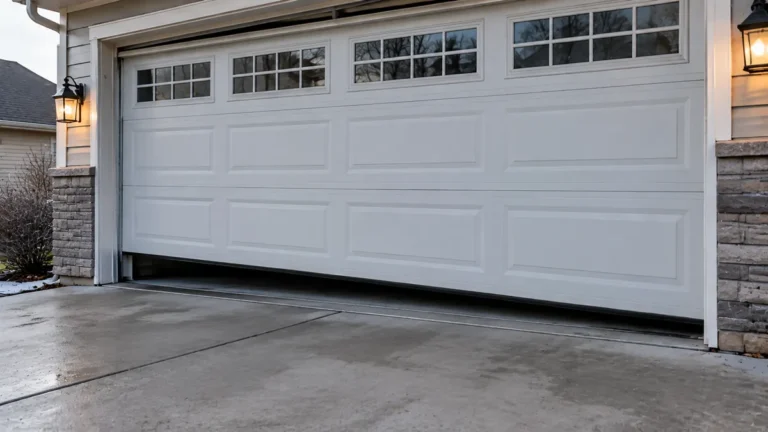
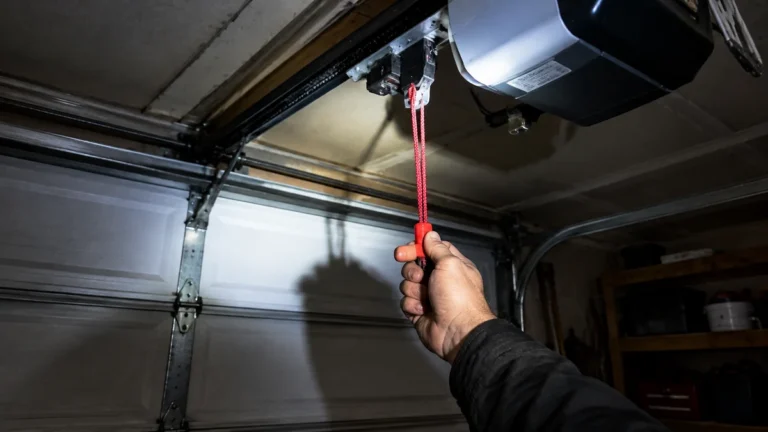
- Leave a closed door closed. It is the safest position. If the door is stuck partway open, keep everyone out from under it and do not pull the red release cord.
- Unplug the opener so nobody in the house presses a remote out of habit.
- Leave the bottom brackets alone. They anchor the lift cables and can still be under tension.
Can you still get the car out?
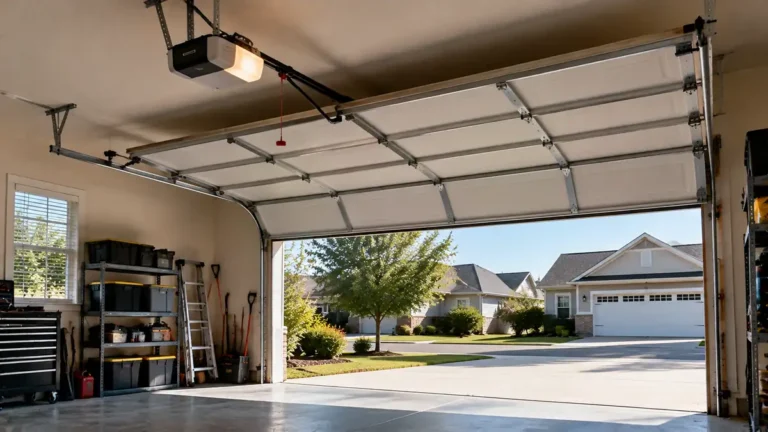
Sometimes. A two-car door with no spring help can weigh 150 pounds or more, so lifting it is a two-adult job at minimum. If you decide to try, do it only with the door fully closed. Pull the red release cord, lift together using the handles or the bottom edge with your hands flat, and once the door is fully open, clamp both tracks just below the bottom rollers with C-clamps or locking pliers so the door cannot slide down. Back the car out and leave the door where it is.
If you are on your own, if the door barely moves, or if you notice a cable hanging loose, stop. Arrange a ride, work from home, or wait. A door that falls while someone is under it does far more damage than a missed morning, and a broken spring is a very fixable problem.
If the spring broke with the door open
This is the trickier case. If the door was up or halfway up when the spring let go, the opener is now the only thing holding it, through a thin trolley on the rail. Do not pull the red release cord: without spring tension, the door would drop under its full weight. Do not try to close it with the remote either, because the opener may lose control of the descent.
Keep everyone, including pets, out of the doorway and away from the garage until a technician arrives. If the house needs securing, lock the interior door between the garage and the house. A technician will clamp and support the door before doing anything else.
Older Nampa homes with extension springs
Some older homes, particularly single-car garages and houses from the 1980s and earlier, use extension springs that stretch along the horizontal tracks instead of a torsion spring above the door. When one of those breaks in the cold, it can whip across the garage unless a safety cable runs through its centre. If you see a spring hanging loose beside a track, keep people out of that side of the garage, and ask the technician to add safety cables if your door does not have them. Some homeowners use the visit to convert to a torsion system, which runs more smoothly on heavier doors.
What to tell the technician
A few details help a technician bring the right springs on the first visit, which matters on a cold-snap week when everyone is busy:
- Whether you heard a bang, and roughly when.
- Whether you can see a gap in the coil, and whether there are one or two springs on the bar.
- Your door size and whether it is insulated, wood-look or plain steel.
- Whether the opener was run after the spring broke, and whether any cable looks slack or off its drum.
- Whether the door is closed, open or stuck partway.
Ask for a written price before work begins. It should cover both springs on a two-spring door, because the unbroken one has done exactly the same number of cycles and will not be far behind. That is standard practice, not an upsell.
What the repair looks like
A technician will clamp the door, unwind any remaining tension with proper winding bars, measure the old springs and the door so the new ones match its weight, fit the new pair, check the cables and drums, wind and balance the springs, and finish with an opener check and the auto-reverse test. On a typical double door it takes around an hour once they are on site.
If the opener was run hard against the broken spring, have its gear and rail checked as part of the same visit. And if the cables came off the drums, the cable repair page explains why they are usually replaced in pairs as well.
Making next winter easier
- Know your spring’s age. Write the date on the garage wall in marker when springs are replaced. At six or seven years on standard springs, start budgeting.
- Book a tune-up in October. A pre-winter tune-up catches a weak spring before the cold does.
- Lubricate the coils twice a year with a garage door lubricant, not a solvent spray.
- Consider high-cycle springs if the garage is your household’s front door. They cost more but last two to three times as long.
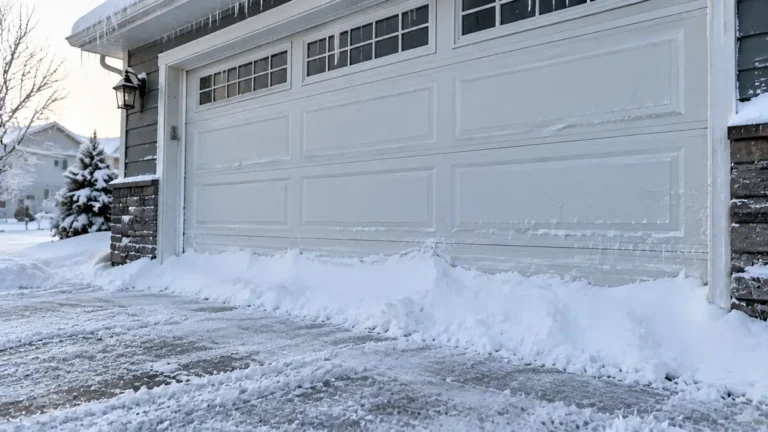
- Clear meltwater from the threshold so the bottom seal does not freeze to the slab and add extra load on cold mornings.
None of this makes a spring last forever. It just means the next one breaks on your schedule, or gets replaced before it breaks at all.
Garage door spring broke: quick answers
Why did my garage door spring break on a cold morning?
The spring was already near the end of its cycle life. Cold mornings add load, because grease stiffens and the door resists more on its first cycle, and that extra strain is often enough to snap a fatigued spring.
Can I open my garage door after the spring broke?
Only by hand, only with the door fully closed and the release cord pulled, and only with two adults lifting. Clamp the tracks once it is up. If it feels too heavy or a cable is loose, leave it closed.
Should both springs be replaced if only one broke?
Yes, on a two-spring door. Both springs have the same wear, and pairing a new spring with an old one leaves the door unbalanced. Replacing both avoids a second visit soon after.
Is it safe to stay in the garage after a spring breaks?
Yes, as long as you stay clear of the door, the spring shaft and the bottom brackets, and nobody operates the opener. The broken spring itself has released most of its energy; the risk comes from trying to move the door or adjust anything under tension.
How long does it take to fix a broken garage door spring?
About an hour on a standard door once the technician arrives. During cold snaps, demand rises across the valley, so the wait for an appointment can be the longer part.
Sources: temperature normals from the NOAA 1991–2020 normals for the Boise Air Terminal station; local climate from the City of Nampa climate summary; safety guidance from the CPSC garage door safety guidance.