Garage Door Opens by Itself: Common Causes
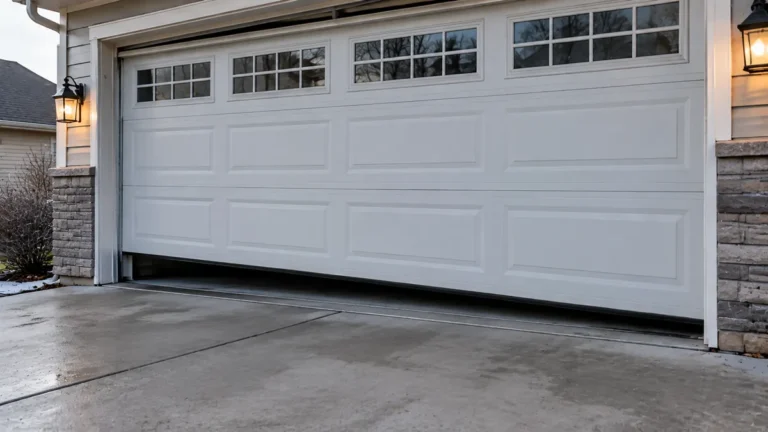
When a garage door opens by itself, the opener is almost always receiving a signal it should not: from a stuck remote or wall button, a short in the low-voltage wiring, an old remote code, or a logic board damaged by a power surge. Unplug the opener and lock the door manually first, then track down the cause.
This guide covers how to secure the house tonight, the five most common causes, how to narrow them down, the fixes you can safely make yourself and when the opener should simply be replaced.
First, make the house secure
A door that opens or closes on its own is a security problem before it is a repair problem, and it can be a safety problem if it closes on someone. Until the cause is found:
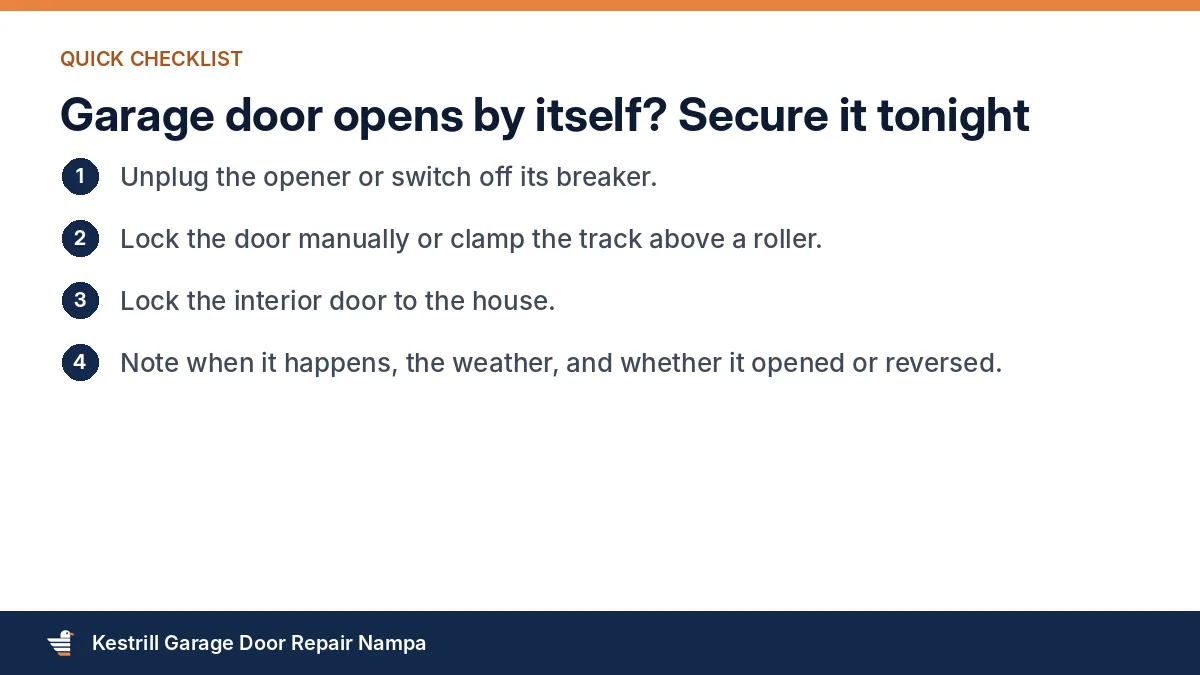
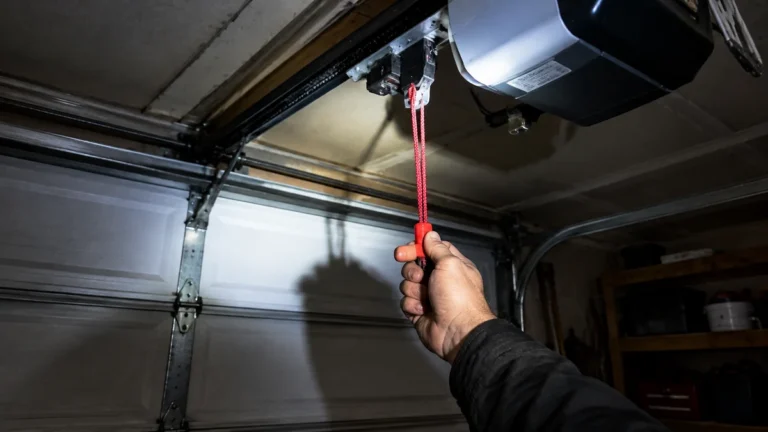
- Unplug the opener or switch off its breaker. That stops any phantom signal from moving the door.
- Lock the door manually with its slide lock if it has one, or clamp the track just above a roller so the door cannot be lifted from outside.
- Lock the interior door between the garage and the house.
- Note when it happens: time of day, weather, whether anyone pressed anything, whether it opened or closed. Patterns point straight at the cause.
The usual causes, most likely first
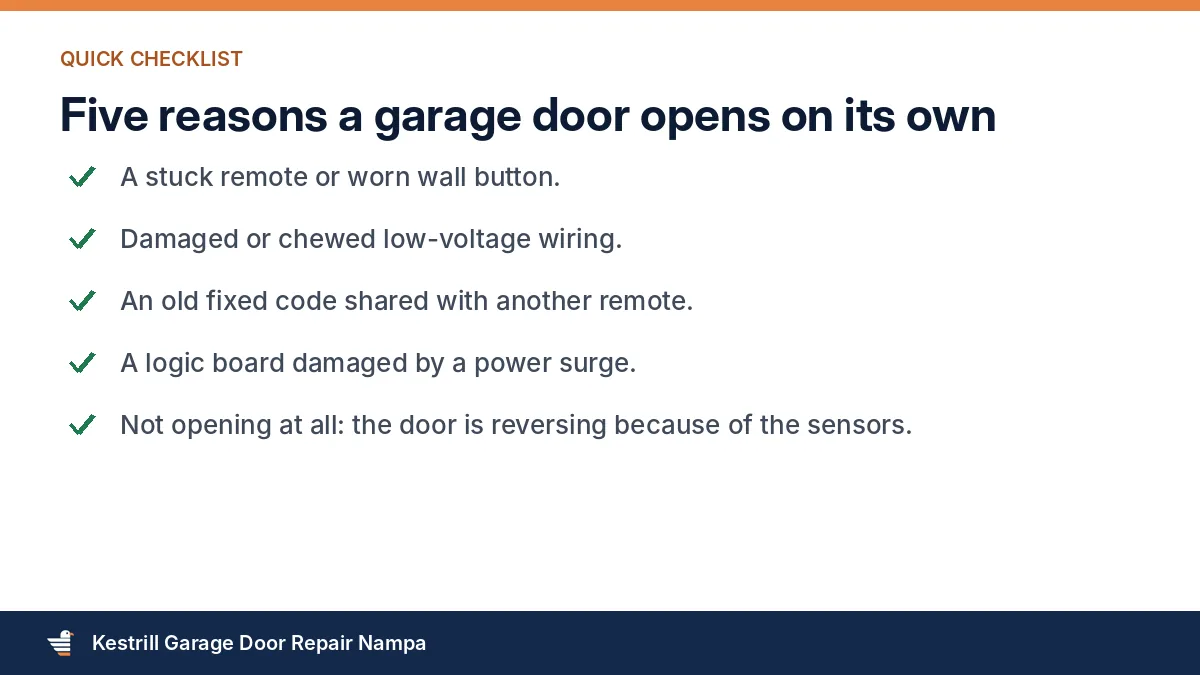
1. A stuck or faulty button somewhere
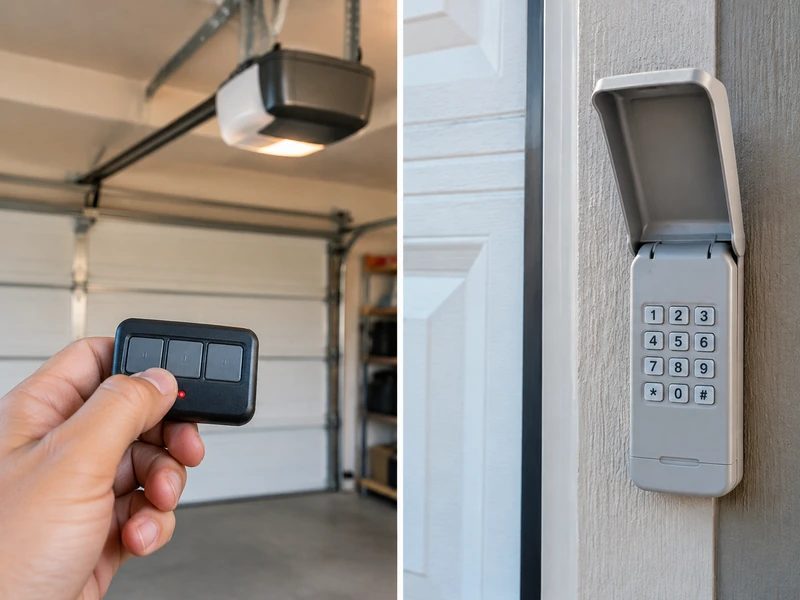
A remote wedged between car seats, a remote button that sticks after being dropped, or a wall button with a worn contact can send a signal on its own. Remove the batteries from every remote, including spare ones in drawers and old cars, and see if the problem stops. Press the wall button several times and watch whether it springs back cleanly.
2. Damaged low-voltage wiring
The thin wires running from the wall button and the safety sensors to the opener can be pinched by a staple, nicked by shelving, or chewed by mice. If two wires touch, the opener sees a button press. Intermittent shorts are especially common when the garage gets damp or when temperatures swing, which suits a Nampa winter perfectly. Look along the wire runs for damage.
3. Someone else’s remote
Older openers, mostly from before the mid-1990s, used fixed codes set by small switches. A neighbour with the same code, or anyone with an inexpensive code grabber, can open the door. Even with modern rolling-code openers, a remote you forgot you gave to a contractor or a previous owner can still be programmed in. Clear all codes from the opener using its learn button and re-pair only the remotes and keypad you actually use.
4. A logic board fault, often after a surge
Power surges when the electricity comes back after an outage can damage the opener’s circuit board, and Nampa sees plenty of outages, 55 in the 90 days to late October 2026 according to PowerOutage.us. A damaged board can trigger the motor randomly or misread its inputs. If the problem started right after a storm, this is a strong suspect.
5. The door reverses on its own
Some homeowners describe a door that “opens by itself” when it actually started closing and reversed. That is the safety system responding to a blocked or misaligned sensor, sun glare on the sensor, or a close-force setting that is too sensitive. The fix is entirely different, so watch carefully: does it start from closed, or does it go back up after starting down?
How to narrow it down
| Clue | Points to |
|---|---|
| Stops when remote batteries are removed | A stuck or faulty remote |
| Happens when it is damp, cold or windy | Damaged wiring or a weak wall button contact |
| Started after a storm or outage | Surge-damaged logic board |
| Opener is very old with code switches | Fixed-code interference from another remote |
| Door starts down, then goes back up | Sensors or close-force setting, not a phantom signal |
Fixes you can do safely
- Remove batteries from every remote, then put them back one at a time to find a faulty one.
- Clear the opener’s memory and re-pair only the remotes and keypad you use. Your manual explains the learn button sequence.
- Inspect the wall button and the low-voltage wires for damage, staples or chew marks.
- Clean and realign the safety sensors if the door is actually reversing.
- Plug the opener into a surge protector once it is working again.
Leave the inside of the opener housing, the board and any mains wiring to a technician.
Smart openers, apps and shared access
Smart openers add a few new ways for a door to move without anyone in the garage. A family member may have triggered it from the app, a scheduled close may be set, or a delivery or guest access feature may have been granted to someone and never removed. Some vehicles also have built-in garage buttons that are easy to bump. Check the app’s history, which usually records who opened the door and when, and review any shared users, schedules and linked vehicles.
If the history shows no command at the times the door moved, the cause is local to the opener: wiring, a button or the board. If it shows commands you did not expect, change the account password, remove unknown users and turn on alerts for every open and close.
What a technician checks
- Tests the wall button and its wiring for shorts, with a meter rather than guesswork.
- Inspects the sensor wiring and connections at the opener head.
- Clears the opener’s memory and re-pairs your remotes, keypad and any smart accessories.
- Checks the logic board and receiver for faults, especially after a storm.
- Tests the photo-eyes, the travel limits and the close force, then runs the auto-reverse test.
If the opener is old and the board is failing, the technician should give you a repair price and a replacement option in writing so you can compare.
When the opener itself needs replacing
If the opener uses old fixed-code switches, has a damaged board on a model no longer supported, or is past about 15 years old, replacing it is usually the better fix. Modern openers use rolling codes that change with every press, many offer app alerts when the door moves, and most can take battery backup and surge protection. The opener installation page covers what to look for; for a repair on a newer unit, see garage door opener repair.
Why it matters in Nampa neighbourhoods
A door that opens on its own overnight leaves cars, tools and bikes on show and gives access to the house through the interior door. In newer subdivisions where many homes were built in the same few years, it is not unusual for several houses on a street to have similar openers, which is one more reason to clear old codes and make sure only your own remotes are paired. If you have just bought a home, clearing the opener’s memory on day one is a sensible habit, along with changing the keypad code.
If it closes by itself
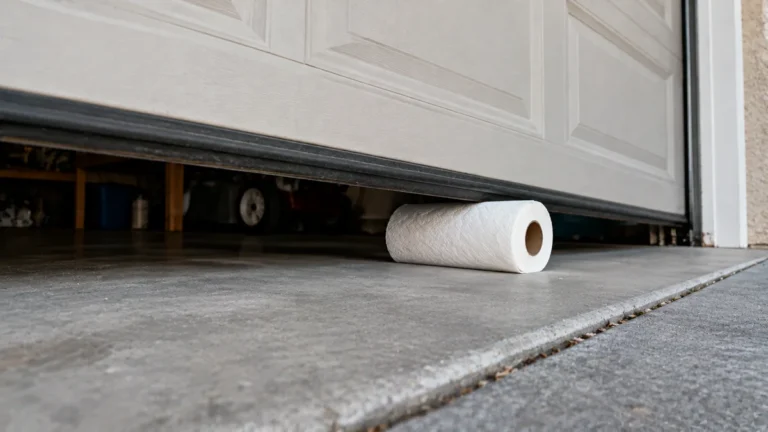
A door that closes unexpectedly is more dangerous than one that opens, because the safety system is the only thing between the door and whatever is underneath it. Run the photo-eye test and the 2×4 auto-reverse test from the CPSC garage door safety guidance straight away. If the door does not reverse on contact, disconnect the opener and keep it disconnected until a technician has checked it.
Garage door opens by itself: quick answers
Why does my garage door open by itself?
The usual causes are a stuck remote or wall button, damaged low-voltage wiring, another remote using the same code on an older opener, or a logic board damaged by a power surge. Some doors that seem to open on their own are actually reversing because of the sensors.
Can a neighbour open my garage door with their remote?
On older fixed-code openers it is possible. Modern rolling-code openers make it very unlikely. Clearing the opener’s memory and re-pairing your own remotes removes any old codes.
Can a power surge make a garage door open by itself?
Yes. A surge can damage the opener’s logic board, which may then trigger the motor randomly. Problems that start after a storm or outage often point to the board.
What should I do tonight if my garage door keeps opening by itself?
Unplug the opener, lock the door manually or clamp the track, and lock the interior door to the house. Then work through the causes in daylight or have a technician check it.
Is a garage door that opens by itself dangerous?
It is a security risk, and if it also closes unexpectedly it can be a safety risk. Test the auto-reverse with a 2×4 and keep the opener unplugged until the cause is fixed.
Sources: outage counts from PowerOutage.us; safety testing from the CPSC garage door safety guidance.