Garage Door Problems After a Windstorm
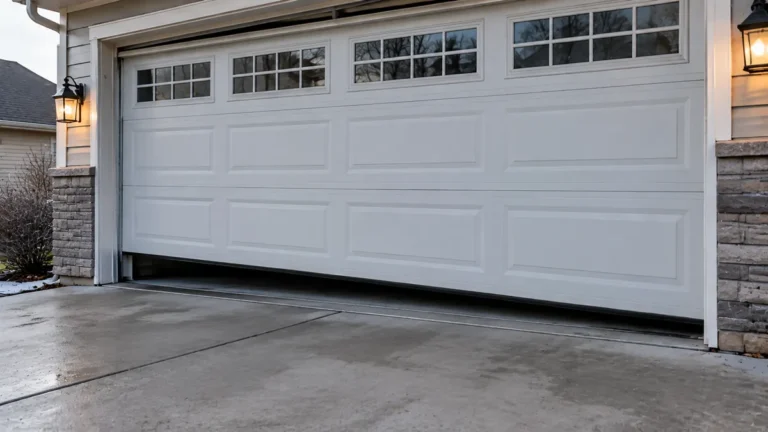
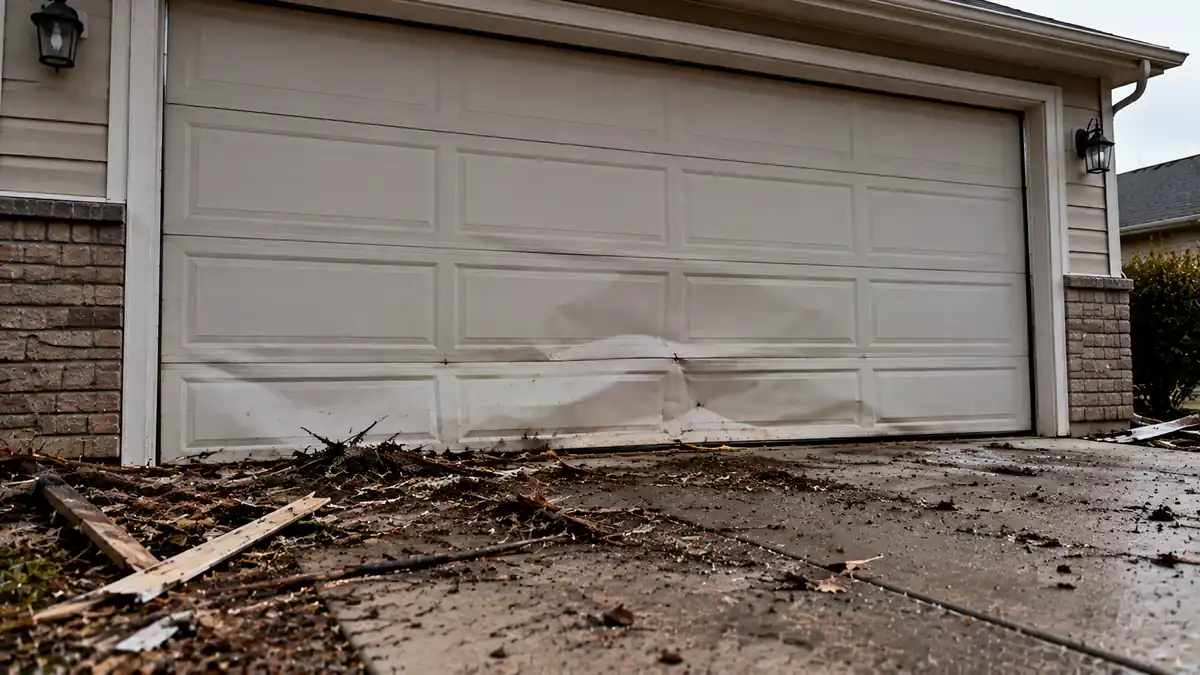
After a windstorm, check your garage door before you press the button. Wind can bow sections, crack hinges, loosen track brackets and nudge rollers out of the track, and a damaged door can bind or jump its rails the first time the opener moves it.
Nampa gets strong storm gusts several times a year, usually with dust and power outages. This guide covers how wind damages a door, a seven-step walk-round check, what common problems mean, how to protect your door next time and what to do about insurance.
How wind damages a garage door
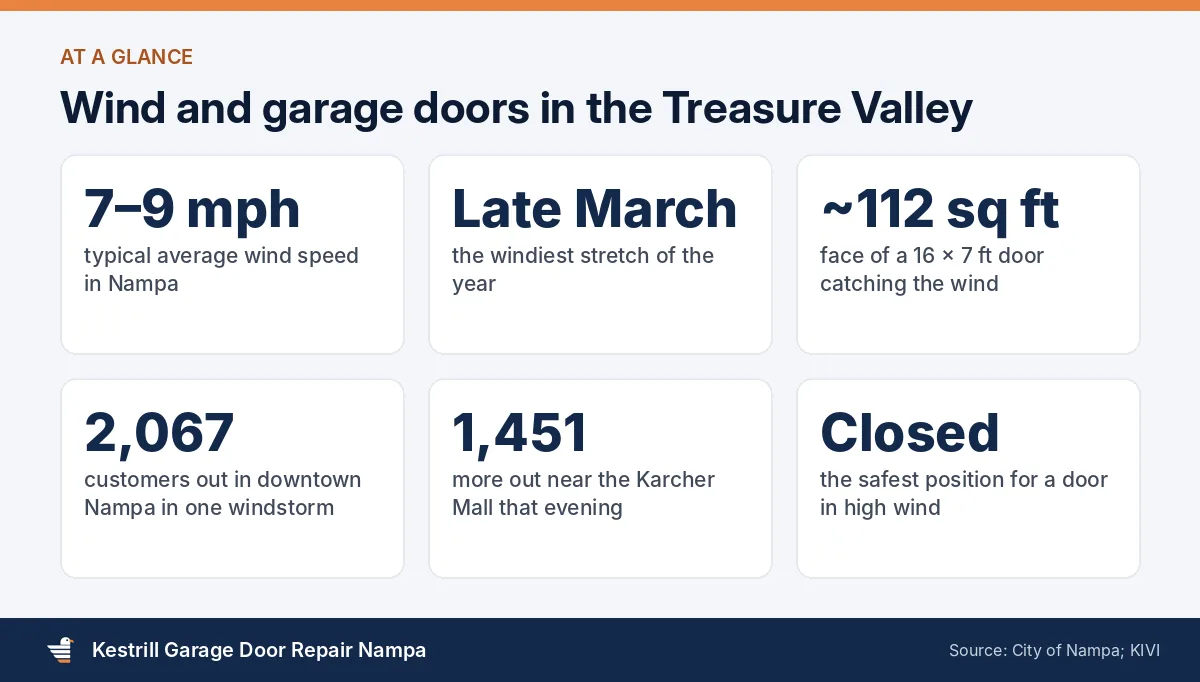
A two-car garage door is around 16 feet wide and 7 feet tall, roughly 112 square feet of fairly thin steel facing the street. Wind pushing on that surface bows the sections inward, strains the hinges and pulls on the track brackets. A door left partly open is worse still: wind gets underneath and lifts it like a sail, twisting the sections against the tracks.
Nampa’s average breeze is modest, around 7 to 9 mph according to the City of Nampa, with the windiest stretch of the year in late March. The damage comes from storm systems, which can bring gusts far above that average, often carrying dust and debris. One spring windstorm knocked out power to about 2,067 Idaho Power customers in downtown Nampa and 1,451 near the Karcher Mall, as KIVI reported, and plenty of garage doors took a beating the same evening.
Walk-round check after a windstorm
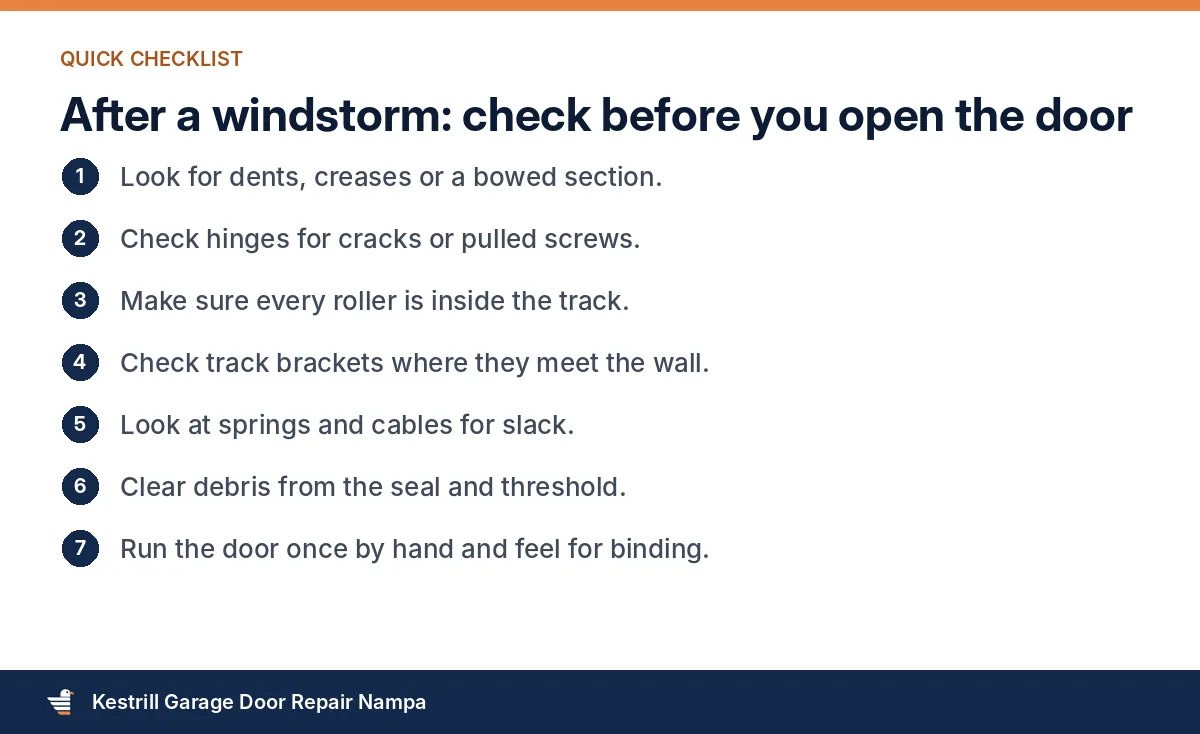
Do this before you run the opener. A door with hidden damage can bind, jump its tracks or bend further the first time it moves.
- Look at the outside face for dents, creases or a section bowed inward, especially across the middle of the door.
- From inside, check each hinge between sections for cracks or pulled-out screws.
- Look along both tracks for bends and make sure every roller is seated inside the channel.
- Check the track brackets where they bolt to the wall; wind can loosen them.
- Look at the springs and cables for anything slack or out of place.
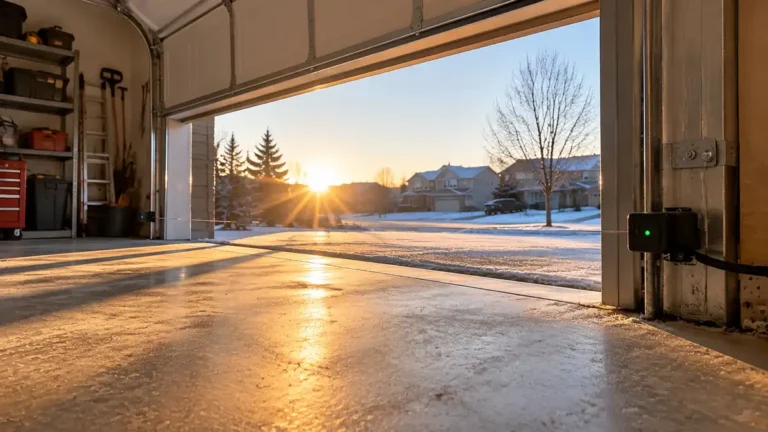
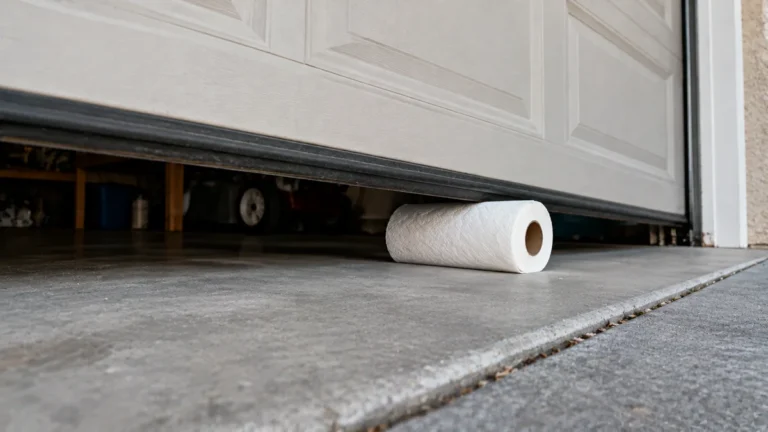
- Check the bottom seal and threshold for blown-in debris, gravel and dust.
- Then run the door once by hand with the opener released, if the door is closed and the springs are intact, and feel for binding.
Common windstorm problems and what they mean
A bowed or dented section
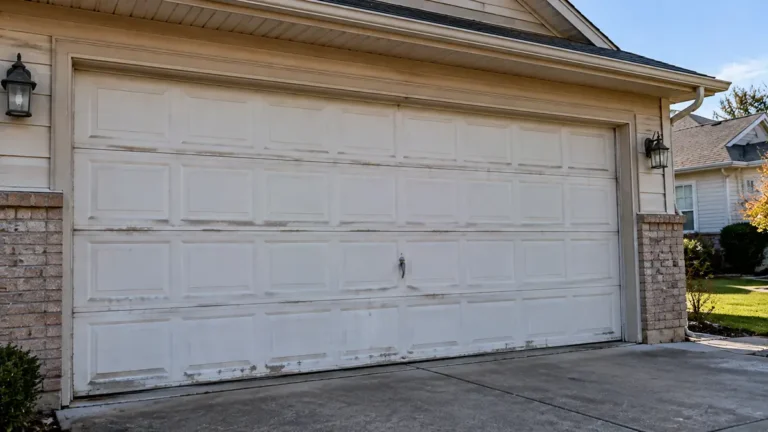
If a section is bowed but not creased, it may still run, though it often rubs or binds. A creased or folded section usually needs replacing. The garage door panel repair page explains when one section is enough and when the door is due for replacement.
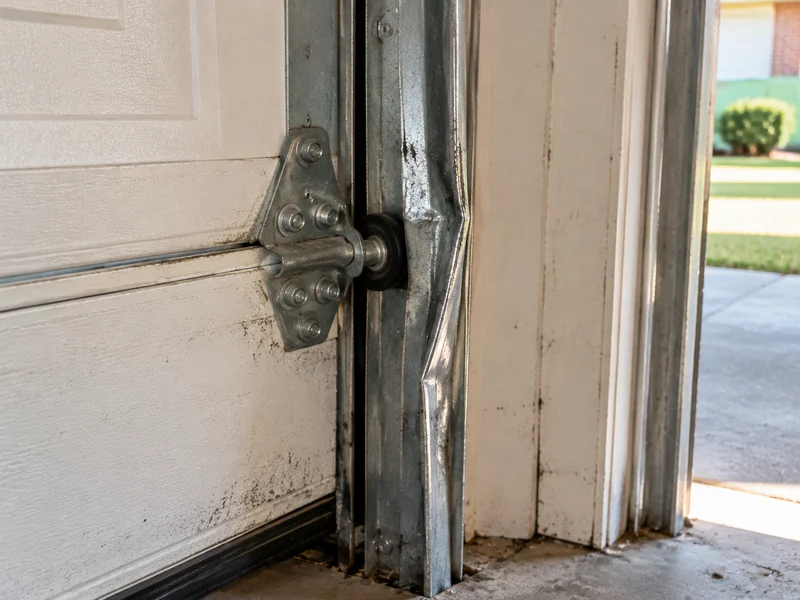
Rollers out of the track
A door that was twisted by a gust can leave rollers outside the rail. If you see that, do not run the door; it is now an off-track repair and needs careful handling.
An opener that will not work
Windstorms knock out power, and the surge when it returns can damage an opener’s logic board. If the door is fine but the opener is silent or erratic after a storm, reset the GFCI outlet and breaker, unplug the opener for a minute, and if it still misbehaves, see garage door opener repair.
Sensors out of line or coated in dust
Blown debris knocks sensor brackets and dust coats the lenses. If the door starts down and reverses, wipe and realign the sensors before assuming anything is broken.
Grit in the tracks and rollers
Dust storms push fine grit into everything. If the door is suddenly louder or rougher, wipe the tracks clean and lubricate the roller bearings and hinges.
Dust storms: the quieter kind of damage
Not every windstorm leaves a dent. Some of the summer storms that roll across southwest Idaho carry walls of dust from dry fields and construction sites, and the damage they do is slower. Fine grit packs into the bottom of the vertical tracks, works into the open bearings of steel rollers and settles on the sensor lenses. Mixed with old grease, it becomes an abrasive paste that wears rollers and hinges faster and makes the door louder every week.
After a dust storm, wipe the tracks with a dry cloth, clean the sensor lenses, brush off the bottom seal and lubricate the hinges and roller bearings with a garage door lubricant. If the door was already noisy before the storm, it is a good moment to look at the rollers; worn builder-grade steel rollers are a common reason doors come out of their tracks during the next gust. The noisy garage door page explains what to look for.
Protecting your door before the next storm
- Close the door fully when wind is forecast. A partly open door is the most vulnerable.
- Add a strut to the top section of a wide or lightweight door; it stiffens the section against wind and against the pull of the opener.
- Keep the hardware tight. Loose track brackets and hinges are where storm damage starts.
- Consider battery backup so the door still works in the outages that follow storms.
- When replacing a door, ask about heavier-gauge steel and insulated construction, which are stiffer.
Insurance after a windstorm
Wind damage is the kind of sudden event many homeowners policies cover, unlike wear and tear. Before anything is repaired, photograph the door inside and out, note the date of the storm, and keep the written estimate and the final itemized invoice. If the repair comes in under your deductible, paying directly may be simpler; if several sections, the tracks and the opener were damaged, the numbers can look different.
Shop and RV doors take the brunt
Tall shop and RV doors on acreage around Nampa and Lake Lowell face open fields with nothing to slow the wind. They have more surface area, heavier springs and longer tracks, so a gust that dents a house door can fold a shop door. After a storm, check them first and be especially careful running them; a tall door that binds can drop or swing out of its tracks.
After a windstorm: quick answers
Can wind damage a garage door?
Yes. Strong gusts can bow or dent sections, crack hinges, loosen track brackets and push rollers out of the tracks, especially if the door was partly open. Check the door before running the opener after a storm.
Should I open my garage door during a windstorm?
It is better to keep it fully closed. A partly open door catches wind and is far more likely to be damaged or forced out of its tracks.
Does homeowners insurance cover wind damage to a garage door?
Many policies cover sudden storm damage but not wear and tear. Photograph the damage, note the date and keep the estimate and invoice before any repair.
How do I know if a bowed section needs replacing?
If the steel is creased or folded, or the door rubs, binds or sits crooked, the section usually needs replacing. A gentle bow with no crease may be straightened, but have it checked before using the door regularly.
Why won’t my opener work after a storm?
A power surge when the electricity came back may have damaged the logic board, or a GFCI outlet may have tripped. Reset the outlet and breaker, unplug the opener for a minute, and have it checked if it still fails.
Sources: wind patterns from the City of Nampa climate summary; outage reports from KIVI and PowerOutage.us.