Fall Garage Door Checklist for Treasure Valley Winters
This fall garage door checklist takes about an hour on an October weekend and heads off most of the problems that strand Nampa homeowners in winter: broken springs on cold mornings, seals frozen to the slab and doors nobody can open during an outage.
Work through the ten steps in order. Most are simple homeowner jobs; a few are about knowing when to stop and book a technician instead.
Why fall is the time to do it
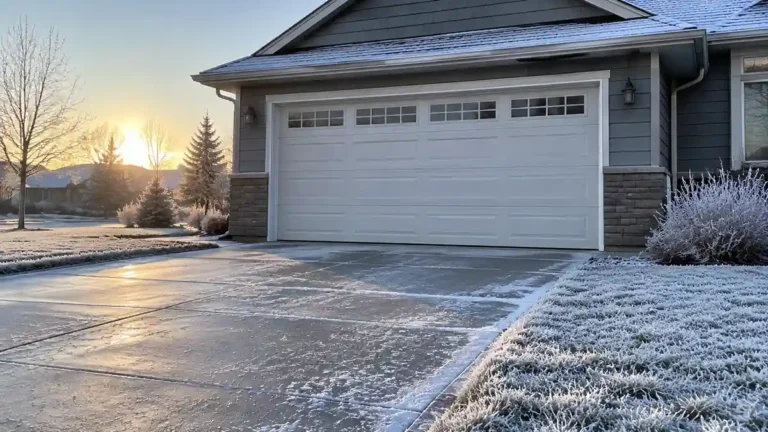
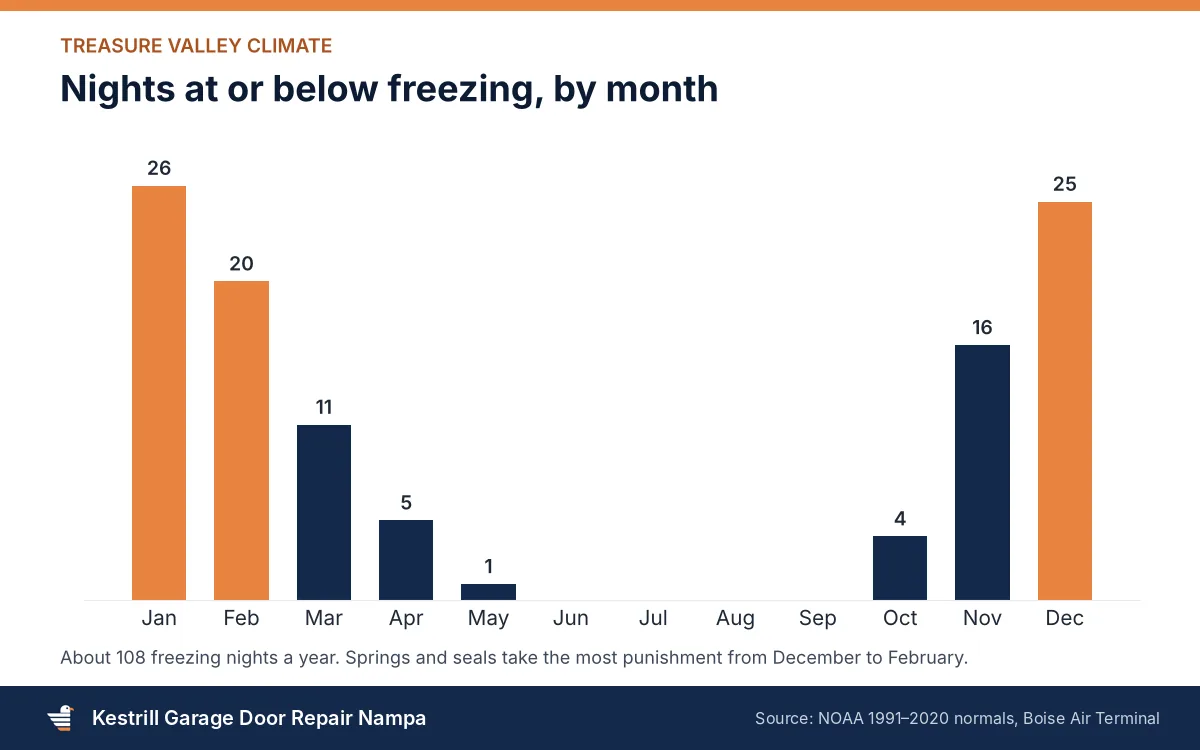
Treasure Valley freezes come back in October and November, with about four freezing nights in an average October and sixteen in November, before December and January bring twenty-five or more each. That shift is when tired springs start snapping, rubber seals stiffen and stick to the slab, and old grease turns to paste. A garage door that limped through summer often fails in the first cold week.
October has two other things going for it. The weather is still pleasant enough to work in the garage, and garage door companies are not yet swamped by the cold-snap rush, so a tune-up is easier to book.
The fall garage door checklist
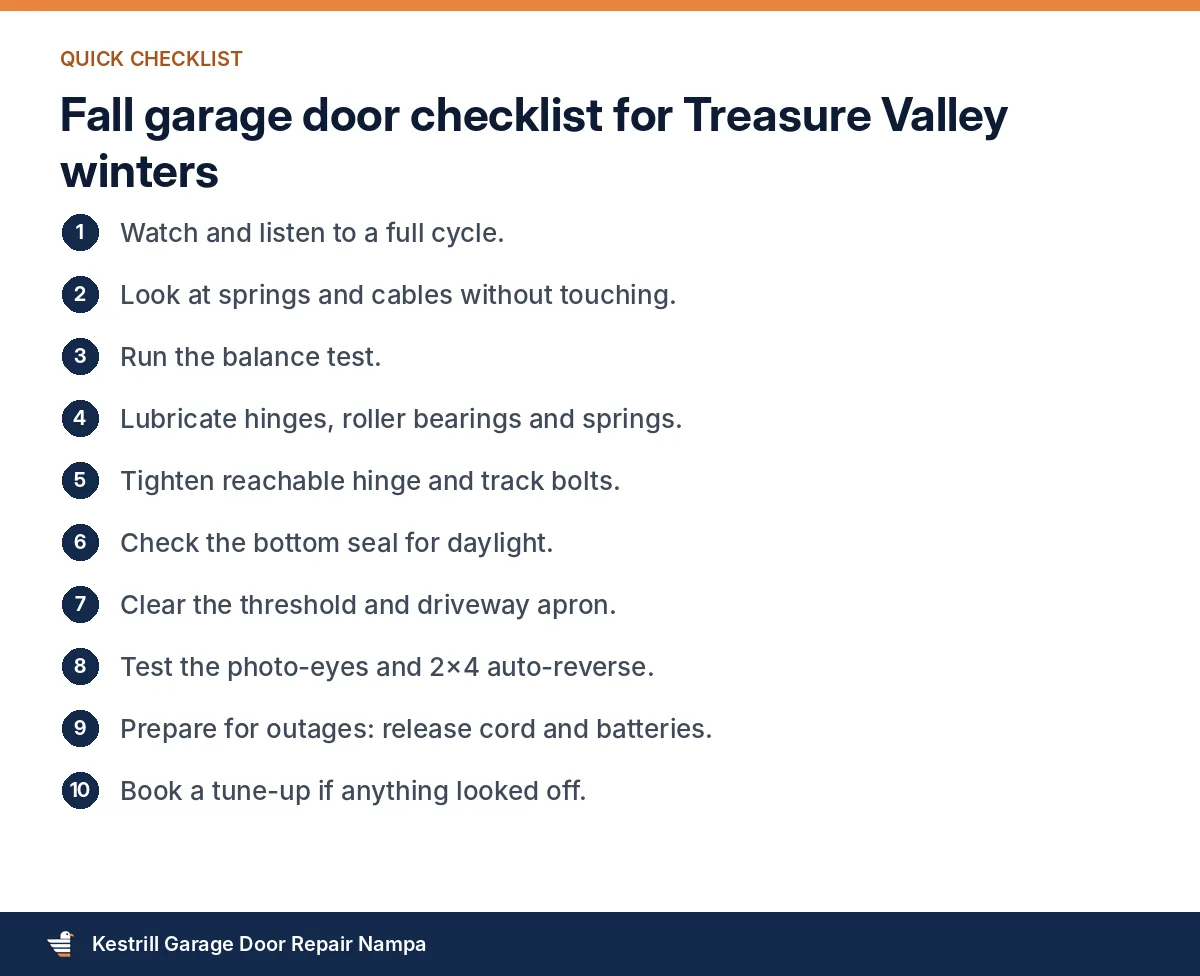
1. Watch and listen to a full cycle
Stand inside the garage and run the door all the way up and down. Listen for grinding, squealing or scraping and watch for jerks, pauses or a door that rises unevenly. Note anything new; it is easier to describe now than on a frozen morning.
2. Look at the springs and cables, without touching
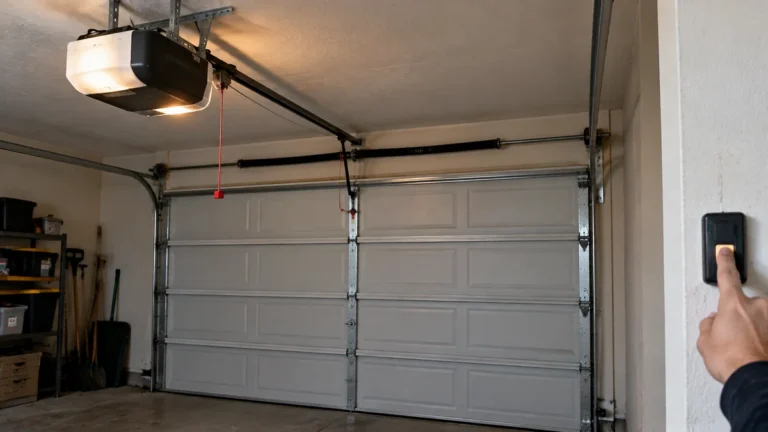
With the door closed, look along the spring above it for a gap, rust or coils that are stretched apart. Check both bottom corners for frayed cable strands. If you see either, book a repair now rather than waiting for it to fail in December.
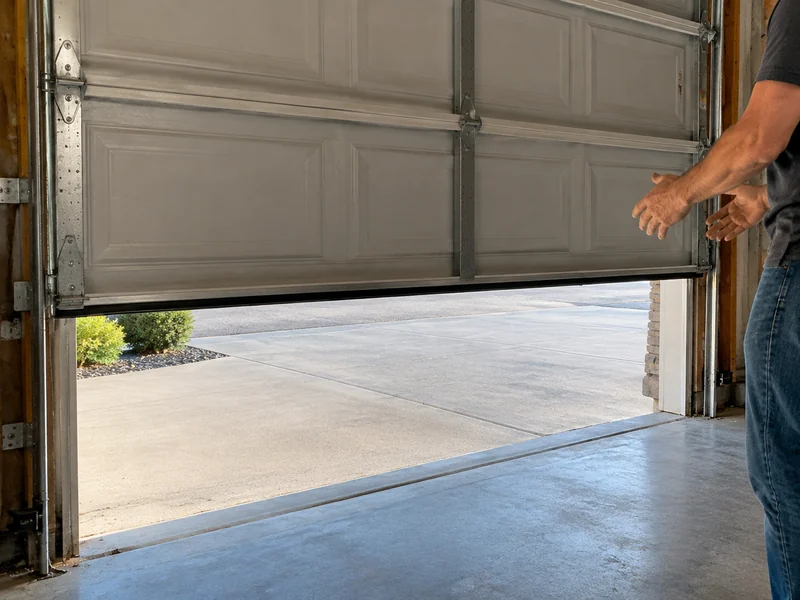
3. Run the balance test
Pull the red release cord with the door closed, lift the door to about halfway and let go. A balanced door stays roughly where you leave it. If it drops or rises, the springs are weakening, and cold mornings will finish the job. Reconnect the opener afterwards by running it once.
4. Lubricate the moving parts
Use a garage door lubricant, silicone or white lithium, on the hinges, the bearings in steel rollers, the spring coils and the end bearings on the spring shaft. Wipe off the excess. Skip the tracks; grease there only collects dust. Fresh lubricant before winter means less strain on cold mornings.
5. Tighten what you can safely reach
Snug up loose bolts on the hinges and track brackets with a socket wrench. Leave the bottom brackets and anything on the spring shaft alone; they are under spring tension.
6. Check the bottom seal for daylight
On a sunny afternoon, close the door, switch off the lights and look along the bottom and sides. Light means gaps that will let in cold air, meltwater and mice. A cracked or flattened seal is worth replacing before winter; see garage door weather seal replacement.
7. Clear the threshold and the apron
Sweep out leaves, gravel and dust from under the door and the bottom of the tracks. Outside, make sure water from the driveway runs away from the door, not under it, since that meltwater is what freezes the seal to the slab.
8. Test the safety features
Run the two tests from the CPSC garage door safety guidance: wave a broom handle through the photo-eye beam while the door closes, and close the door onto a 2×4 laid flat on the floor. It should reverse both times. Wipe the sensor lenses while you are there; summer dust builds up.
9. Prepare for outages
Winter storms bring outages. Make sure everyone in the house knows where the release cord is and how to use it safely with the door closed. Replace remote and keypad batteries. If your opener has battery backup, test it by unplugging the opener and running the door.
10. Book a tune-up if anything looked off
If the balance test failed, the springs looked tired, a cable was frayed or the door was noisy and jerky, a professional garage door tune-up in October is the least expensive way through winter, in money and in stress.
What a winter-ready door looks like
When you have finished, the door should open and close smoothly in one steady motion, with no grinding or scraping and no pause partway. It should stay put when stopped halfway by hand, meet the floor evenly with no light showing underneath, and reverse on both safety tests. The springs should show no gaps or heavy rust, both cables should be tight and unfrayed, and the opener should run without straining or humming.
If your door ticks every box, you have done the work that prevents most winter calls. If it does not, you now know exactly what to describe to a technician, which makes the visit quicker and the quote clearer. Either way, write the date on the inside of the garage door frame. Next October, you will know at a glance when the door was last checked, and when the springs were last replaced.
One more local habit worth adding: keep a plastic snow shovel and a squeegee near the garage door through winter. Clearing slush away from the door before the evening freeze takes a minute and saves a lot of frustration with frozen seals the next morning.
Extra steps for shop and RV doors
Tall shop doors on acreage around Nampa deserve the same list with two additions. Check that the bottom seal still meets the gravel or concrete pad evenly, since pads shift more than garage slabs. And look at the opener’s mounting and the track brackets carefully; wind loads on a 12 or 14-foot door are high, and loose hardware is how storm damage starts.
What not to do this fall
- Do not adjust spring tension yourself, even if the balance test fails.
- Do not use a general-purpose solvent spray as a lubricant; it strips grease.
- Do not raise the opener’s force setting to make a stiff door close.
- Do not ignore a seal that already freezes down; it only gets worse in January.
Fall garage door checklist: quick answers
When should I prepare my garage door for winter?
October is ideal in Nampa. Freezes start returning that month and become frequent in November, and companies are less busy before the first cold snap.
What should be on a fall garage door checklist?
A visual check of springs and cables, a balance test, lubrication of hinges, rollers and springs, tightening of reachable bolts, a seal check, clearing the threshold, the photo-eye and 2×4 safety tests, and outage preparation.
Should I lubricate my garage door before winter?
Yes. Fresh garage door lubricant on hinges, roller bearings and spring coils reduces strain on cold mornings. Do not grease the tracks.
Can I replace the bottom seal myself in the fall?
Sliding a new seal strip into a sound retainer is a manageable homeowner job. If the retainer is bent or rusted, or the work is near the bottom brackets, have a technician do it.
Do I need a professional tune-up every fall?
Not necessarily every year, but book one if the balance test fails, the springs or cables look worn, or the door is noisy and uneven. Busy households benefit from a yearly check.
Sources: freezing-night normals from the NOAA 1991–2020 normals for the Boise Air Terminal station; safety tests from the CPSC garage door safety guidance; local climate from the City of Nampa climate summary.